Friday, August 14, 2020

The forest of Political Inner Circle: Meiji Memorial Garden of Oiso 明治記念大磯邸園


Next week, let’s hike Oiso Hill 大磯丘陵 with a view spot where we can see the entire Oiso Town and the Pacific Ocean. From there, we will understand Oiso is a typical beach town of Shonan  湘南 with seaside protection forest shielding the town from the effect of strong sea breeze (; my post on October 12, 2018). Since for more than millennia Oiso Town was a post town of Tokaido 東海道, the main road of Japan, people has afforested the oceanfront for centuries to guard the human settlement. By the 19th century, it became a charming place with the established seaside protection forest. In the age of smokestack industrialization, the first person who noticed the health benefit of such environment was Dr. Jun Matsumoto 松本順, the first Surgeon General for Japanese Imperial Army. In 1885, he opened Oiso Beach as sea resort for commoners. Dr. Matsumoto had strong connections with the “Society” and lectured his friends how nice to be in Oiso all year round. Several of them, including ministers for the government, bought their summer house in Oiso during the 1880s. (The map showing these houses in Oiso can be seen here.) One of the earliest new comers was (step-)father of Shigeru Yoshida (my post on July 31, 2020), who owned the property in 1885. Minister of Interior, Aritomo Yamagata 山県有朋, also bought his Oiso place in 1887. Two years later in 1889, Yamagata became the 3rd Prime Minister of Japan. It was the beginning for Oiso Town to entertain a series of landlord-PMs. In total, 8 Japanese PMs had their summer houses. 6 of theirs (including Yoshida Residence) were on beach side.


The resting place of Dr. Matsumoto
 in Myodaiji Temple
妙大寺.
 We visit there next week. 😀


Yamagata’s summer house stood on the ground now for Oiso Junior-high on Route #1. To the west next to the campus was the place of Shigenobu Okuma 大隈重信, the 8th and 17th PM (and the founder of Waseda University), the next one was of Hirobumi Itoh 伊藤博文, the 1st, 5th, 7th, and 10th PM, and the neighbor beyond was Kinmochi Saionji 西園寺公望, 12th and 14th PM. In between the property of these PMs, there was a summer house of Munemitsu Mutsu 陸奥宗光, Minister of Foreign Affairs during the 1890s who engaged in the after-war negotiation with Qing Dynasty (i.e. a person who was at the forefront of the real beginning of Japanese aggression towards China) and succeeded in abolishing all the extraterritoriality agreements with European countries and the USA. Another neighbor of these ministers was Marquis Nabeshima 鍋島直大, the last feudal lord for Saga 佐賀藩. In the former property of Marquis, there stood a condo now. The rest, from Okuma place to Ikeda property has become National Meiji Memorial Garden of Oiso 明治記念大磯邸園. The Okuma and Mutsu Residences were planned to be open on July 2020. Unfortunately, COVID-19 has postponed the opening at least till late 2020.


The condo standing over Marquis’ memory


Under the current circumstances, no one knows when we can start visiting this park. In any case, the old buildings where the biggies actually used are needed heavy repairs so that any of them won’t be accessible for us at least this year. We can now just poke in the gardens each house has, from outside of the construction fence. It seems to me all the places preserve the forest of black pine (Pinus thunbergii) relatively well, at least in the outer rim of the Garden. Okuma and Mutsu potion has wide open space between the house and the black pine forest, that must have been loved by these guys … wide open space if impeccable lawn and beautiful pines covering twinkling lights from wave crests over there … Unfortunately, now the final approach to the sea is blocked by Seisho By-pass Highway 西湘バイパス, but we must be able to listen sound of the sea (with roaring car engine noises …) in the forest. Saionji property was later owned by Shigeaki Ikeda 池田成彬, the CEO of Mitsui Group and the 14th Governor of Bank of Japan who built a mansion in art deco style there. The garden and mansion are planned to be unveiled to the public next year. We keep crossing fingers for this to happen …


Last February, workers were busy
 for the preparation of opening at Okuma Residence …
A mansion Governor Ikeda built.
 It is said that its entrance hall is
 one of the best Art Deco structures remaining in Japan.
 I hope we can have an access to it next year …
The forest of Saionji Residence.
 It surely needs some mowing.


The summer house of Hirobumi Itoh occupies the largest acreage for Meiji Memorial Garden of Oiso. It may have had the largest modification since the time of the 1st PM. Until recently, it was the property of Seibu Group that built banquet hall and Chinese restaurant there in the style of the 1960s and the 70s (, and gave up the business with large losses). It seems to me, Ministry of Land, Infrastructure, Transport, and Tourism is engaging in a heavy restoration work for this area. It may take some time for us to see how the original summer house of the PM looked like. In terms of historical importance, this is the most significant area for Meiji Memorial Garden. Itoh was inevitably close to Emperor Meiji so that his crown prince, Emperor Taisho, was natural regulars in Oiso Society when he was a schoolboy, staying Itoh’s place. It helped another guest for Itoh’s Oiso House to be a part of the Society. He was the last crown prince, Prince Yu Un 李垠 for Joseon Dynasty of Korea. Before Japan made Korea her colony, Itoh invited (or, some may say “abducted”) in 1907 10 years’ old crown prince to be a schoolmate for Japanese crown prince at Gakushuin 学習院. Since then, Korean prince’s private life in Japan was mainly spent in Oiso. He even met his wife here. She was Princess Masako 方子, the first daughter of Prince Nashimotonomiya 梨本宮 who shared the same grandfather 5 generations back with Emperor Heisei. Wife of Prince Nashimotonomiya was the daughter of Marquis Nabeshima so that Princess Masako often came to spend her time in her granddaddy’s place, a neighbor of Itoh Residence. Although the marriage of Korean Crown Prince was for political reasons of course, the couple was to some extent childhood friends. Remembering after 1945 how they struggled together to return to Korea, what the forest of black pines in Oiso did for kids’ memory may be for a screen play of Korean love stories …


Former banquet hall Seibu Group built
 on the 1st PM’s memory.
 It is too large to demolish at once, maybe …
Out of business Chinese Restaurant.
 Though, the architecture preserves some parts of
the building Prince Yu Un and PM Itoh used.
 Locals say it would be an “engineering show
 how they return that restaurant into a historical building.”
 Er, well, OK.


As their time in the office comes closer to the 21st century, summer house for a PM in Oiso becomes more moderate, except for Shigeru Yoshida. In addition to 3 PMs of Meiji Memorial Garden, there are 5 more who lived in Oiso. Aside from estates for Aritomo Yamagata and Shigeru Yoshida, three houses of the rest must have been very modest. Two houses, those for Masatake Terauchi 寺内正毅 (the 18th PM, which was on the hillside) and for Takashi Hara 原敬 (the 19th; his was near Oiso Fishing Port), are now gone. They are a part of ordinary residential area. The property of Taka’aki Katoh 加藤高明 (the 24th) remains somewhat as an immediate neighbor for Myodaiji Temple where the grave for Dr. Jun Matsumoto resides. But … I tell you I could not notice that was a house for a PM. It looked a completely ordinary house in Oiso. Katoh was the only Japanese PM before 1945 who was chosen through election though it was still a restricted kind. During his tenure, he achieved universal suffrage, and established the “Maintenance of Public Order Act” that was heavily used to strictly limit the freedom of speech … The very modest house in a town of rich people, built by a PM of such history … may say something. So, most of the grandeur Oiso had during the first half of the 20th century has now gone, or become for a museum, except one.


I think this is the place for former PM’s residence.
 But they had a different name plate …


When we leave from JR Oiso Station, in front of us is a small hill covered by forest. It was (yes, in past tense) a summer house of Yanosuke Iwasaki 岩崎弥之助, a younger brother of Yataro Iwasaki 岩崎弥太郎, the founder of Mitsubishi Conglomerate. Yataro himself had a close connection with Kenzo Yoshida 吉田健三, the (step-)father of PM Yoshida, and played some role for Kenzo to acquire the land for current Yoshida Residence. Haven’t you noticed both Yoshida and Iwasaki occupied the places at the end of a row of mansions for Oiso beachfront? In Pre-war Japanese politics, they were to some extent outsiders. After Yataro died in 1885, Yanosuke took over Mitsubishi’s fortune and in 1890 purchased the Oiso property. Since then, the Iwasaki Clan spent summer there. In 1894 Yanosuke handed over Mitsubishi’s top post to Yanosuke’s eldest son, Hisaya 岩崎久弥, who had 6 kids. His eldest daughter Miki 美喜 nurtured a good memory with Oiso, grew up and married a diplomat, Renzo Sawada 澤田廉三. Mr. Sawada was a devout Catholic, who later became the first Japanese ambassador to the UN. Miki was converted to Catholicism, moved around the world with her husband, became friends with Josephine Baker, Marie Laurencin, and Pearl S. Buck, among others, and learned children’s home by Barnardo’s in the UK. At the time when GHQ dismantled the wealth of Iwasaki Family, the clan payed their wealth tax due by their summer house in Oiso. Miki had a different idea.


The forest of former Iwasaki Residence had
 very beautiful camellia last February.


Miki Sawada 澤田美喜 knew there were lots of orphans because of the war. Especially, as a (rare, then) woman with international experience, she often watched the hard life in Japan for kids with international background, like of Japanese emigres or of abandonment by their parents in international relationship. After 1945, in large Japanese cities where American forces stationed, there were lots of starved Japanese women who engaged in prostitution for the occupiers. Some of them gave birth to babies with no idea who the kid’s father was. Such babies’ feature stood out in uniform and traditional life of ordinary Japanese. (Oh, yes, Japanese racism, if you ask me to identify it.) Leaving behind mixed-race babies in a street corner was rife. Miki determined on converting Iwasaki Clan’s former summer house to an orphanage for such children, just like Barnardo’s. She poured all the fortune she personally had, and asked help from her international comrades. One of such good friends for hard time was Elizabeth Saunders, an English woman who stayed in Japan even during war years as the Governess of Mitsui Family. She as a good Anglican donated all her savings to Miki’s project. They managed to buy back the estate from the GHQ, and in 1948 established an orphanage named Elizabeth Saunders Home. Later in 1953, she added St. Stephan’s School as a private elementary school + kindergarten, and in 1959 a junior-high school for kids live at her Home. So, instead of being parks with restored glittering architectures, or Chinese restaurant, Mitsubishi’s summer house is now a home and a campus for grade schoolers. Elizabeth Saunders Home for the 21st century is a place for kids from diverse backgrounds but equally suffered with many kinds of violence. St. Stephan’s School is not only for the kids from the Home but also ordinary families who are in sync with the founding sprit of the place. As such, we cannot enter the forest of Former Iwasaki Residence, but near the entrance there is Sawadamiki Memorial Museum where we can see the collection of Miki Sawada who was also famous as a collector of Japanese Christian art. The Museum has a troop of student volunteers who can guide you in English. 😄 Er … sorry, due to COVID-19 the museum is now closed until further notice. 😕


The relief of Mrs. Miki Sawada
 at the entrance for Elizabeth Saunders Home.
The kids’ place is beyond this tunnel
 (for permission holders only).
Outside Meiji Memorial Garden of Oiso
 along Seisho By-pass Highway,
 there is a small corridor called Koyurugui Ryokuchi
 (
こゆるぎ緑地 Koyurugui Green Belt)
 which is managed as Japanese National Trust area.
 The place was once devastated by pine wilt disease
 as the pine forest of Yoshida Residence.
 Volunteers in Oiso Town and Kanagawa Midori Trust are
 restoring the place since 2003.
 It’s still a young forest,
 but pleasant place to stroll quietly. 😌


Showa Kinen Park Oiso Office, Kanto Regional Bureau,
Ministry of Land, Infrastructure, Transport, and Tourism
国土交通省関東地方整備局
国営昭和記念公園事務所大磯分室
Phone:  0463-79-8700

St. Stephan’s School 学校法人 聖ステパノ学園 小学校/中学校
868 Oiso, Oiso-cho, Naka-gun, Kanagawa, 255-0003
〒255-0003 神奈川県中郡大磯町大磯868
Phone: 0463-61-1298

Oiso Town Hall 大磯町役場
183 Higashikoiso, Oiso-cho, Naka-gun, Kanagawa, 255-8555
〒255-8555 神奈川県中郡大磯町東小磯183
Phone: 0463-61-4100
Fax: 0463-61-1991
http://www.town.oiso.kanagawa.jp/isotabi/index.html
http://www.town.oiso.kanagawa.jp/oisomuseum/index.html

Thursday, August 6, 2020

The forest of after Downton Abbey: Oiso Joyama Park of Kanagawa Prefecture 神奈川県立大磯城山公園


Let’s go to the hill-side of Oiso Joyama Park. Leaving the Yoshida Residence, in front of us on Route #1 is a traffic light named “Joyama Koen Mae 城山公園前”. We cross it, then, on our right, there is a hill covered by forest. This is the Former Mitsui Estate of Joyama Park, another remnants of a mansion. Mitsui is one of the richest, and oldest business families of Japan. They started their business in the 16th century and, still, they have strong ties with corporations of TOPIX 100, et al. Until Japan lost the World War II, and the GHQ for the Allied Forces ordered them to dismantle their kingdom, Mitsui Family really owned Mitsui Conglomerate with tremendous wealth, and unspoken power to the Japanese ruling class. Oiso Mitsui Estate was the property of Aburakojikita-ke Family 油小路北家 of Mitsui (in abbreviation, Kita-ke 北家), that was the leader of Mitsui Group since the 17th Century. Needless to say, they were RICH. In 1898, the 10th head of Kita-ke, Takamine Mitsui 三井高棟 bought Oiso property that was the largest in the celebrity world of pre-war Oiso Town. Accordingly, hill-side forest of Joyama Park is the largest among the series of ocean side parks we visit in this series.


The decoration that adorned
 the hallway of Mitsui mansion in Oiso.
 It’s now in Oiso Municipal Museum.


Takamine Mitsui was a kind of a central figure for Japanese “Society” during the first half of the 20th century. In 1922, he even welcomed Prince of Wales (Edward VIII) at his private Roppongi 六本木 mansion. He certainly entertained Emperor Taisho in his Oiso Estate. Until the Mitsui Conglomerate was disassembled, Takamine Mitsui built numerous structures in his Oiso estate. Many of them were built with materials gathered from historical temples and shrines that were demolished during the late 19th century under the fever for “industrialization in western style.” We can see how those architecture were in Oiso from this web page. He even moved several entire structures from Kyoto and Nara to Oiso. One of them is now a national treasure, a tea arbor named Joan 如庵 built in 1618 for Ken’ninji Temple 建仁寺 of Kyoto by Tea Master Oda Yurakusai 織田有楽斎, the younger brother of Oda Nobunaga 織田信長. It was first moved from Kyoto in 1908 to Mitsui mansion in Roppongi, then in 1938 Takamine Mitsui transferred it to Oiso, a clever move in hindsight. Their Roppongi property was burned down completely by carpet bombings by the Americans during the World War II. In 1933, Takamine handed over the business matters to his son, Takakimi 三井高公, and retired in Oiso. He died here in 1948, after the Mitsui conglomerate was dismantled by General Douglas MacArthur. The life of the 10th Head for Kita-ke in Oiso was for art. To his Oiso estate, Takamine invited Master Eiraku 永楽 from Kyoto to establish a pottery kiln for gorgeous Kyo-ware 京焼. With their huge wealth gone, so did the architectures in Oiso. After 1945, those structures moved from Kyoto or Nara to Oiso were moved again by the new owners, this time not private family but joint stock companies. Joan was bought by Meitetsu 名鉄, and now stands in one of their properties in Inuyama City 犬山市, Aichi Prefecture 愛知県 ... We can observe only foundations of these grandeur constructions in Joyama Park.


The point where once Joan stood.
 Takamine Mitsui invited friends
 to have tea ceremonies here.
The highest altitude point of Joyama Park
 where the main house of Mitsui mansion had its tower.
 The huge structure as a mansion covered
 all the slopes we can see here.


Even though, just walking inside the well-paved Mitsui-potion of Joyama Park, we can feel their grandeur and opulence. (The map of the Park is here.) In ordinary forests of Kanagawa Prefecture of this size, we don’t fail to find an afforested area with coniferous trees. Until the 1960s, such forests were marketable for timber. In Former Mitsui Residence of Oiso, there is none of such mundane things. Mitsui family did not need it. The place was only for the pleasure of Takamine Mitsui. Majority of vegetation is now in advanced maturity. The tall trees are strategically positioned, maybe in yesteryears matched with the now-disappeared architectures. They change their feature from season to season for the eyes of the owner. From the area of the highest altitude for the park, where the Mitsui mansion stood, we can admire the Pacific Ocean and mountains, Mt. Hakone, Mt. Fuji, et al under complete open sky. This is a gorgeous place to live exclusively. I imagined how Mr. Mitsui strolled in his forest of such “naturally” looking broad-leaved and coniferous trees ...


The view from the view point
 where once Mitsui mansion stood.
 When I’ve been there in February,
 the weather was not that nice,
 but Mt. Fuji was still looked majestic.
The Park has networks of roads
 many of which are barrier-free.
 The admin office for Mitsui potion of the Park has
 free rental service for wheelchairs.


In the eastern potion of Mitsui area of the Park, there is archeological sites of the 6-7th century and Oiso Municipal Museum. The Museum has a good collection explaining the history of Oiso Town from the pre-historic era to the 21st century. Their English explanation is very friendly for overseas visitors. It’s a place worth a visit to learn Town’s special status in Japanese history. Their exhibit includes ethnological information of the community which has interesting traditional festivals. I will return to one of such rituals later in this series for Oiso’s forest. The festival is about the forest, I tell you. Anyway, before the festival things, we return to the beach front next week with a row of houses for former PMs. They must have been entertained by Mitsui Family in Joyama Park …


Oiso Municipal Museum


Oiso Joyama Park of Kanagawa Prefecture 大磯城山公園 管理事務所
551-1 Kokufuhongoh, Oiso-cho, Naka-gun, Kanagawa, 259-0111
〒259-0111 神奈川県大磯町国府本郷551-1
Phone: 0463-61-0355

Oiso Town Hall 大磯町役場
183 Higashikoiso, Oiso-cho, Naka-gun, Kanagawa, 255-8555
〒255-8555 神奈川県中郡大磯町東小磯183
Phone: 0463-61-4100
Fax: 0463-61-1991
http://www.town.oiso.kanagawa.jp/isotabi/index.html
http://www.town.oiso.kanagawa.jp/oisomuseum/index.html


Thursday, July 30, 2020

Downton Abbey in Japan: Former Shigeru Yoshida Residence in Oiso Joyama Park 旧吉田茂邸


This week and next let’s stay closer to Oiso Beach. The beach of Oiso Town starts from the mouth of Hanamizu River 花水川 and ends in front of Oiso Golf Course. From Hanamizu River to Oiso Fishing Port 大磯漁港, it is the oldest Japanese bathing resort for commoners. From the Port to the Golf Course, it is a beach not suitable for swimming (due to the current and seabed geography), but popular for weekend anglers. Along the entire shore, there runs Seisho By-pass Highway 西湘バイパス to the City of Odawara 小田原市. Beside the Seisho By-pass, on June 26, 2020 Japanese Ministry of Land, Infrastructure, Transport, and Tourism opened Oiso’s portion for the Pacific Cycling Road 太平洋岸自転車道. So, now we can walk/bike along the motorway in Oiso. Actually, the forests we go locate in a continuous row at the side of Pacific Cycling Road. They are Oiso Joyama Park 神奈川県立大磯城山公園 and National Meiji Memorial Garden of Oiso 明治記念大磯邸園.


Seisho By-pass Highway near Oiso-nishi IC 大磯西IC,
 Oiso Prince Hotel.
Oiso’s Pacific Cycling Road.
 Oh, important info.
 The area is VERY popular for joggers, marathon runners, and cyclists.
 I’ve not been there since last March,
 but if Niiharu Forest’s
新治市民の森 soaring popularity
 due to the COVID-19 lockdown is for any indication,
 I would tell you this:
 Cyclic Road in Oiso with refreshing see breeze
 could become even more congested.


So, in terms of access, visiting today’s place is not difficult. First, we can drive and park the car in one of the ample parking spaces of the parks (with parking fees, er, not cheap, FYI). Or, if you prefer on foot, please start from JR Oiso Station, and take one of these 3 routes. Route A: go to Oiso Fishing Port by crossing Route #1, and then enter Pacific Cycling Road. … Oh, yes, the Port also have a large parking space. Also, in Terugasaki Municipal Swimming Pool right next to the Oiso Fishing Port, there is a municipal office providing free bike rental service, called Port House Terugasaki ポートハウスてるがさき. Business Hours 9:00-16:00 except December 29-January 3; max bike rental hours = 4 hours; please bring your photo ID and fill-in an on-site form. The available bikes are 6, which are for “first-come, first-served” base. (Good Luck!) Route B: without going the Port, walk along Route #1 to the direction of Odawara which is an itinerary passing the front gates of the Parks. Route C: take Kanachu Bus services (many, I tell you; time tables are here) from Oiso Station and get off at Joyama Koen-mae 城山公園前 bus stop, and return the Station on foot by and by. The last method may be the least demanding to visit these places. In this post, I start from Oiso Joyama Park, then visit (or poke in) National Meiji Memorial Garden of Oiso, and return to Oiso Station.


The parking for Former Shigeru Yoshida Residence
 in Oiso Joyama Park.


Oiso Joyama Park 大磯城山公園 is made of two parts. One is the beachside forest called Former Shigeru Yoshida Residence 旧吉田茂邸, and another is on Joyama hill, which is on the other side crossing Route #1 from the beachside. The area near the sea was a former residence of Shigeru Yoshida, the 45th and 48th-51st Prime Minister of Japan. He is a grandfather of Taro Aso, the 92nd PM and the current Deputy PM cum Minister of Finance, and of Princess Nobuko, the wife of Prince Mikasano-miya (a cousin of Emperor Heisei). Yoshida lived here even during his tenure as the PM, and commuted by car to the PM Office next to the Imperial Palace. Yoshida inherited the estate from his (step)father, a wealthy merchant of Yokohama when he was still a grade schooler, did whatever he wanted with the place, and died here in 1967. PM Yoshida invited PM Konrad Adenauer of the West Germany to his Oiso residence. Here, he entertained Crown Prince Akihito (Emperor Heisei) and Crown Princess Michiko (Empress Michiko) when they were newly-weds. The biggest achievement of PM Yoshida was the restoration of state independency in 1952 by San Francisco Peace Treaty. He was proud of it. He brought a couple of cairn terriers from his state business trip to San Francisco. Their name was “San” and “Fran.” Later the doggie couple had a cute puppy. Yoshida named it “Cisco.” All three were buried here.


Shigeru Yoshida.
 This statue stood at the nearest spot
 to the sea in Yoshida Residence.
 He’s facing San Francisco,
 somewhere over there …
The grave of “San” in Yoshida Residence


Inevitably, the place carries the history of Japanese Post World War II period. The area is made of the house Yoshida lived and his forest which is rather too large to be called a “garden.” Each room of the house has their story. So does the design of the garden. The reason why this place is now a prefectural park is a part of history for the nation and for Yoshida Family, which would be of Downton Abbey. (I mean, about power, money and love, Wooooow.) Anyway, talking about their detail is not for this blog, so I skip it. The point I have to tell you is this: the entire Yoshida Residence is a jumble of styles Yoshida fancied during his 89 years’ life. And so for his “garden.” Shigeru was an adopted son from a poor but politically active family in Kochi Prefecture 高知県. He maintained the connection with his biological family and introduced many vegetations from Kochi that is definitely warmer than Kanagawa. After graduating from University of Tokyo, he became a diplomat and stationed in China, Korea, and Europe during the early 20th century. He brought home his impression of scenery from each of his assignments. They transformed the house of his father’s garden in the original vegetation for Oiso’s soil in whatever way to be a part of Shigeru’s world. The result was a towering Phoenix canariensis right next to large traditional Japanese ponds adorned by plum and cherry blossoms, and a bamboo forest. The palm tree is to commemorate his achievement in California where lots of palm were lined for boulevards. Traditional ponds were specially designed to welcome Crown Prince and Princess, and the bamboos were from the village of his birth family.


The Yoshida Residence early spring, 2020.
 The hill (a part of Yoshida estate) behind the house
 maintains the original vegetation of the place.
 The ponds in front of us was redesigned
 to welcome Crown Prince and Princess.
 It smells marvelous when plum blossoms are in full-bloom,
 like in this photo …

The very important palm trees,
 for Yoshida, and in Japanese history.

The bamboos Yoshida brought from his birth-town in Kochi.

The design of each room, and the entire house
 are a sort of amalgam of architectural styles
 starting from Japanese classic to Western modern.
 But there is one unified concept for sure:
 from every room Yoshida used,
 he could admire beautiful Mt. Fuji.


Yoshida Residence was once famous for its beautiful forest of black pine (Pinus thunbergii). Yoshida himself confessed he loved to admire his “garden” of pines. Unfortunately, they were almost annihilated by pine wilt disease brought in by Americans after 1945. Hmmmmmm … it’s very symbolic … The pine trees loved by Japanese PM who negotiated with Americans to restore independence after the defeat of the war was exterminated by germs brought by Americans … Anyway, after the infection, Kanagawa Prefecture treated the area and replanted the young, disease-tolerant black pines which is the main black pine trees these days for Yoshida Residence. The place has a strolling route for the young forest. Not many tourists enter there. I like its quiet atmosphere with sound of the sea. Maybe PM felt the same way with his older pines …


Young forest of pines.


The parking for Yoshida Residence was a part of rose garden as the PM was the president of the Japan Rose Society. (He was proud of his “English” accent.) Now the rose garden itself was less than 1/4 of its former size, as the space was modified in 1979 for President Jimmy Carter and the PM Masayoshi Ohira to have a meeting at Yoshida Residence. Before the larger rose garden, the area was on a border for 3 summer houses. One was for Yoshida family, another was of Mitsui Family whose main area we visit next week, and the third was for Tsunatsune Hashimoto 橋本綱常, the first general director of Japan Red Cross Hospitals and the court physician for Crown Prince Yoshihito (Emperor Taisho, the great grandfather of the current Emperor). When he was a schoolboy, the Crown Prince visited many times his physician’s place to play. Of course, the climate of Oiso was desirable for young prince. Yet, there was another reason why his father, Emperor Meiji, allowed his heir to stay in Oiso. In Yosida Residence, there is one architecture, called Shichiken Doh 七賢堂, which is to commemorate 7 politicians contributed to industrialization of Japan since Meiji Restoration of 1868. It was first built by Hirobumi Itoh, the first PM of modern Japan, in his summer house that was a neighbor for Yoshida Residence. In 1960, Yoshida moved it to his estate. In 1968 after his death, PM Eisaku Sato, the 61st to 63rd PM, added Yoshida to be commemorated in this structure together with the other 6 seniors already listed there. The existence of such structure tells the reason why this beach was the playground for the Crown Prince. Next weeks, we’ll visit the forests which have the connection with these Japanese modern historical biggies. Stay tuned. 😃


The remnant of rose garden

Shichiken Doh built in 1903 and moved here in 1960.


Oh, I have to tell you this. We have to pay the entrance fee to see the inside of Yoshida Residence, a part of Oiso Municipal Museum. BUUUT, enjoying the forest of PM Yoshida is free of charge. 😄 We can enter there between 9:00-16:30, Tue-Sun (except every 1st day of month and December 29 – January 3). Next to the Yoshida Residence is Oiso Prince Hotel that will be a satellite Olympics Village for Sailing Competition in Tokyo 2020 Games. I imagine during the summer of 2021, Olympians may visit Yoshida Residence to have a little stroll. 😊


Oiso Town Hall 大磯町役場
183 Higashikoiso, Oiso-cho, Naka-gun, Kanagawa, 255-8555
〒255-8555 神奈川県中郡大磯町東小磯183
Phone: 0463-61-4100
Fax: 0463-61-1991
http://www.town.oiso.kanagawa.jp/isotabi/index.html
http://www.town.oiso.kanagawa.jp/oisomuseum/index.html

Friday, July 24, 2020

Beach front forests for celebrities: Visiting Oiso Town forests, introduction


Oiso Town


From this post I will tell you for several weeks the greenery of Oiso Town 大磯町, a municipality next to the Hiratsuka City 平塚市. I’ve been there early this year before COVID-19 dominates our conscience. Since then, there are some changes in Oiso due to the pandemic. I’m going to mention it, hoping the arrangement is only temporary. Anyway! The township faces to the Sagami Bay 相模湾 and has a unique meaning in Japanese history. Their forests show such feature. Part of them will be National Meiji Memorial Garden of Oiso 明治記念大磯邸園. It was planned to be partially open in July 2020. Now the inauguration is postponed. I’ll tell you more about it next week … Oiso Town is a nice place to live. Not for nothing Haruki Murakami 村上春樹 keeps his Japanese residence there. Yukio Mishima 三島由紀夫 was a party boy at Oiso Prince Hotel. There lived 8 Prime Ministers in the town. You may have an idea what kind of place, and forest, don’t you?


A morning in Oiso Fishing Harbor. 
They have a restaurant uber-popular,
 but no reservation accepted.
 Reason? They serve food of real fishermen!


First, geography. West of Kanagawa Prefecture was the epicenter for the 1923 Great Kanto Earthquake. It is the point where the Philippine Plate sinks under the North American Plate, after carrying the seabed from the Pacific Ocean. The tectonic crush continuously pushes up the seabed, creating numerous active fault lines, hills and volcanos such as mountains of Izu Peninsula 伊豆半島, Hakone 箱根, and Mt. Fuji 富士山. Shinseiko Lake 震生湖 (my post on November 15, 2019) is on this fault line. From the area of Shinseiko Lake, a hill is created to the south by the tectonic crash. It is called Oiso Hill 大磯丘陵. The Hill is sandwiched by alluvial fans of the City of Odawara 小田原市 by Sakawa River 酒匂川, and the City of Hiratsuka by Sagami 相模川 and Hanamizu Rivers 花水川. Unlike these two relatively flat areas, south slope of Oiso Hill is steeply tumbling down to the Sagami Bay. The top soil, er roughly 20m or so deep, of the hill is volcanic ashes spewed from the ancient Mt. Hakone that does not exist anymore due to the volcanic collapses. Especially between about 400 thousand to 60 thousand years ago, the debris from the volcano covered the tectonically crumpled-up seabed of Oiso. So, Oiso Hill is one of the most geologically unstable places in Japan. We’ll go there next month. 😉


Oiso Hill seen from JR Oiso Station


Even though, people have lived Oiso area for millennia. Do you remember we’ve been there once for Mt. Takatori 鷹取山 (; my post on December 1, 2017)? The hiking course to Mt. Takatori has shrines worshiped for centuries by Tokugawa Shogunate and the other historical dignitaries. Especially, the beachside to the Pacific Ocean has a long sandy shore along the main road, aka Tokaido, connecting Kyoto and Kamakura, and later Edo (Tokyo). The scenery of long beach with sharply rising hill behind (sans present-day suburban houses), with Mt. Fuji over there, must have been beautiful. Surely, it appeared often in Japanese classic literature as a gorgeous place of moderate climate. Many poets wrote their impression of the vista while they were travelling. The oldest appears in Manyoshu poetry anthology 万葉集 that was compiled in the 8th century. By the mid-19th century, the Oiso beachfront became of celebrity. After Meiji Restoration of 1868, the governmental biggies who led industrialization of Japan competed in the area to build their holiday mansions with private beach. Meanwhile, in 1885 a beach in Oiso spared from the “privatization” became the first Japanese bathing-resort for commoners.


The ancient Tokaido, now National Route 1,
 was lined with pine trees when it runs along the seashore.
 In Oiso, such design is preserved,
 and we can feel how it was in, say, 200 years ago.
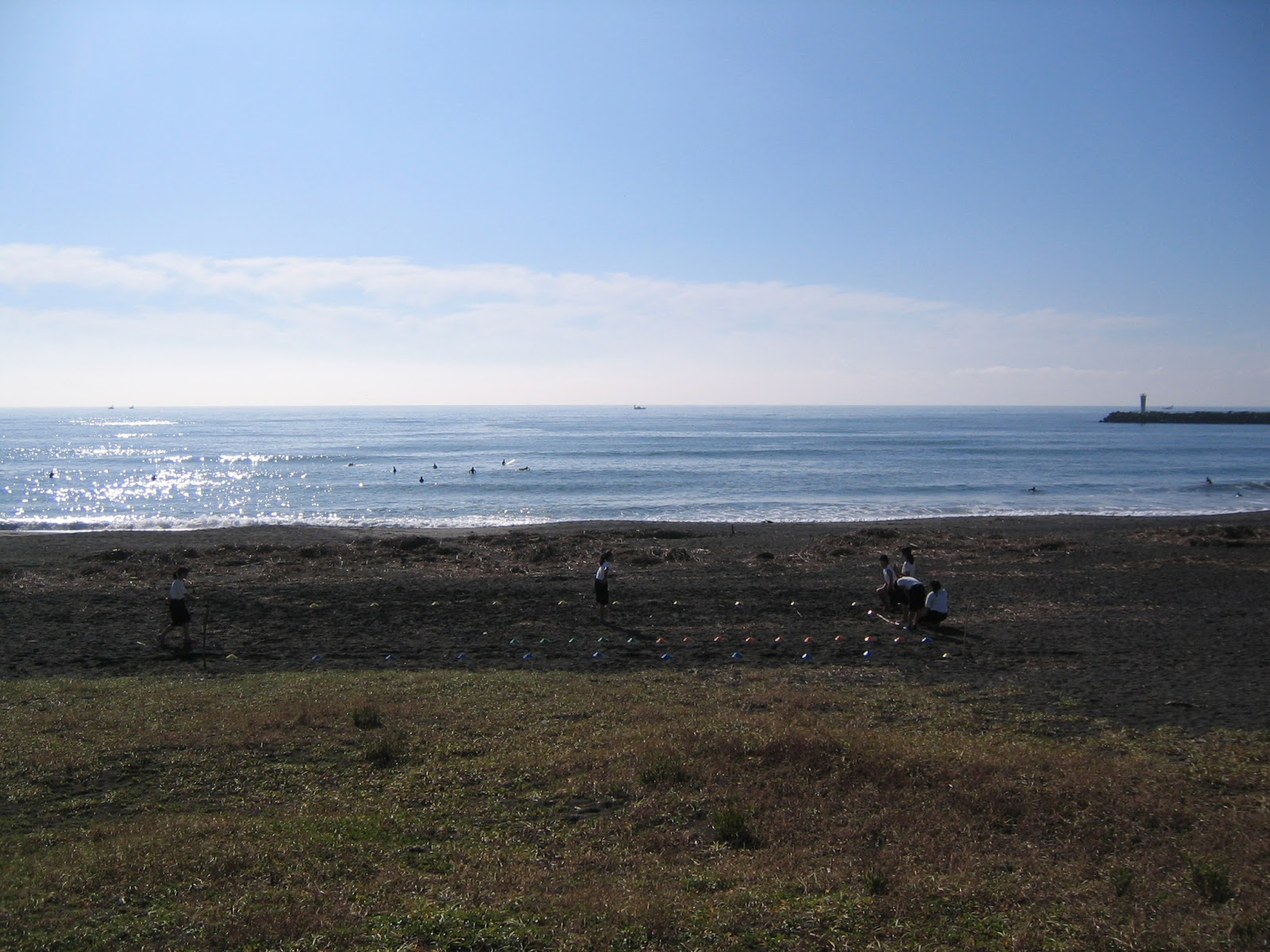
The Oiso Beach now.
 Surfers congregate all the year round including winter.
😄

When in 1945 Japan was defeated in the World War II, the GHQ of the Allied Forces ordered to dismantle the wealth of such stately homes. Since then, the owners of these real estates have been companies listed in the first section of Tokyo Stock Exchange. Now in the 21st century, the corporations could not find success to use the places as restaurant, banquet houses, or learning centers for their employees. Not many C-types could maintain their Oiso residence consists of historical buildings of the celebrities 100 years ago. When the area of historical value started to show apparent neglect, ordinary people of Oiso, together with the concerned citizens for history and art, negotiated with the local and national governments to preserve the area. The result is the 2017 cabinet decision to create National Meiji Memorial Garden of Oiso 明治記念大磯邸園. The place was planned to be partially open in July 2020 ...


Seibu Group tried to use the front building
 of the mansion owned by
 the first Japanese modern PM, Hirobumi Ito
伊藤博文,
 as a Chinese restaurant.
 Their business apparently failed …


Next week, I start to tell you my adventure with those “forests” of ex-PMs in Oiso. I found their idea is like that of Lord of Hikone and Prince Fushimi-no-miya who were the owner of the forest now in Hotel New Ohtani of Tokyo (; my post on September 20, 2019). But theirs in Oiso are certainly of the age of industrialization, and with the sad memory of Korea-Japan relationship … Please stay tuned.


If you find environmental issues in Kanagawa Prefecture, please make a contact with Kanagawa Natural Environment Conservation Center 神奈川県自然環境保全センター

657 Nanasawa, Atsugi City, 243-0121
〒243-0121 厚木市七沢657
Phone: 046-248-0323
You can send an enquiry to them by clicking the bottom line of their homepage at http://www.pref.kanagawa.jp/div/1644/