Showing posts with label Gardening. Show all posts

Friday, April 15, 2016

In search for lost butterflies: Yokohama Citizen Forestry Guideline and Conservation / Management Plan 横浜市森づくりガイドラインと保全管理計画


The creation of the Niiharu Conservation and Management Plan 新治保全管理計画 was, it seems to me, a kind of a pilot project in Yokohama Green Up Plan. In Yokohama Citizen ForestryGuideline and Conservation / Management Plan 横浜市森づくりガイドラインと保全管理計画, they discuss the experience when Niiharu was creating the Conservation and Mangement Plan. Oiwake and Yasashi Citizen Forests are also the topic in the Guideline so that these north forests in Yokohama are the pioneers of forest management with strong volunteer participation in Yokohama. Measuring the success in terms of biodiversity, the pilot forests are very successful and no wonder the replication continues now with the other forests in Yokohama.


Could you figure out a female pheasant in the middle?
It’s a wild bird I found the other day
in a farm land in Niiharu.

The Guideline consists of 3 parts. First they introduce us the overall feature of greenery in Yokohama and the necessity of a tailor-made Conservation and Management Plan (CMP). Then, the Guideline explains the method to create a CMP, really in step-by-step. The third part is a very practical and comprehensive guide for actual forestry works based on ecology for each of the environments the forests in Yokohama contain, including the area immediately next to the housing development. The third section of the Guideline was the most popular among the budding forest volunteers who attended the introductory forestry course last fall. It leaded to excited discussions about obtaining the license for chainsaws. Anyway, before unleashing our inner desire to wield a chainsaw, we need CMP. “Don’t cut trees randomly!” Yeah.


The trees are coppiced in Maruyama of Niiharu
last February … though they are still too tall.

The Guideline tells us as of 2012, only 29.8% (12,972ha) of Yokohama is covered by green where 58% of it are forests. The 2000 research done by the Ministry of the Environment found only 0.2% of Yokohama’s greenery is the original biota of the area, i.e. 99.8% of 12,972ha is Satoyama with very long-term human interventions. For Yokohama, Satoyama provides more biodiversity so that the key to achieve rich environment in the city is slow and controlled human intervention. In the 21st century urban life, people do not have immediate incentive to recreate traditional Satoyama life. In order to attain environmentally friendly Yokohama, it is necessary for the urbanites to have a CMP with a clearly defined image for the future of a forest in 20 years ahead. The future vision is the first thing CMP shall have. For Niiharu’s case, it is the Niiharu Charter. Second, when we visualize scenery of Forest A in 2035 Yokohama, it will have a community of living creatures that is for a target vegetation in the CMP. To make the goal realistic, we have to think the current condition of the forest with respect to its geology, biology, and relationship with the urban human life. Inevitably we cannot ignore the history between the place and the humans in addition to the natural biota of the area. Adding possible resources the management can mobilize now, the objective becomes very specific for a small zone within Forest A. As one forest can have numerous zones, it will also have a variety of target vegetation. Finally, in order to achieve a target by the volunteers who are basically city dwellers without previous experience in forestry, people do need step-by-step instructions for the job in terms of timing, the method of intervention, resource allocation, and monitoring and evaluation. Moreover, if a forest has many zones with different targets, the work required for each aim will differ. It is the reason why we have a bulky volume for Niiharu Conservation and Management Plan with detailed work plans for dissected zones with specific target vegetation each.


Within a forest, Niiharu hides many large cherry trees.
People were picnicking under the flowering trees.

I guess it is probably something of “lessons learned” after rampant deforestation and impoverished urban environment in the decades of almost unchecked housing development … The Guideline emphasizes the importance of continuous monitoring and evaluation by the citizen forestry. All the tailored CMPs shall have indicator fauna and/or flora for target vegetation each that tell(s) volunteers our work has achieved an original objective, and we will maintain the environment as such in perpetuity. Here fauna includes urbanites who visit the forest for weekend relaxation. The forest volunteers are expected to watch continuously and carefully the soil, the winds, the sunshine, the composition of plant / animal community, and the usage by visitors in the forest. The information from monitoring will be evaluated among all the concerned parties promptly to be utilized for a timely modification in coordinated activities. I realized why the lecturers in the Introductory for Forest Volunteers in Yokohama emphasized the forte of volunteers … as detailed and continuous eyes of the protectors of forest. When we consider the glacial pace of eternally understaffed bureaucracy, and the vegetation could be in threat of bulldozers any time, it would be effective to station willing people who care continuous human cohabitation with the terroir. Otherwise … I am shocked to know beautiful sasakia charonda that was so familiar when I was in kindergarten is now near extinct in my home city. The caterpillars eat leaves of celtis sinensis and the adults drink sap from quercus acutissima and quercus serrata. All the trees are of Satoyama, and they were destroyed massively for houses and condos … The absolutely practical Guideline recommends not to make sasakia charonda as an indicator for volunteer activities, but choose hestina persimilis japonica instead. Sad. Very sad.


Table manner of a bird of prey

After listing the necessary contents in a CMP, the Guideline talks how to make a CMP. Though the process explained is in detail, the summary is simple: coordination. In order for a CMP to be useful for a forest, everybody who engages in conservation and management understands and consents with the contents. The Guideline says a CMP must be an agreement from the beginning among the people who care the forest. So, during the course of drafting a CMP, people must decide who does what, and an institutionalized way to harmonize the activities after the CMP becomes operational. It is a kind of natural for a council to be born. At the beginning the parties who have a stake for the forest meet regularly to draft the CMP. During the discussion the division of labor gets clearer. People could imagine possible contingencies in a practical sense, and arrange the way how to deal with probable “matters.” What if when the Lovers of the Forest realizes that a work is more dangerous than it is expected in the CMP? Let’s make such incidents to be in the possible agenda for the council meeting. Bounty Community Association may spot strangers who could be thieves for the area. Well, we establish lines of communication for the issue to be informed swiftly among the council members and the police. How about a new task that is not in the CMP but realized as necessary later? We predetermine how to deal with such cases before the CMP becomes operational. Hey, who’s gonna coordinate all of these? The Guideline recommends to choosing somebody who has a good communication skill with broader basic knowledge for the forest, rather than a geeky expert. (Wooo …) The Guideline shows us an interesting experience with the Niiharu’s CMP. I’ll tell you in my next post how my senior volunteers did it.


Niiharu Elementary and Umeda River in early spring.
It’s a territory of the Lovers of Waterside of
Ipponbashi Bridge Medaka Plaza.

Oh, by the way, as of April 3, there remain only 3 logs of 20m long Japanese cypress and chamaecyparis pisifera in the Mukebara of the Niiharu Citizen Forest. We are still working as a human crane. My BMI is improving. Yayyyyyyy!


Remaining 3


The City Office who’s in charge of execution of Green-up Plan is

Yokohama Municipal Government Creative Environment Policy Bureau 横浜市環境創造局
Phone: 045-671-2891
FAX: 045-641-3490
http://www.city.yokohama.lg.jp/kankyo/


Friday, April 8, 2016

The Soil for Mantle Vegetation: Yokohama Green Up Plan


The Citizen Forests Family lives in a village of city planning in Yokohama. The city’s policy started from 1973 Urban Space Conservation (National) Act 都市緑地法 and the City Ordinance for Creating and Nurturing Green Environment 緑の環境をつくり育てる条例. A year before, in 1972, the Family started with 4 members, Iijima 飯島, Kamigoh 上郷, Shimonagaya 下永谷, and Miho 三保. So, Yokohama Citizen Forest was more or less born with the trend of national development policy. Then, around the turn of the century when the issues of sustainable development started to take the center stage for municipal policy with the Master Plan 横浜市都市計画マスタープラン, the Citizen Forests Family was allowed to have a distinctive place in the town. First in 2005 the Family was given a room in the Basic Plan for Water and Greenery 横浜市水と緑の基本計画. Then with the introduction of Green Tax in 2009, the Forests are allocated a large room within the Yokohama Green Up Plan みどりアップ計画. Now the policy village Green Up Plan lives has newly moved geeks such as Future City Initiative 環境未来都市構想 for alternative energy generation and fuel cell vehicles, funded by the Cabinet Office of Japan, 3R! Plan ヨコハマ3R夢!プラン for aggressive waste recycling, and Yokohama b Plan 生物多様性横浜行動計画 for biodiversity promotion in line with UNCBD. Among fashionable, cosmopolitan, and state-of-the-art neighbors, our Forests remain determinedly local. J

The planned site for the new city office in Minato-mirai Area.
There will be a skyscraper in 2020.
A fuel cell station near Zoorasia

In the town of the 21st century city planning, the forests stay very close to us from the beginning. In addition to the landlords, it seems to me some Forest Volunteers are veteran of more than 20 years of experience in Niiharu. (Niiharu Citizen Forest has entered its 16th year in March 2016.) As a municipal policy formation, Yokohama Green Up Plan and Green Tax scheme include a strong component of citizenry. Green Up Plan has a policy formulation / monitoring / evaluation body, called Citizen Council for Promotion of Greenery 市民推進会議 whose members are dignitaries from the leaders of Lovers of Forest Volunteers, academia, the Chamber of Commerce, and JA, in addition to the career officials from the city. They have been engaging in the Green Up Plan well before 2009. Although they are not “elected” officials, they represent the voices of their constituencies, and annually turn over the post according to the business of their home organization. Moreover, they do not act like the 19th century gas-business people in Manchester: their voice for the management of Green Tax revenue has a strong support among Yokohama locals. In the surveydone by the city in 2013, 93% of residents and 91.3% of corporations agree with the goings of the Yokohama Green Up Plan. Even about green tax burden, 74.4% of individual taxpayers and 66.7% of corporate tax bearers support the arrangement. At least till 2018, the Green Up Plan has a solid ground. The policy received a prize from Parks and Open Space Association of Japan in October last year.

Greenery in town

The Green Up Plan has 3 Outcomes as a policy. The first one is to protect the forests in the city to be loved by the citizens. The second Outcome is to make the business of agriculture thrived and loved in the city that will protect the agricultural greenery against the march of urban development. Bounty Community Plan with Associations for Bounty Community is a project for Outcome 2. The third Outcome is to make the greenspace familiar among city dwellers through creating gardens in the downtown area. In the budget allocation for the first Plan, the second and the third Outcomes received 9% each of the money. The lion’s share of the gold went to the forests. The money Green Up Plan can use comes from Green Tax, general fund of the city, grants from the national government, and the municipal bond. Among those sources, Green Tax is strictly earmarked for the projects exclusively listed in the Green Up Plan, and managed in the special fund for Green Up Plan 緑の保全及び創造に資する事業の充実を図るための基金. Green Up “Special” lists the projects for securing forests and agricultural land, for quality improvement of the greenery, and for supporting citizen participation in greenery management, i.e. volunteering and educational events.  Observing the activities in Niiharu Forest, I think forests receive lots of pecuniary help from the Plan for sure.

Jike’s Visitor’s Center which was spruced up
during the first Green Up Plan.
Increasing allotment area is one of the outputs
the projects in Outcome 2 aiming for.
Though, the attainment of the target was 78%
in the first Plan which was lower than
any other projects for Outcome 1.

The first Green Up Plan was for FY 2009-2013. In June 2014, the Citizen Council for Promotion of Greenery published their evaluation about the First Plan. According to the Evaluation Report, the first Plan managed to secure 527.2 ha of greenery, which was 47% of the Outcome 1 target. As an absolute acreage it may not much, but it slowed the speed of deforestation in the city from 47 ha per year during 2004-2008 to 14 ha in 2009-2013. Out of 527 ha, 125 ha was bought by the city responding to the call for help from the landlords facing inheritance tax issues. This 125 ha is now permanently protected forest… Japan is really an aging society … During the first 5 years, total of 324 volunteers received forestry training, which exceeded the target number of 300, and 24,000 people participated in the seminars and fun events of environmental education organized by colleges and libraries with the fund from the Green Tax. Money. Yeah, the total expenditure used for the 5 years of the first Green Up Plan was about 50 billion yen. (Wow!) Out of the pot, more than 40 billion yen was spent for securing the forests within the city. For Outcome 1, about 6.3 billion yen was used for supporting volunteer activity in the forests, and 53 million yen was for educational activities. From the revenue of Green Tax, the Outcome 1 of 2009-2013 received more than 24.5 billion yen, and Outcome 2 and 3 got about 2 billion. Still, the Special Fund kept some change, and the projected total budget was not used up. The ratio of budget implementation ended with 85%, and the average achievement of each target within the first Plan was slightly less than 100%. It says something about the difficulty to get things done with land and environment …


A day in a corner of the city …

The second Green Up Plan of 2014-2018 is an continuation from the First with smaller budget of 48 billion yen where Green Tax revenue covers 13 billion. This time Outcome 2 emphasizes more on reducing food mileage among urbanites (i.e. promoting local ag-business), and Outcome 3 encourages downtown folks to join gardening activities in the city center. Having said that, 76% of 48 billion is allocated to Outcome 1, whereas Outcome 2 receives 8% and Outcome 3 will have 16%. 67% of the second Green Up Plan budget is distributed to secure the land (purchase, tax treatment, etc). In practical term, the environment policy is about “terroir,” yeah. At the moment, Yokohama Green Tax is a temporary arrangement till 2018. So, we’ll see how the things will turn out within a year or so.


Terroir … Oui, even in a same cherry tree,
one branch with more sunshine flowers first …
But why the top of the tree with more sunshine
does not open till the end?

The prize the Green Up Plan received last year is originated from 6.3 billion yen for supporting volunteer activities. The training sessions for urbanites to be knowledgeable in forestry are one of those sponsorships the Plan provides. Another assistance of the Green Up Plan arranges a practical guideline for non-professionals to manage the forests in Yokohama. For the purpose, the Plan emphasized the importance of formulating a detailed Conservation and Management Plan (; let’s call it CMP). Yes, that wonky gardening tome used in Niiharu. During the first Plan period, 62 million yen was used to create CMP, customized for 13 Citizen Forests each. As of the end of 2013, the forests in Yokohama with a CMP are Oiwake 追分, Yasashi 矢指, Niiharu 新治, Miho 三保, Wuethrich ウィトリッヒ, Minami-Honjuku 南本宿, Segami 瀬上, Shimonagaya 下永谷, Nakata-Miyanodai 中田宮ノ台, Fukaya 深谷, Araizawa 荒井沢, Nature Sanctuary 横浜自然観察, and Shinbashi 新橋. Their experience for creating a tailored management guide was summarized in a manual called Yokohama Citizen Forestry Guideline and Conservation / Management Plan 横浜市森づくりガイドラインと保全管理計画. It is a detailed how-to guide when somebody wants to create an individualized CMP for a forest. In the second Green Up Plan, the making of Conservation and Management Plan is continuing in the other forests, and the first 13 forests are engaging in M&E activity based on the CMP. In the next post, I’ll report you what the Guideline says.


Actually, flowers for aucuba japonica
are chic, and cute.


The City Office who’s in charge of execution of Green-up Plan is

Yokohama Municipal Government Creative Environment Policy Bureau 横浜市環境創造局
Phone: 045-671-2891
FAX: 045-641-3490
http://www.city.yokohama.lg.jp/kankyo/


Friday, February 26, 2016

It’s not Big Sur, but … A rainy weekend in Niiharu Citizen Forest


Strictly speaking, Niiharu Forest consists of two (a kind of) parks: one is Niiharu Citizen Forest 新治市民の森 that is not a “Park” as defined by the Urban Park Act of Japan 都市公園法, and another is Niiharu Satoyama Park 新治里山公園 where Okutsu House stands. In total, the area has more than 70ha in size, and preserves rich biodiversity in the middle of Tokyo Metropolitan Area. In order to celebrate 2011 that was the 10th anniversary of the opening of the Niiharu Citizen Forest, the civil society who volunteer within the Forest, the City of Yokohama, and academic communities worked together to articulate a more systematized plan for the Forest in the spirit of Niiharu Charter. In March 2011, it became Niiharu Conservation and Management Plan 新治保全管理計画 that details long-term Outcome and Targets of nature conservation program in the Forest starting from the baseline condition of the area in 2010.


Er, I have not conquered yet in this blog the Rokkoku-toge Hiking Trail from Kanazawa Bunko to the City of Kamakura. I promise I will do that soon and report you what I find there. It will fulfill my original ambition to visit all the Citizen Forests in Yokohama! Meanwhile, as some of my peers told me they wanted to know more about Yokohama’s Citizen Forest scheme (in English), I decided to do fixed-point observations for the workings of civil societies in Niiharu. I happen to live not far from Niiharu Forest, and the place is one of the two largest focal areas for the City’s Green-up forestry policy. (Another is around the Yokohama Nature Sanctuary.) I hope you like this plan. I try to maintain once in a week posting … let me see how I can manage.


Niiharu Conservation and Management Plan is really a good and fun read to know the big picture and how-tos of community-based Niiharu forestry. It is also a perfect reference book for gardening if you have a large forest around Tokyo, I guess. Using this plan, the landowning farmers, 5 volunteer organizations and the City do their daily work that is often a part of very long-term (like for 10 to 30 years) projects. I have joined one of the volunteer organization, Lovers of Niiharu Citizen Forest 新治市民の森愛護会. At the time of registration, they gave me a welcome package that includes further detailed information about their activities in Niiharu. It is a very interesting read too. I like their open-door approach. Starting from today’s post, I report (and translate) some of the contents of the Plan and the Info-pack. One sheet of spreadsheet in the package explained what the Lovers did in FY 2014, with weather reports of each activity day. Very interestingly, RAIN or shine, somebody, often about 20 people, attended the volunteer activity in the Forest. The Conservation and Management Plan explains the timing of thinning or mowing, but it never says a stormy day is good for such activities in the Forest. So, I wondered what my seniors did when it was raining heavily. I was lucky enough to know it very quickly. One February weekend, Yokohama was pounded by a freak typhoon like storm with strong winds, thunders and 20C+ temperature. I am certain it was due to El Niño with global warming.


Storm!

The regular activity days for Niiharu Lovers are the 1st and 3rd Saturdays, and the 2nd and 4th Sundays of a month. We meet at Ikebuchi Open Space 池ぶち広場 at 9:00 (April – November), or 9:30 (December – March). The standard forestry activity is till 12:00, but some big ones could take a whole day so we have to bring our lunch to join such fun. There is no quota for attendance. Lovers are also in charge of opening and closing the small gate of the weekend Forest Parking (9:00-17:00). But it does not explain why 20 or so people come under 15+ m/s winds in a weekend morning. The Lovers have 6 sub-clubs (for Charcoal Making, Nature Observation, Farming, Woodworking, Nature Crafts, and Dragonfly Watching) whose activity normally starts after 12:00 of each activity day. Having said that, Woodworking and Nature Crafts Clubs open the Niiharu Forest Atelier にいはる森工房 in Miharashi Open Space みはらし広場 every Sunday and National Holidays for a whole day. The Atelier has its own mission: to think how to utilize timber and other things from the Forest in a modern urban life, and to share the opportunity of such thought process with the surrounding community. Well, this world is huge and there could be people who love to visit the Forest even under a weekend typhoon. So, there is a reason forest volunteers venture into strong winds early weekend morning, and be ready in the Atelier before somebody comes.  Sure, Of course, Why Not?


The parking gate when it is a fine day
Niiharu Forest Atelier when it is a fine day

In that morning, the strong wind blew my umbrella inside several times. The Forest itself howled ominously, whose voice reverberated with my stomach. The rain poured down. The scenery looked very similar to Hiroshige’s White Rain at Shono. Pretty plum flowers were blown off from the branches, and smashed and scattered over the paved roads ... However! When I approached to Ikebuchi Open Space, I could figure out a white chimney smoke coming out. Wow. The huts for Lovers in Ikebuchi Open Space were already warm by a wood-burning stove, and crowded by the volunteers.


Yes, volunteers are coming even if it is a storm!
Wood-burning stove with kettles. Tea?

The way to work in the Forest for the members of Lovers is not like “Today, you do this, you do that.” When it is a fine day, there is a menu of activities scheduled according to the annual calendar that is formulated at the beginning of each fiscal year based on the big picture of the Conservation and Management Plan. You can just come at 9:30, say hello to everybody, and go home if you don’t like to do anything … though, normally it does not happen for the people who bother to come Ikebuchi Open Space deep into the Forest. People select whichever activity they fancy on that day, and join the group for the task. Each activity has a pre-determined volunteer leader (that is arranged by self-recommendation) who is responsible to the procedures and the safety of the group of the day: it’s a serious job. Once you choose to participate in a particular work, you follow the instruction of the leader, which is the fundamental rule. Otherwise, it is very dangerous to work in a forest, you know. However, when it pours, standard forestry works, including patrolling trekking roads, are not done obviously, except for the Atelier. So, in that typhoon day, 5 volunteers who belonged to Woodworking Club and Craft Club gathered at Ikebuchi Hiroba, said hello to everybody, and walked to the Atelier for their regular activities. … Remaining 15? It turned out to be there are lots of things to do when it rains.


Niiharu Forest Atelier in a winter thunder-storm
Volunteers do woodworking from Niiharu woods,
rain or shine.
Their work is very careful, and fun!


The bamboo chips are …

polished before crafted.
Lots of products from the Forest.
Those black lacquered vases of bamboos in the left
are must-haves for students of traditional Ikebana.

November to February is the time when trees do not suck up much water from the ground. Especially for coppicing trees, it is a high-season of thinning without the fear of much damage. The 21st century Japanese forestry combines good’ol edged-tools and high-powered chainsaws. All devises require scrupulous maintenance works for safety, and meticulous handworks are specialty of Japanese. Stormy weekend morning is ideal for concentrating such tasks. Without anybody to ask, the gathered volunteers scattered within the complex of huts in Ikebuchi Open Space, and started to do the tasks each set aside for rainy days. “Is the fuel for chainsaws OK?” “How about the chainsaws themselves?” “It would be handy to have the place for this tool to be stored in this way. I’ll make the proper arrangement … yes, paper clips can be utilized for that …” “I’m sorting the mess in the storage.” “These hoes need to be sharpened. I do it.” “The handle of the hatchet is needed to be replaced. This piece of wood has ideal thickness. Let me see …” “I’ll make sticks out of these bamboo logs. They’ll be good materials for Craft Club to work with …” etc. etc. etc. …


Checking the chainsaws. “Rain? It’s not much!”
“This place is to be sorted in this way.”
Maintenance work for chainsaws
By the way,
this is a chainsaw for bamboos which has fine blades.
This is for woods.
Can you see the difference in the size of blades?
Replacing a handle for a hatchet.
“After doing it, the blade needs a good sharpening …”
Almost done for a new handle!
The new bamboo materials for the Craft Club

My confession. I did not know there really are lots of things to do in a forest even when storm comes. All the members for Lovers of Niiharu engaged in the rainy-day works lively, and indeed happily voluntarily. The howling of the trees in the gale let us focus on our tasks almost in a meditative way …  of Kumbaya. Maybe, when people lived in Satoyama ages ago, the life was like that: when it rains, the community has tons of things to do which cannot be done when it shines. 


I learned
how to build a fire for wood-burning stove!
These logs will be processed for
Woodworking and Craft Clubs.
The weather cleared up in the afternoon. J

Lovers of Niiharu Citizen Forest
Phone/FAX: 045-934-9898 (Japanese only)


Friday, February 5, 2016

Forest Volunteering 101: 横浜森づくりボランティア入門講座体験記


So, Yokohama Citizen Forests need volunteers who can thin the undergrowth in the forests. On the other hand, Yokohama sits next to Tokyo and not many people have experience with even a small gardening. But, natural environment turns out to be essential even for city dwellers, and they can be eager care-givers of neighborhood forests, if they know how. Ideal condition for “Human Development” program, huh?


Yokohama Forest Volunteering 101 started in FY2012. It is a part of seminar series organized by the City with a help from civil society organizations that provide technical experts in urban forestry. Since 2014, the seminar is held once in a year in Niiharu Citizen Forest. The course consists of 3 weekend 9:30-15:00 seminar and practice sessions. Anybody who is 18+ years old and lives/works/studies in Yokohama can participate, free-of charge, provided s/he can attend all 3 days. Although the City organizes many other seminars for Forest volunteerism, this is the only course open to a person who has not started forest volunteering yet. The number of seats is limited at 30 on first-come-first-served basis that could be in full soon after the registration period begins. This fiscal year, for the seminars on October 17, November 14 and November 23, the application was accepted either by email or FAX between September 17 and October 2 at the Support Center for Civic Activity in Environmental Issues that belonged to the City’s Creative Environment Policy Bureau 環境創造局環境活動支援センター (FAX:045-721-6356, email: ks-shiencenter@city.yokohama.jp). 30 Yokohama people of aged 20+, male and female, attended and had a weekend fun. I was one of them. J

A rainy October weekend
in Niiharu

All 3 days were made of a combo of lectures and labo (i.e. forestry volunteering exercises). Lectures in the first two days were held in the Main Room (Hiroma) of the Okutsu House. That was a splendid venue. Although it was either rainy or misty for all three training Saturdays last fall, the pure traditional room with tatami floor was warm and very comforting, or even therapeutic. I learned that in1994 the last patriarch of Okutsu Family rebuilt the house as “a traditional Japanese wooden house standing at least for 100 years without a problem.” The 3m main pillar, Daikoku-bashira 大黒柱, is zelkova, other pillars and liangs are cypress all of which do not have a knot. They were selected carefully from all over Japan. The sliding doors that partition rooms are one-wood panels (I mean, not plywood) from cedars of Akita and Yakushima Island (UNESCO World Heritage site). The carpenters were specialists of Japanese traditional architecture so that they built the Okutsu House with almost no nail. During intermissions, we all spread our legs on comfy cushions and said “If this were my house …” The grandpa of Okutsu Family commercially grew flowers in glasshouses stood on the land where now regular farmers’ Saturday market is held. Mr. Okutsu did not have an heir and donated the estate to the City. Niiharu Park and Citizen Forest were open in March 2000. Mr. Okutsu passed away in the fall of 2000. He was really a person.


Okutsu House
Sculptured window for a storage door
in the Main Room of Okutsu House.
Ideal café table
for intermissions during seminars
The traditional Japanese room is comfortable
with Powerpoint presentations.

The first morning lectures in October started by the people from Creative Environment Policy Bureau explaining Yokohama Green-up Plan and the biota of Yokohama. Then, Ms. Mihoko Yoshitake of NPO NORA introduced us the important and exciting roles of forest volunteers in the Green-up Plan. She is a veteran of civil society participation in Yokohama’s environmental policy. According to her, the 2010 change in national land legislation for agriculture facilitated the rental contracts of farm land, and clarified the role of volunteer organizations in urban forestry. Her story about the early days of forest volunteering in Yokohama was entertaining, but very educational. She pointed out 3 kinds of diversity in a forest of the City. Actors of urban forestry are many; landlords, neighborhood urbanites, hikers, municipalities, etc. with lots of crash of egos. Yokohama is in Japan where original biodiversity is very high so that the living creatures in the forests are various; sun worshippers, light haters, wet-soil lovers, drier-preferred, and don’t-care. This is the world of Darwinian “the survival of the fittest” in microenvironment. Finally, the place is so near to Tokyo and Kamakura that the area has rich geography and tradition; Tama Hills, Miura Peninsula, Sagami Plane, the yesteryear’s land usage, an incessant urbanization, legends and fairly-tales, village custom … come to think of it, we are in the birthplace of Mega-cities in the post-WW II era. Coordination Saves (Forests') Lives.  (“Coordination, coordination, coordination!”) The role of volunteers in Green-up Plan is to be facilitators and participants in planning, doing, monitoring and evaluation (“Project Cycle Management”) of urban forestry, with (“this is important”) finesse in a community. Hmmmmmmmmmm.


The second morning lectures in November discussed first the Guide Line for ForestCreation and Management 横浜市森づくりガイドラインと保全管理計画. The overall concept of the Guide Line is to aid a project cycle by volunteer organizations in a forest. First, the research about a forest is to be done (What are living inside? Who are coming to the forest for what? Is there any conflict of interest? …), and the result of the study must be shared by all the actors connected to the forest. Next, everybody is to agree with “the future of the forest,” zoning of the area, and the ways to manage the forest. Then, set a (short-term) target that is understood by all the participants: for this, the consideration for historical approach to the land management and the result of hearings from community elders should be shared by all. After all of these preparations, actual forest management activities begin, with continuous monitoring by all the members in forest management. The works in a forest are also subject to periodic evaluations, and if necessary changes in target and methodology are introduced for reaching to “the future of the forest.”


It seems to me the reason why the Guide Line takes this approach is from the experience in early days of forest volunteerism in Yokohama. It is funny when urbanites found the joy of forestry, the most exciting thing was to cut trees and clear vegetation no matter what (and lots of beer afterword), which left the mess on the ground … is it some kind of karmic thing of humans? Anyway, now many have realized it was not productive for peaceful neighborhood. In Green-up Program, the activities of volunteers should consider 5W2H always:
  • Why must it be done? To make the hiking road nice? To facilitate natural succession? …
  • What should be done for the objective? Research? Thinning? Clearing? …
  • When will we do it? E.g. Is it the right timing of work for nurturing the reproduction of owls? …
  • Where do we work? This particular point, or the entire area? …
  • Who will do it? Isn’t it better to leave it for professional? …
  • How will we do it? Do we use chainsaws? How many of us do it? What is the risk in activities? …
  • How long do we do it? For 1 hour minimizing the noise for raccoons? For several years? …

In this area of Niiharu, forest management is done by
Lovers of Niiharu Forest and local elementary schools.

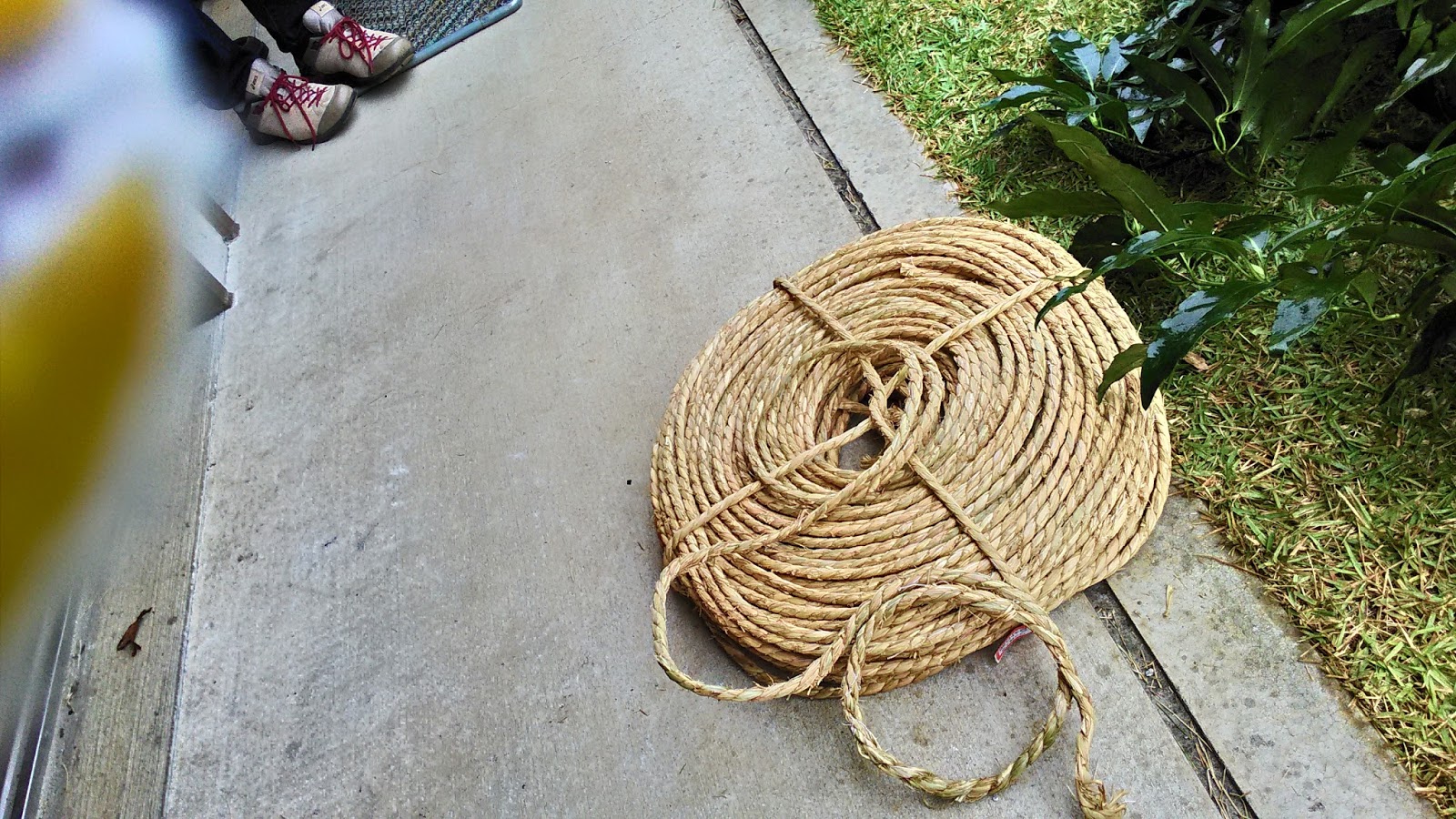
As each forest has its own background, every work plan will be order-made. There is a strong merit of attentive and continuous works by volunteers coming from the neighborhood. Having said that, volunteers need to be well-versed in the management of the forest, intellectually and technically. So, the 101 seminar includes several sessions for very practical aspects of forest works. This part of the seminar was instructed by Mr. Ken’ichiro Jinbo of Kanoko Kankyo Produce Co., consisting of lectures about the basics of works in forest, such as about safe attire, about the necessary tools for works, where to procure poison removers against hornet stings (; it’s sold at Tokyu Hands), simulation technique for predicting dangers during forest works, and so on. We also had labos in the Niiharu Forest to learn the methodology of preliminary study / monitoring of forest sections. There was an exercise for the usage of sickles and ropes, a kind of scout training but specialized in forestry. I learned leaving weeded sasa bamboos or thinned trees on the ground could be harmful when the objective of a work is to enhance the biodiversity of the location. As the darkness of the ground is the main culprit making the neglected Yokohama forests less diverse, the work is to let the sunshine coming to the soil. If we leave the debris in the forest, since it is a humid city, mildews, molds, etc. can prosper at the “cleared” place and no light reaches to the ground. No mission accomplished, or worse: diseases can spread from there. After weeding and thinning, we have to carry out the cut branches and undergrowth to a designated compost heap. Hence rope works, such as Otoko-musubi, become very important.


Mr. volunteer lecturer from Lovers of Niiharu introduced
 us this part of the Forest as a spot being monitored
after weeding 3 years ago.
The work continues for several more years …
Monitoring exercise sheet I’ve done
with the field in the Forest
Quiz: Which rake is for forest works?
Answer: None.
All of them will destroy the dormant flora in the soil.
The best tool to rake forest floors after weeding is
a piece of wood.
How to use a traditional Japanese machete
We use this rope for putting together cut sasa bamboos.
Once the grasses are arranged
in this way, it is easy to carry.
Now, our turn!

The third day started with an actual exercise on a slope near the C-5 entrance ofNiiharu Forest. For about 2.5 hours, we worked to weed sasa bamboos and other bushes with Japanese machete and scissors. The objective of the exercise was to create a space for anemone nikoensis and anemone flaccida whose seeds were dormant in the soil due to the overgrown sasa bamboos. “Let there be light!” During the labo, the instructors taught us the practical surveillance methodology, (“Such bushes could hold wasps’ nest. So, first check the place gently if dangerous creatures come out.” “Do you think the distance between the working place and the creek below is enough?” …), proper work postures (“Always draw back your leg which is in the direction of your machete movement” …), safe positioning (“Start from the bottom, then go up gradually.” “Maintain enough space between team members to avoid any injury” …), division of labor (“At least one of the team members must act as a sentry to warn members to keep safe distance, possible fallen objects, etc” …), how to weed (“the roots of sasa bamboos are to be disrupted as much as possible by inserting the machete in this way.” “Cut the stumps to the subterranean level. The hikers could stumble if a remnant pokes out.” …) It was a November day of misty cold rain … and such a fun! I was amused the concentration came naturally for all of us. 2.5 hours were so short, and at the end we admired the cleared space from many directions, imagining a new flower meadow next spring. In Kanagawa Prefecture, Hakone (National Park) has the richest biodiversity. Second position is held by Tanzawa Mountains (Quasi-national Park). The third one is (surprise, surprise) the area around Niiharu Forest. Well, people are really taking care of these places, men.


Our working site is over there.
First, check the safety of the place.
Before
After
”Let’s do ropes!”
After the work,
there was a lesson to care the tools.
“Grindstones are to be soaked
in water overnight.”

The seminar was concluded with a networking session between the seminar participants and forest volunteer organizations. Kanazawa Mori-dakusan no Kai かなざわ森沢山の会 told us their activities in collaboration with Kanazawa Zoo and Botanical Garden. Japan Bamboo Fun Club is now piloting a quasi-business scheme to develop new health foods using very young tip of bamboos. (“Unlike a standard forest, bamboo forests require annual thinning. We have to think how to dispose regularly occurring tons of deforested bamboos, in the most efficient and eco-friendly way.”) Lovers of Niiharu Forest work with 3 other volunteer organizations and surrounding communities active in Niiharu Park and Niiharu Citizen Forest, according to the Niiharu Forest Preservation and Management Plan 新治市民の森保全管理計画. Telling you the truth, I did not expect much from the seminar before attending. “Well, it’s organized by boring bureaucrats …” WRONG. The people from the City were very knowledgeable and good teachers. The lecturers and instructors from the civil society had wealth of information and experience to restore the biodiversity in the City. My fellow participants, comrades, and people from forest volunteer organizations were very friendly and eager to enjoy the forest. I had wonderful rainy weekends last fall. J


Powerpoint everywhere
Networking with
chocolates and rice crackers


The City Office who’s in charge of execution of Green-up Plan is

Yokohama Municipal Government Creative Environment Policy Bureau 横浜市環境創造局
Phone: 045-671-2891
FAX: 045-641-3490
http://www.city.yokohama.lg.jp/kankyo/