Showing posts with label June. Show all posts

Sunday, June 16, 2024

Hydrangea


Hydrangea macrophylla is Japanese endemic species. The original species is lacecap hydrangea we can easily find in Kanagawa’s coast area. There are several theories how the Japanese lacecap flower was introduced to European Court Society. Though, the established story is it was during the 17th century. From the Society the flower spread world-wide and received numerous selective breeding. Now the garden variety would have more than 2000 kinds and decorating our garden.

Lacecap hydrangea is casually decorating
a strolling path in Hayama Town.

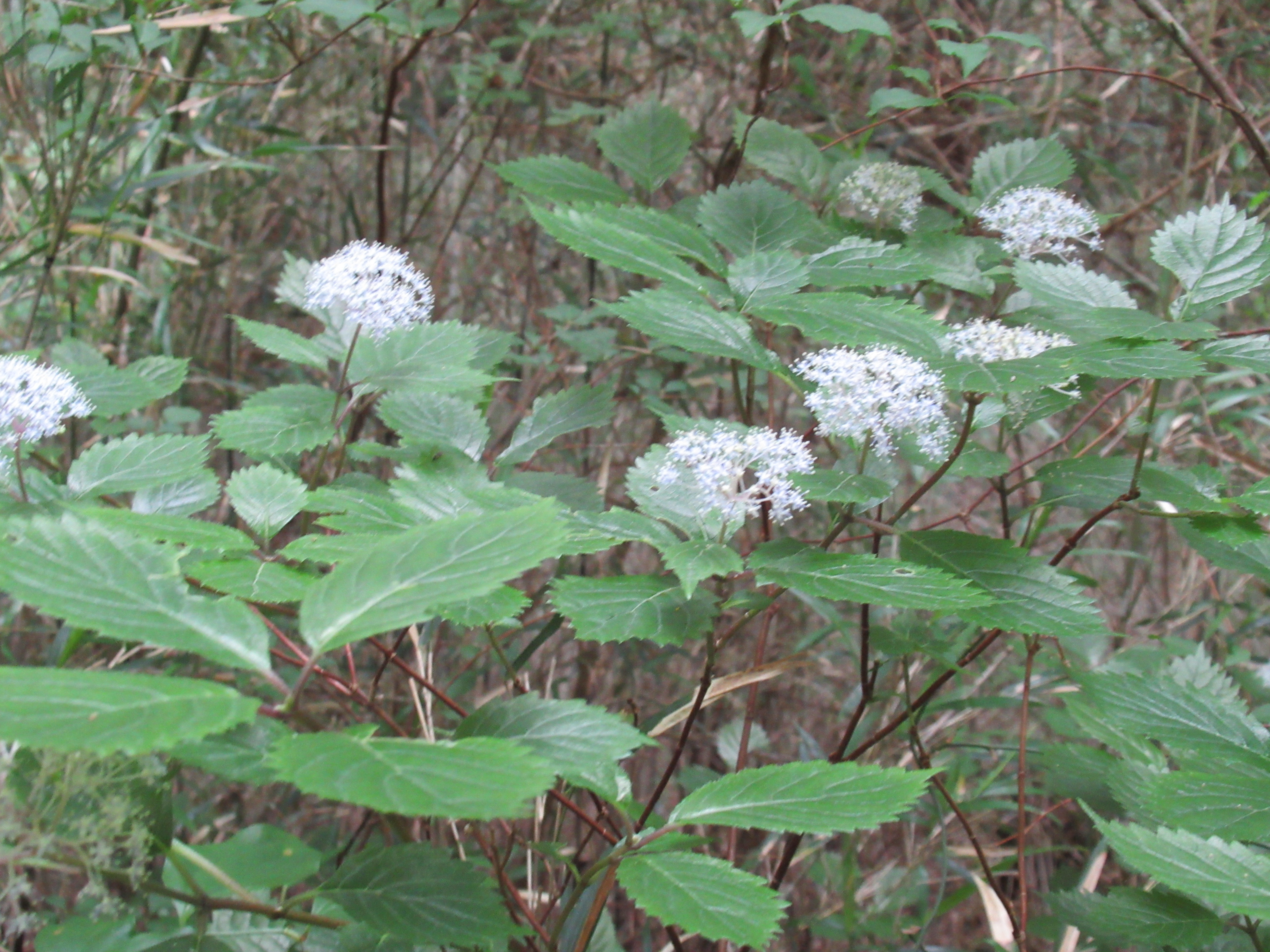
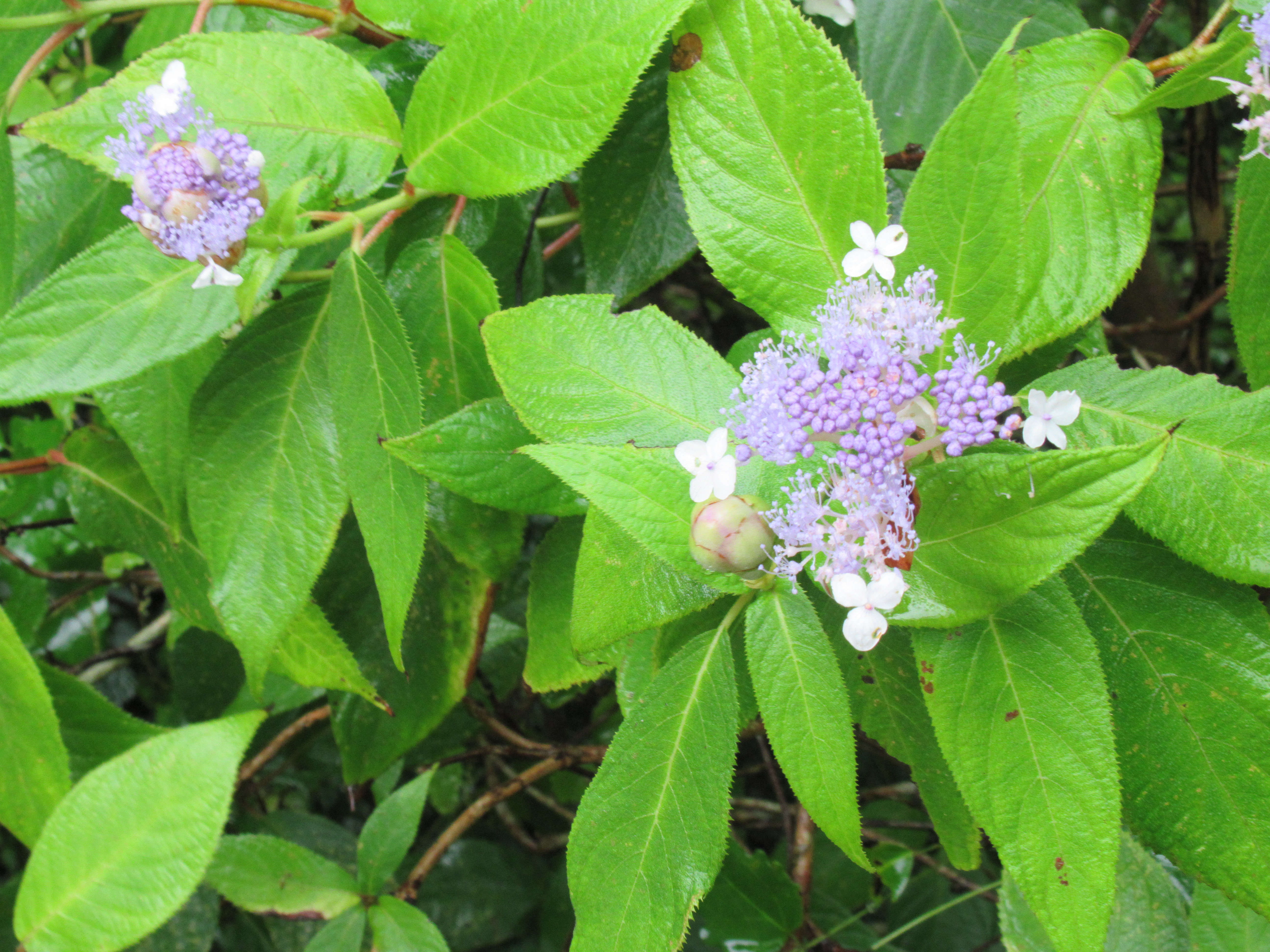
In more mountainous area of Kanagawa, we have also the other kinds of wild hydrangea, like
Hydrangea involucrata Siebold, in Tanzawa.
Hydrangea serrata, aka Tea of Heaven, in Hakone.
Hydrangea hirta, in Hakone.

They are also very attractive. Japan has seasonal rainy season between spring and summer. During these wet days, hydrangea is THE flower occupying the center stage of our psyche. In suburbs Yokohama, we can find many varieties here and there in our neighborhood gardens. Like


Recently, one of my friends told me hydrangea had scent. Really? At least ubiquitous hydrangea in my neighborhood does not assert itself in this way, unlike morning roses. I tried to find a scent of hydrangea. The flashy “flower” part of hydrangea is sterile sepals. The fertile part is in the middle surrounded by sepals. Thinking the role of flowers for seeds, and the scent is to attract pollinators to carry pollens to pistils, I surmise the fragrance of hydrangea would be from the center part. I stick my nose into the center of the above flowers, and … could not smell it. I continued my smelling adventure, and finally found delicate aroma from this.


It’s strange. This hydrangea has almost sepals only, i.e. it is a heavily modified variety. Having an attractive smell for sterile parts does not make sense, don’t you think? I guess its faint scent is the result of human intervention … it’s a successful breeding for sure. Later I noticed its smell is the aroma we are surrounded by in a park when it is raining for a June day. A-ha. It’s a calming smell. Quiet park, rain, and slight scent wafting unconsciously into our psych …


Lacecap hydrangea can actually be found in relatively mild climate area of Japanese archipelago, like Kanagawa’s coastal area. Familiar sighting of the flower in our backyard forests might be our local specialty. True, hydrangea is not rose or jasmine. Still, it could be flower of subtle scent in June for Yokohama’s Machado-moment.

The wind, one brilliant day, called 
to my soul with an odor of jasmine.


'In return for the odor of my jasmine, 
I'd like all the odor of your roses.'


'I have no roses; all the flowers 
in my garden are dead.'


'Well then, I'll take the withered petals 
and the yellow leaves and the waters of the fountain.'


the wind left. And I wept. And I said to myself:


'What have you done with the garden that was entrusted to you?'


If you find environmental issues in Kanagawa Prefecture, please make a contact with Kanagawa Natural Environment Conservation Center 神奈川県自然環境保全センター

657 Nanasawa, Atsugi City, 243-0121
〒243-0121 厚木市七沢657
Phone: 046-248-0323

You can send an enquiry to them by clicking the bottom line of their homepage at http://www.pref.kanagawa.jp/div/1644/

Friday, June 11, 2021

Magical Lantern: Campanula punctata


In Yokohama every early summer, around the beginning of rainy season in June, bell-shaped flowers come to bloom along pedestrian ways of greenery. It’s Campanula punctata. I would say they are ubiquitous this time of year. The flower could be one of the first species Japanese kindergarten kids remember their name. At least I think I was one of such babies. They have a very peculiar shape. They have several colors like hydrangea. They have not-so-small flowers. They are easy to learn for novices, you know? They simply are a part of early summer landscape in Yokohama.


During a casual stroll around north forests of Yokohama, we can find many Campanula punctata. Though, once we dive into deeper areas of forest, they disappear, it seems to me. They love sun light, or they may prefer flowering near humans. 😊 Scientifically Japan has known 5 species of Campanula each of which lives in a particular area. “Campanula punctata Lam. var. hondoensis (Kitam.) Ohwi is for more mountainous areas,” etc. I think Yokohama’s is Campanula punctata, but they can change their color along just 50m or so long road. 5m from very deep purple wild Campanula, we encounter white bunch of flowers, and so on. A quick Google search suggests it’s due to very microclimate, such as of soil moisture, of chemical composition of the ground, and the amount of sun light the particular point would receive. It’s something of natural wonder even in very urban environment … Babies love it, naturally.

This and the next are flowering almost side-by-side,
 about 1m apart.

Campanula punctata has several Japanese names. Here in Kanagawa, we call it Hotaru-bukuro ホタルブクロ, meaning “a sachet for firefly.” The season when Campanula flowers appear is the time for fireflies emerge for elegant mating dance. When Japanese field was mainly for rice cultivation, admiring dreamy evening lights of fireflies was seasonal tradition in villages. Kids caught fireflies, kept one bug each in a Campanula flower, and secured the opening with spindly leaves of pine. While they returned home in dark country road, the Campanula punctata could be a petit lantern with magical lights of firefly. One of my senior forest instructors, who presides a nature school for kids in Hakone 箱根, told me when they can have lots of firefly kids can enjoy this traditional game, but “It becomes once in several years adventure these days, you know.” Oh … even in a National Park. One popular solution for such environmental change has been “Buy hundreds of commercial larva of firefly and release them in a stream to prepare for seasonal tourists attraction!” Hmmmm … Though the things have started to change, which is the topic for the next week. Please stay tuned. 😉


By the way, annual firefly season in the forests of north Yokohama is now ending. If it is a normal year, Shikinomori Park 四季の森公園 (my post on June 26, 2020) would hold “Firefly Festival” in the first week or so of June. The event is popular with lots of visitors from all over Metropolis Tokyo. COVID-19 has stopped the fun for these two consecutive years … Can we recover it next year? … In any case, fireflies along Umeda River 梅田川, including in Niiharu 新治, have been fine, COVID or not. 😊


If you find a problem in the greenery of north-half of Yokohama, please make a contact with

Office for the Park Greeneries in the North
北部公園緑地事務所
Yokohama Municipal Government Creative Environment Policy Bureau
横浜市環境創造局
Phone: 045-311-2016
FAX: 045-316-8420