Showing posts with label Wasps. Show all posts

Friday, July 22, 2016

Caution! Dangers in Forests of Yokohama: Wasps, or selfish humans


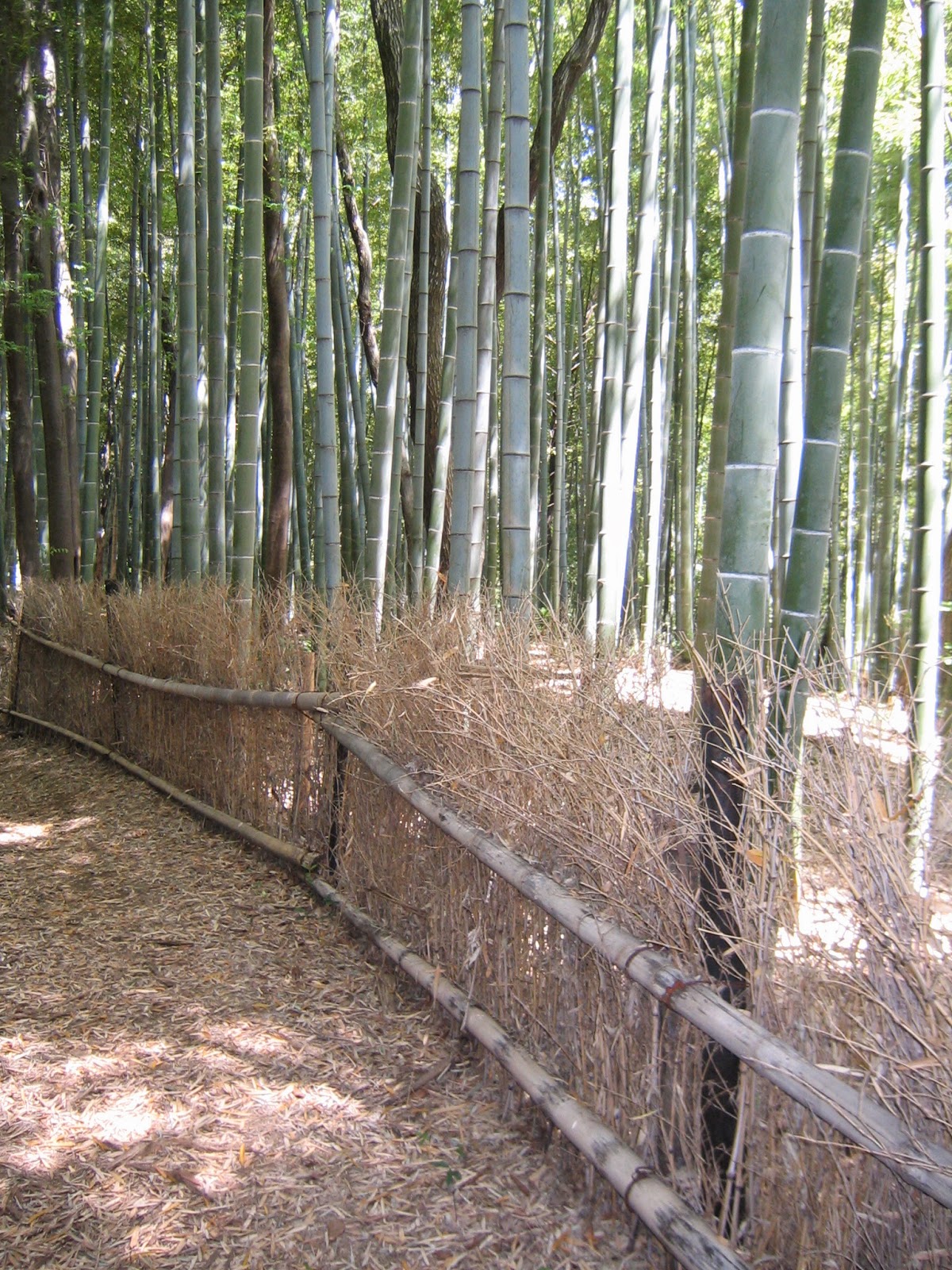
Wasps. The Lovers volunteers thinned the chamaecyparis obtusa and pisifera last March, near Zone C of Niiharu. In the process, we lopped off branches and simply piled them aside in the field in order to make logs easy to be trundled. The cut branches became a huge hedge that looked like a newly built wall from afar. Removing the logs and sweeping the field after the operation were not supposed to take 5 months. It did, in the end. (Er, volunteer work is once in a week, you know …) We completed the task this month, July, which means there was enough time for weeds to spread over the pile of branches. It became an ideal nesting ground for wasps. Woops. First, the neighboring landlord who’s doing farm work next to the pile complained that the spreading weeds started blocking the road he commuted every day. So one activity day in early July, aside from works to load the logs on a truck, the volunteers mowed the weeds invading the road a bit. Then, the menacing buzz came out. Wooooooow. “Get away!” A large tiger-stripe with wings appeared from a hole facing the road, and flying to sentinel around the pile. “Gee, we should have completed this job earlier …” “Anyway, stopgap measures! Return to the office hut to collect a spray insecticide.” July is in the early stage of nest building for wasps. Precaution could work. So, since then during the final phase of the operation, we treaded carefully around the pile of branches. Every time my seniors brought huge spray cans of insecticide whose label said “The range of emission: 10 m.” “10 m, really?” “Let’s do a trial.” “Ready, aim, spray!” “… 5 m, I guess.” “Is it effective?” “Well, better than nothing, I hope.”

An anti-wasp spray and a first-aid box are ready in the field.
Hm, this ad in a drug store says the spray will reach 11 m.
Anyway, we’ve moved all the logs, at last. Yayyyyy!

Basically, getting rid of wasps and other dangerous animals in private land is the job landlord must pay. The thinning operation was done in a private land next to the Citizen Forest, so that the City won’t pay for it. In addition, there is this huge pile of branches and boughs. The farmer who’s commuting every day to the field next to the pile thinks the “hedge” annoyance. The large pile must be disposed promptly as a trash produced in a private property, which could cost something. The amount is too large to be sneaked in household garbage for the City to collect. Disposing branches and other remnants after the forestry in metropolitan Tokyo area is becoming a huge problem. This Niiharu episode is not unique. The economizing landlord told the Lovers, “Please burn the pile.” “Hey, it’s very dangerous to set fire now. Did he ask it to our Chairman?” “Yeah.” “Wooooow.” Humid summer in Yokohama makes it difficult to watch if the fire is controlled. Besides, we are entering the months when the activity of wasps reaches to the max. Setting a fire could trigger “a wasp war.” The idea to deal with this problem became, (1) the Lovers will deal with the pile during winter when the activity of wasps are dormant, and the weeds can be controlled, and (2) the landlord of the thinned area must negotiate with his neighbor to wait until then; any possible cost during the waiting should be the responsibility of the landlord. A first-year newbie of me for Niiharu Lovers is holding my breath how the issue would be settled. The executive office of Lovers must mobilize intricate ability of diplomacy in the Niiharu community … civil-society based forestry has its own peculiar difficulty …

The weeds are approaching to the utility road …
An entrance to wasp nest

So, meanwhile, in this post I list the dangers you may encounter during summer in the forests of Yokohama. The first hazard I have to call your attention is, of course, wasps; in Japanese, Suzumebachi. They can kill you if you are bitten and have an anaphylaxis shock. On average 20 people died every year in Japan due to a wasp attack. Although we can find many “country hedges” made in situ in public and private forests these days, Niiharu Lovers seniors are now critical of this practice. The hedge made in this way is an ideal nesting place for wasps in Japan. “Now, how does the City think of this problem, huh?” The take-away in our episode is, please be careful when you find country hedges in the Forest of Yokohama. When unfortunately you meet one of them, never try to brush them off. Your movement shall be interpreted as a declaration of war for them. You stay calmly still while they are buzzing around you. Eventually, they conclude you are just passing by, and move on. When the coast becomes clear, you can start moving again. For precaution, we can purchase poison remover for about 1000 yen via internet, or in home centers, large drug stores, Tokyu Hands, and other places. This site explains how to use a kit available in Japan (in Japanese). When bitten, according to the advice of Wakayama Prefecture, (1) wash the affected area with running water. (2) Apply the remover to suck out the poison. (3) Apply anti-histamine. (4) See the doctor ASAP. If you are bitten once before, twice bitten could mean death within 15 minutes. Please be careful.

Poison Removers.
I found them in one of the special stores for mountaineering.

The next one which is easy to encounter is rhus javanica var. chinensis, Nurude in Japanese. It was used as poor peoples’ lacquer for wooden dishes. The similarity does not end here. Although it’s not as strong as sumac tree, many people can still react to them. If your toddler innocently touches them, you’d better wash their hand immediately with cold running water, and watch carefully for allergic reaction. If the situation worsens, go to see a doctor. Nurude is a pioneer plant so that harsh conditions of urban forest are a kind of their field. We can find them along a paved road in Yokohama Nature Sanctuary. Please be careful.


Rhus javanica var. chinensis.
The point to identify them is,
watch for the arrangement of leaves and the stems.
They have this orderly leaf-formation
with a kind of leafed stems.
They are very common in Yokohama Citizen Forests.

And of course, poison ivy. Japanese version has its own Latin name, toxicodendron orientale. They are also regulars in the forests of Yokohama. When they are climbing up trees, it is easy to recognize, but the distance can fool our eye. They often hide within the thick undergrowth. We are a sort of surprised to know how big their leaves are when we look at them close-by. It would be easy to touch them without recognizing. Better keeping the trekking road where the undergrowth is clear.


Young poison ivy in Niiharu
And they can hide within the vegetation under the tree.

I also have to mention artaxa subflava and euproctis pseudoconspersa. Actually, they are more common in urban small gardens and tree-lined streets in downtown Yokohama, especially when there are camellias. Their body, both caterpillars and adults, have small but numerous venomous hairs which can trigger allergic reaction for almost anybody. According to the advice from Health and Welfare Bureau of Yokohama, if you are stung by them, (1) wash the affected area with fresh running water, then (2) with the duct tape, try to remove the hairs from the body; never try to sweep them by anything other than strongly sticky tape. When you use your hand to remove them your hand will have reaction. Moreover, their hairs are tiny and light. They are easy to be blown away and inhaled, which could cause internal  allergic response.  (3) Wash the part again with running water. (4) Repeat (1)-(3), until the itches and swelling recede. (5) When the reaction continues or serious, visit the clinic.


Camellias are really common in all over Yokohama.
So, we must be careful for venomous euproctis,
especially during spring and summer.

And for anybody’s fear, there are poisonous snakes. In Japan there are 3 kinds of natives in this category: Japanese pit viper, rhabdophis tigrinus, and protobothrops flavoviridis. In Kanagawa Prefecture, we have the first 2 of them, but rhabdophis tigrinus are living in Tanzawa and Hakone. (Oh, by the way, Tanzawa and Hakone are called Okuyama, which means the mountains beyond Satoyama.) So, when you hike the area in Yokohama, Kamakura, or Miura Peninsula, the only snake business we have to be attentive is for Japanese pit viper. The first thing we must do is NEVER venture into the off–road. Yokohama’s forests have many damp grounds that can be covered by thick vegetation. Those are the places where Mamushi call home. Unless you know the ground really well, it is difficult to identify such sites just by looking. The locals who know the forest inside-out never dare to go inside the spots during spring and summer. Second, the vipers can also come out of their places to the trekking road. Our line of defense is noise. When we walk and make enough human noise in advance, such as sweeping noise by canes as we walk, timid vipers notice we are approaching and leave to avoid encounter. In case you are bitten, try to see the doctor ASAP. This newspaper article last year reported a research that found people running to the clinic for 18 minutes (average) after a viper encounter had a better result in treatment than those waited ambulance to see a doctor. Although running would hasten your heart beat and make the poison to circulate your body faster, laying in a mountain road waiting for emergency rescue makes the matter worse. It’s a matter of life and death, really.


Caution! Vipers are here!
In Niiharu, the left, viper, is dangerous.
But the right, Japanese rat snake, is harmless.
I’ve met rat snakes many times in Niiharu this July.

… But, really, no one knows if we encounter cobras or rattle snakes in the forests of Yokohama. It is an international port town. Currently, 40% of Yokohama’s vegetation is alien species. The poisonous foreign species could easily escape from the Container Terminals. In addition, this is the city more than 3 million urbanites live. Many commuting to overseas and could bring diseases such as Dengue or Zika. So mosquito and other insect repellent should be very useful in the forests of Yokohama. The traditional Japanese mosquito coil is the most popular. They are also effective to fend off common orthorrhapha whose bite can again cause allergic reaction.


An ignited mosquito coil can be portable within this container.
These are high tech version for mosquito coils.
With batteries, some can last 480 hours.
Lots of insect repellent in drug stores
But I think this organic peppermint oil is
the most effective among those repellents.
Caution, based on my experience:
NEVER apply it near your eyes.
I learned firsthand the reason
why it can ward off the insects …
its very minty vapor rapidly evaporates …
I cried, really. +.+
The peppermint oil spray is available
in sports gadget stores.
My peppermint spray. Inside the box is this tiny bottle.

Hmmmmmm … come to think of it, all of these cautions are for humans. Those “pests” must have their reason to cause problem on us … Do you know some temples in Kamakura do not equip mosquito coils or other equipment to kill pests. The monks think killing creatures is anti-Buddha. They use only organic repellents such as strong hot pepper water to be situated in a bottle at the corners. It is our responsibility for that huge pile of branches in Niiharu … In the end humans can be the most tricky to control in the forests in Yokohama, perhaps …


The City Office who’s in charge of execution of Green-up Plan is

Yokohama Municipal Government Creative Environment Policy Bureau 横浜市環境創造局
Phone: 045-671-2891
FAX: 045-641-3490
http://www.city.yokohama.lg.jp/kankyo/


Wednesday, May 6, 2015

Where the wild things are: Miho Citizen Forest 三保市民の森


Miho Citizen Forest 三保市民の森 is located to the west of Niiharu Citizen Forest 新治市民の森. The map is here (in Japanese). Roughly speaking the two forests are separated by 6 campuses of educational institutions and JSAT, a satellite operator. So, the area itself is more of one continuous forest rather than 2 forests divided by housing complex or metropolitan businesses.


If you come to Miho Forest by public transportation, take Kanachu-Buses from Tsurugamine Station 鶴ヶ峰 of Sotetsu Line, or from Nakayama Station 中山 of JR Yokohama Line. There are 2 bus routes to choose. One is Route Naka-53, between Nakayama Station and Tsurugamine Station via Imajuku 今宿. (Mind you, there is another bus service between Nakayama and Turugamine operated by Sotetsu-bus withouht going to Imajuku. This route does not come to Miho Forest Park.) Another is Route Yoko-52, between Nakayama Station and Yokohama Station via Kawaijuku 川井宿 and Tsurugamine. (Come to think of it, if you come from Yokohama Station anyway, this Yoko-52 would be the cheapest option as we don’t have to pay for the fare for the trains ...) When you take those buses to Miho Park from Nakayama Station, find Bus Stop Number 1 in the South Square of the station. In Tsurugamine, find Tsuragmine bus terminal from the North Exit of the station. If you come from Tsurugamine Station, here is the time table. From Nakayama Station, the timetable is this one.

Get off the bus at the bus stop for Miho Citizen Forest 三保市民の森 (Miho Shimin-no-Mori) with a bus-stop shelter. I love its simple and rustic design.

Miho Shimin-no-Mori Stop

Next to the bus stop is a small car park, open only for weekends and holidays, for you coming to the park by car.  To find an entrance of the Forest from here is a bit tricky. From the bus stop, go south a bit, just 10 m or so, then turn right for the first small road.


At the end of the way,


there are 2 tiny roads, One-michi 尾根道 (Ridge Way) and Tani Michi 谷道 (Valley Way), both leading you into the Miho Forest.


We can also come to the Forest from Tokaichiba 十日市場 JR station. Go to Bus Stop #1 in the South Square of Tokaichiba Station. The service runs between Aobadai-chuoh Station 青葉台中央 of Den’entoshi Line and Wakabadai-chuoh 若葉台中央, with Yokohama City Bus Service 23 or Tokyu Bus Route Blue 23. Here are the timetables for the Buses to Wakabadai-chuoh from Tokaichiba Station (as of April 2015). The bus stop for the Forest is Kirigaoka Kohkoh (High School) 霧が丘高校. Find a traffic light named “Kirigaoka Kohkoh.” At the crossing, facing Wakabadai Junior High 若葉台中学 take the road on the left. Keep going to meet a T-crossing. Choose the way on the right which eventually becomes Ridge Way of Miho Citizen Forest.

You can see Wakabadai Junior High from O-14 like this.
The 40.5 ha Park was opened in 1972, spreading over a hillside as one of the biggest remaining forests in the City of Yokohama. The tallest trees of the Park are human planted Cryptomeria japonica, Chamaecyparis obtuse, Chamaecyparis pisifera, and natural Quercus myrsinifolia, Magnolias, and others. Under the canopy are rich colonies of various ferns and Sasa palmatas, etc. In Japan, at this moment, there are about 600 kinds of known ferns. We can find 100 of them here in Miho Forest. This is the Forest of ferns.


Mind you, the network of treks within the park is complicated. There is no circular route of the park, Ridge Way (with numbering O-1 to 15) on the east, and Valley Way (T-1 to T-9) in the west both of which connect to the standard paved roads for the surrounding residential areas.  Ridge Way has 15 exit points colored Pink, some of which give us a clear view of Tanzawa 丹沢 and Mt. Fuji in a fine day.

Er, well, Red, yeah
The points for the Valley Way are 9 colored in blue.


Both Ridge and Valley Ways are popular among local joggers, especially for training to trek-run. These 2 Ways are connected by “Promenades” crisscrossing in the Forest. The point numbering is in orange from P-1 to P25, sometimes with a map of the Forest and benches.


If we choose the trek to the right from the Miho Citizen Forest bus stop, we go into the Valley Way that runs (almost) along the graveled road for cars used by locals.


In the middle of the route there is a source of Umeda River 梅田川, a tributary of Onda River 恩田川 which in turn is a tributary of Tsurumi River 鶴見川. The spring now has a name, Kotori-no-Oasis 小鳥のオアシス (“Oasis for small birds”).


You will find a Way climbing upwards which brings us to the northern tip of the Park.


When you go the way to the left from the Miho Citizen Forest bus stop entrance, it brings you to Ridge Way and the treks within the Park.


Just next to the sign to Ridge Way, there is an ancient road sign indicating the Ridge Way of Miho Forest was once a main road for pilgrims to Aburi Shrine 阿夫利神社 in Oyama Mountain 大山 in Tanzawa. 

Soon on the right, there is Miho-daira 三保平, an open space equipped with picnic benches and toilet.


Toilet
… and drinking water
This is the only toilet in the Forest. From here, you can either proceed to the Ridge Way, or turn right to deep inside. If you choose the direction to Ridge Way and check Yellow Point 5, you may find a small farm land cultivating vegetables. The system of Citizen Forest of Yokohama is a kind of public-private enterprise between the municipality and the landlord. The majority of such small farms within the Citizen Forests are by the landlord to preserve their way of farming. Further to the direction of Wakabadai Jr. High, on the left, there is a structure looked like a covered canal. It is a part of 37 km aqueduct from Lake Sagami 相模湖 to Nishiya Water Purification Plant 西谷浄水場 which distributes drinking water to the downtown of the City.


Inside the forest, there are several treks connecting the Ridge and Valley Ways. They are not straight, but winding, crisscrossing and often with steep ups and downs. + Sometimes, especially after rain, several points can suffer land-slides that make the routes impassable. The risk with nests of vespinae and gloydius blomhoffii applies here. Having said that, it is just a small park, surrounded by residential areas of Yokohama. The total length of the trekking network is only 9 k. If you get lost inside, you can either climb up to the Ridge Way leading to Wakabadai Housing Complex 若葉台団地, or down to the Valley Way which brings you to Miho Forest Park bus stop we found before. Grab your map and compass, and examine where you are when you find a check point along the way. No need to panic. 


Some of you may get excited with my description of the forest for its “wilderness.” You are not alone. It seems to me the Forest had problems with Survival Gamers so that you will find many notices saying “Survival Game is prohibited in the Forest.”


I do agree with the Forest administrator for this ban. This is a part of the final front to preserve original nature in the metropolitan Tokyo area. Stomping the ground with survival game surely damages the fauna and flora of the Forest. Miho Forest surely has a charm of many kinds of ferns colonizing the space here and there.

If you manage Japanese, you’ll notice each check point has species name of birds, which are frequent flyers around the point.


Choosing the right time of the day, we can enjoy bird watching there.

Please take your trashes with you when you say good-bye to the forest. There is no trash-bin, of course.

If you find a problem in the Park, please make a contact with

Office for the Park Greeneries in the North北部公園緑地事務所
Yokohama Municipal Government Creative Environment Policy Bureau横浜市環境創造局
Phone: 045-311-2016 (I guess in Japanese only)
FAX: 045-316-8420 (I hope there is somebody who can read English …)


Saturday, May 2, 2015

Thank you for allowing us to visit your forest: inside of Niiharu Citizen Forest 新治市民の森

Niiharu Citizen Forest viewed from Miho Nenjuzaka Park 三保念珠坂公園
The north of Yokohama has two main rivers. One of them, Katabiragawa 帷子川 starts in the south of Miho Citizen Forest 三保市民の森. Another is Tsurumigawa 鶴見川 whose tributary, Umedagawa 梅田川, has its source in Miho Forest. The hills go down from Miho Forest in both direction. Miho Forest is in the south west of Niiharu Forest. So, roughly speaking, the west of Niiharu Forest has higher altitude than the east, and the south is higher than the north. It means, if we enter the Niiharu Forest from Satoyama Exchange Center (aka Okutsu House 旧奥津邸), we must be ready to climb up the hills. (Map, here.)


oh, yes.
In any case, the route of Niiharu Forest is very well-prepared, thanks to the collaboration of landlords and volunteers. Let’s take it easy.


Some routes are closed due to maintenance. Beyond is an afforestation site by volunteers and kids from local elementary schools.
The forest we can see directly from Okutsu House is called Mukaiyama 向山. Mukaiyama means “The hill on the other side.” I guess the name comes from the fact that the area spreads over the opposite side of houses standing next to Okutsu House. Those are the residence of people who actually work in the field of Asahi-Yato 旭谷戸 which we’ve visited in the previous post, “Spring in Satoyama.” Mukaiyama has magnificent Japanese cedars, Japanese cypress, and bamboos.


i.e., Basically Mukaiyama is a cultivated forest for generations. Coniferous forest is for traditional construction materials in Japan, and bamboos are for tools of daily activities, such as baskets and utensils. And hence, Satoyama Center has a regular bamboo basket weaving class. Especially in spring, bamboos provide seasonal delicacy of bamboo shoots, takenoko たけのこ.


If you find bamboo shoots this large, it is too hard to eat already. Let it shoot into the sky.
Normally, people harvest bamboo shoots in early morning. An expert walks in a bamboo forest in soft-sole flip-flops to feel the tip of the shoots still beneath the surface. Finding it, s/he digs it out of the ground, then as soon as possible boils it to get rid of astringent taste. After this procedure, the shoot is ready to be cooked for stew, salad, tempura, etc. It is a typical spring dish in Japan, and hence many people, including thieves, want to dig them. In a beautiful bamboo forest of Niiharu,


there is a warning sign saying “This land is a private property. Digging out bamboo shoots without permission is a crime.”


Aside from culinary and artisanal usage, bamboos were used for flooring at least in Kanagawa Prefecture until the middle of the 19th century. Before Meiji restoration, Niiharu area was a part of land directly controlled by Tokugawa Shogunate in Tokyo. The regulation over the way of living for ordinary people was harsh and strict as Sagami-no-kuni 相模国 (the ancient name for the major part of Kanagawa Prefecture) and Musashi-no-kuni 武蔵国 (the past name of now Tokyo, Kawasaki, and a part of Yokohama) were so near to the castle of Shogun (which is now the Imperial Palace).Ordinary people who lived in the current northern part of Yokohama had to ask special permission from Shogun to construct a house with wooden or tatami-mat floor, as they were more expensive than fast-growing bamboos. Bamboos are easy to be bristled so that it requires frequent changes of floors, i.e. a greater demand for bamboos if they are for floors. The local seniors of Niiharu say in a-matter-of-fact way that any farmers with land (i.e., the ancestors of current landlords of Niiharu) had to have a well-cared bamboo forest. The large bamboo forest in Mukaiyama is the remnant from the time of Shogun. Mukaiyama also maintains the bushes of Sasa veitchii which was once ubiquitous in Yokohama, but now in near extinction.


Sasa veitchii is thriving beneath the canopy.
If you choose to enter from D-1, next to A-1, a small route along the orchard soon brings you to a farm land.


D-1 entrance
I think they are plums.
Mukebara

It is Mukebara 向ヶ原, aka “Niiharu Megumi-no-Sato (Niiharu with blessings) 新治恵みの里,” that is used for educational farming activities operated by local landlords. The harvest from here appears in Farmers’ Market every Saturday.

Between Ikebuchi Hiroba 池ぶち広場 and Miharashi Hiroba みはらし広場, the route is wide enough for a small truck to carry necessary supplies for the maintenance of the Forest. If you are with babies in buggies, you can take the Ikebuchi Route (from A-1 to A-8) for picnic. Ikebuchi Hiroba has faucets for potable water and several picnic benches some of which is under a magnificent canopy of wisteria in full-bloom early May.


Ikebuchi Hiroba also has toilets, with paper, but no soap.


Local mums bring their kids by bikes to Ikebuchi Hiroba for picnic.
The south of Ikebuchi Hiroba and beyond Mukebara is, really, a forest. According to the Revival and Re-energizing Plan for Niiharu Forest, the area is defined as the habitat for (almost) natural fauna and flora of Niiharu. A large group of people (e.g. 100 or more) is positively discouraged to visit the area. A group of 2 or 3 people would be the maximum. (If you plan to have a school excursion, please make a contact with the Office listed below.)


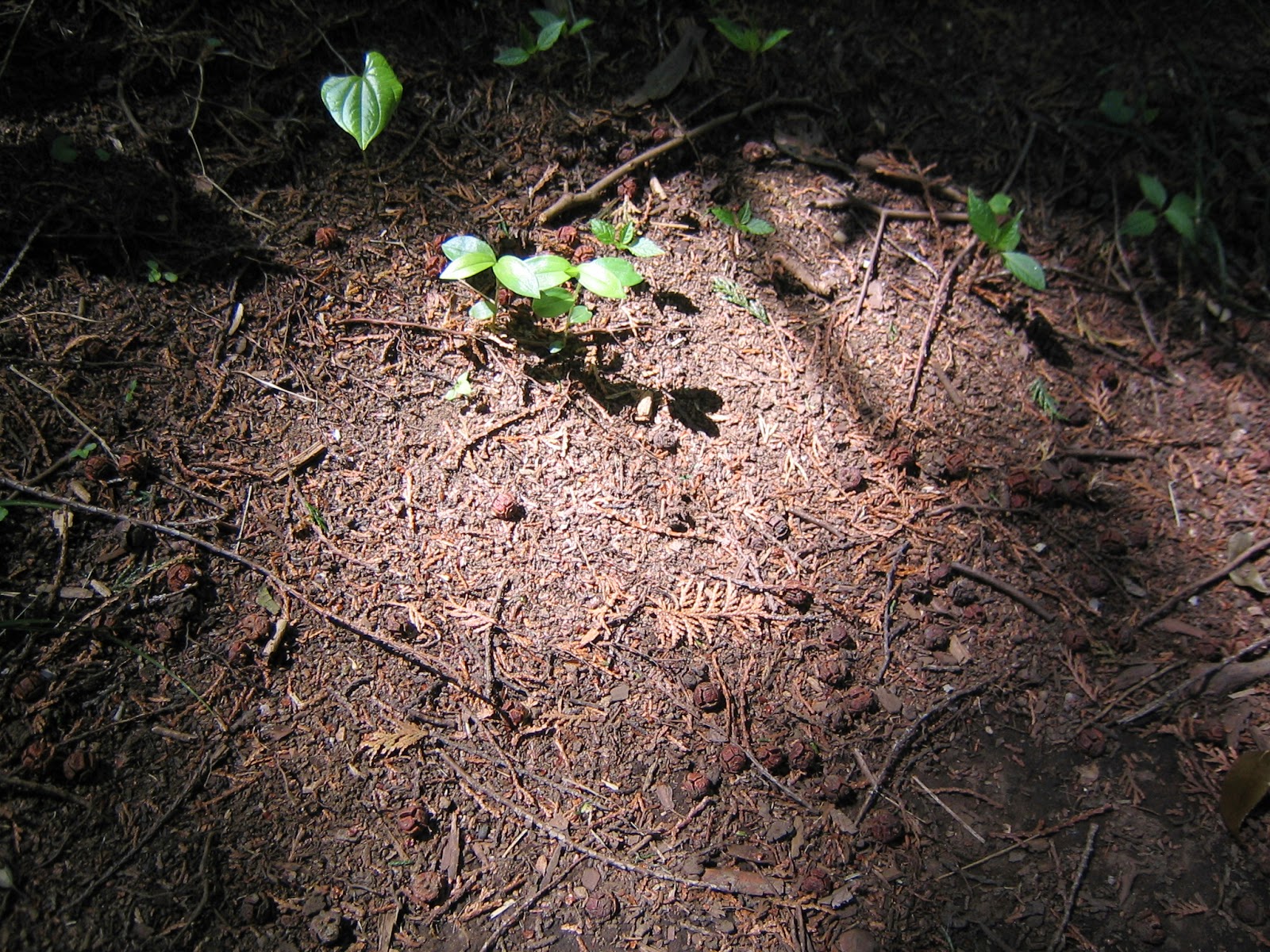
It’s not artificial spot light. I just took a photo of the ground near E-5, one fine day.
Around D-10. The route is really well-kept.
A scenery near D-8. Can you figure out a parking for Yokohama Zoorasia in the middle? 
And suddenly we find logs for Shiitake Mushrooms in the Forest!
The eastern area between Route E and Route D is called Yaman’me Yama やまんめ山. Before, this was the point where people could find many wild silk warm cocoons. (“Yaman’me” means “cocoons of wild silk worm.”) Wild silk cocoons produce the best quality silk so that this hill was really a wealth factory. Now it is the area for regular summer news for wasp and mamushi attacks.


A warning for wasp attack!
The entire experience in the southern part of Niiharu Forest is meditative and really refreshing. Let’s just be modest, as we humans are intruders of family life for wasps and snakes. Don’t be greedy for silks …

If you find a problem in the Park, please make a contact with

Office for the Park Greeneries in the North北部公園緑地事務所
Yokohama Municipal Government Creative Environment Policy Bureau横浜市環境創造局
Phone: 045-311-2016 (I guess in Japanese only)
FAX: 045-316-8420 (I hope there is somebody who can read English …)

Niiharu Administrative Office / Satoyama Exchange Center新治管理事務所・里山交流センター
Phone: 045-931-4947
Fax: 045-937-0898
http://www.niiharu.jp/