Sunday, May 18, 2025

Once upon a Time in War Zone: Forests and Odawara Castle Sogamae I 小田原城総構


Now thanks to the advancement of global communication tools, we are bombarded with the images beamed from war zones. Everywhere with bombs, the scenery is barren with rubbles and charcoaled somethings. It’s not rocket science to see huge environmental problems … Tons of heavy metals from weapons seeping in the barbecued soil, forests are disappearing after air strikes, people left in the battle zone are surviving in dusty “former” towns probably inhaling microparticles of hazardous substances wafting from the destroyed buildings. I really hope nukes won’t come … There, I guess greenery does not have meaning except for covers of soldiers. They are aggressively destroyed to kill the enemy … And that’s the reason why yesteryear warlords in Japan preserved forests. Let me explain.


Japan is registered as a nation of forests whose forested area is 66% of the entire territory. We are situating ourselves at the third position among OECD countries for this rate (; the first, Finland, the second, Sweden). The reason why we are so is at least partially owed to the history. The most famous historical figure who aggressively protected the nation’s forest was Tokugawa Ieyasu 徳川家康 (1543-1616), the founder of Tokugawa Shogunate. He ordered “not to deforest” in the area around Edo = Tokyo. If somebody violated his order, the person was subject to death penalty. Before Ieyasu, Japan was suffering civil wars and warlords everywhere in the archipelago took the same strategy for defense. The reason? Japan is mountainous and our climate is ideal for deep temperate rainforest. Before tank battles and airstrikes, encircling one’s territory with deep forest was the best strategy to build security walls. In Japan we do not have large scale walled cities as historical (aka tourists’) towns, like in Europe and Continental Asian places.

The forest around Mt. Takao.
This is one of the most famous examples
Ieyasu preserved 300 years ago.

When the civil war was settled, the strategically protected forests began to provide materials for constructions and other services such as herbal medicine. i.e. Keeping the forest was profitable. People did not have reason to destroy the gainful forest coverage for quite some time … Those were the days. The 1960s came when international trade of cheap imports annihilated Japanese lucrative forestry industry. Petrol started to dominate the material for many things. Many forests, especially in main cities and towns, where Prefectural Offices and the other modern-day utilities located, were bulldozed to build offices and suburbs for workers. In Japan, almost all such towns have history as a castle town for warlords. They once had deep forest. They are gone. It would be a good thing as we no longer had to think about civil war. But … sad for disappeared forests.
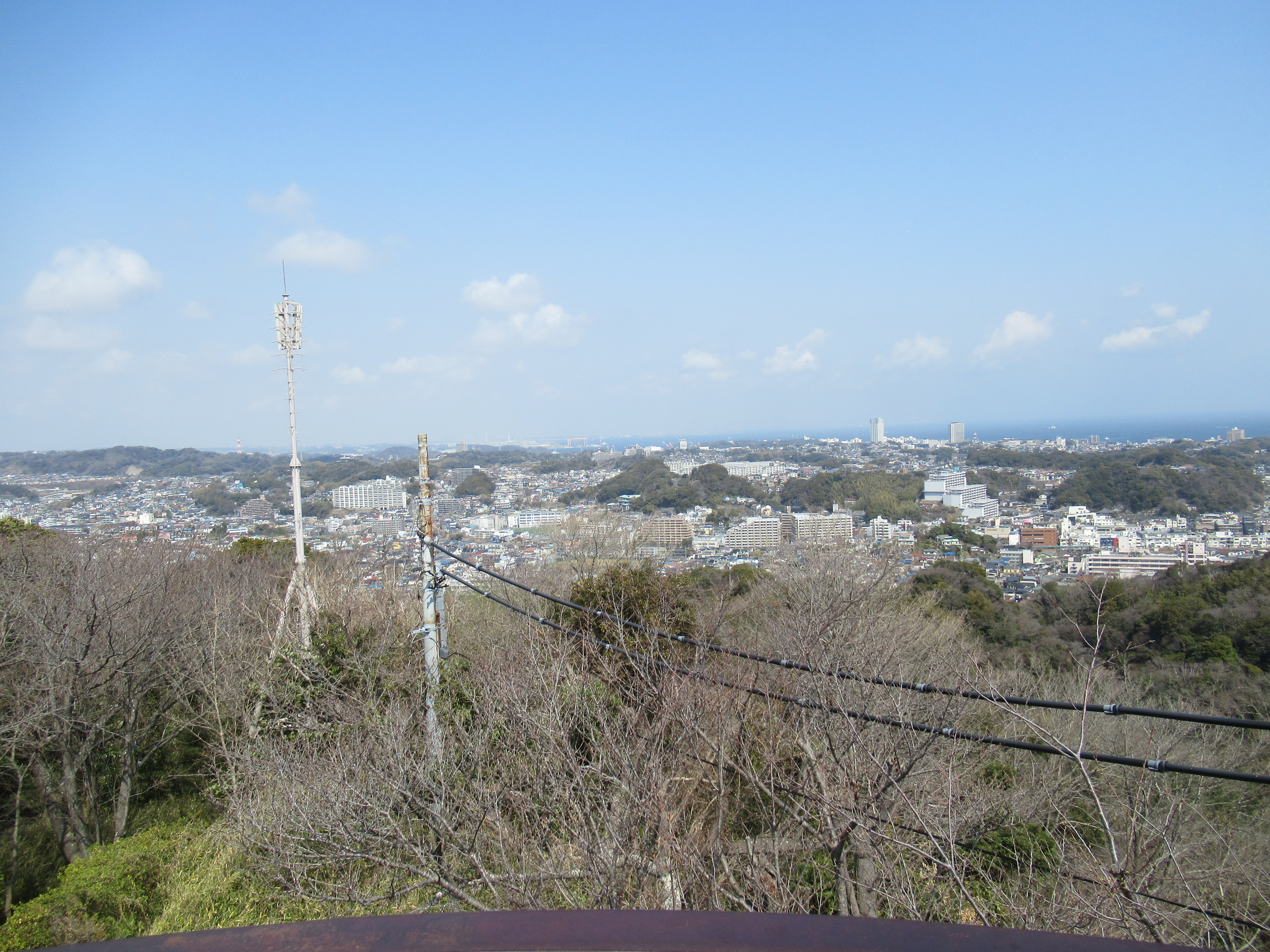
Yokosuka City in Miura Peninsula.
Now this is a port town for
 Japanese Defense Force and the US 7th Fleet,
i.e. strategically important location for the defense of Tokyo.
 When Tokugawa Shogun governed Japan,
the area was off-limit for ordinary forks and
 Shogunate Guard stationed to watch
 any ship entering into the Tokyo Bay.
At that time, the scenery of this photo must have been
 massively covered with green forests.

Even though, some places show the memory of forest-fortress for those who know it. One of the most famous historical places in Japan in this regard is, well, Tokyo. The castle for Tokyo is Imperial Palace, and the forests of surrounding areas including Kanagawa Prefecture acted as a protective wall for the Capital. It’s too big to dig in casually the structure of this megalopolis … Rather, to experience the historical Japanese fortress-forest, we have a compact sized example nearby. It’s the area around Odawara Castle 小田原城. This week I begin to tell you my adventure in the forest, existing or remnants, of previous centuries’ war zone; that is Odawara City.

The Donjon for Odawara Castle

Let me begin with Japanese lesson. The city planning for defense of a castle in yester-centuries is called Sogamae 総構え. To translate this word, I would say “Everybody Ready to Defend Castle City.” The most basic elements for Sogamae are mort and fort. The mort for Imperial Palace is constructed with elegant stone walls built by Tokugawa Ieyasu. But this is the most inner mort for defense. Normally, a castle is protected by multiple layers of morts. For Japanese castle, they are often built utilizing our mountainous geology (more to it next week). Fort is the same. The most inner parts of the design are of stone walls preventing intrudes come in to the castle. But fort is also a system of layers which is designed according to the geographical characteristics for the area surrounding a castle. When the town to be protected was in a plain (which was rare in this country), the mort tended to be deep and wide with not so high forts with gates. The most famous example in this category was Sakai Town 堺 that was once an independent self-governing town of merchants, just like the medieval towns in Europe. When a thing to be protected, like a castle, was on the top of a hill, Sogamae system fully utilizes the geographical features for morts and forts, which we can observe in Odawara City.
The stone-walled inner mort
for Odawara Castle

Probably another unique feature of Japanese Sogame defense system is, it incorporates the existence of rice paddies surrounding up and down towns of a castle town. In time of emergency, the paddies would be intentionally inundated by the attached irrigation system. The paddy became the most outer layer of morts’ system which was expected to hinder the advancement of enemy troops. Do you remember, to the north of Kozukue Castle (; my post on July 3, 2015) there are farmlands called Akata Yato, or Red Rice Paddy. In 1478, a battle made the rice paddies-mort protecting Kozukue Castle became a blood-bath, and hence its name. You may notice Sogamae defense system is not only for protecting a castle situated in the center of a city, but also for the entire castle town including its suburbs. Next week, I tell you an itinerary for Odawara Sogame. It’s about 6-7 hours of town walk. Odawara Castle was BIG. For noticing how big it was, please stay tuned!

Once, here was a blood bath.

For enquires about sightseeing in Odawara City,

General Incorporated Association, Odawara Tourism
一般社団法人 小田原市観光協会

250-0042 350-1, Hagikubo, Odawara City
〒250-0042 小田原市荻窪350番地の1 小田原合同庁舎内2階

TEL:0465-20-4192 
FAX:0465-20-4194

Sunday, May 11, 2025

The Last Dish of Spring: Cooking Japanese butterbur


Now the flowering season of spring ephemeral is over. Day by day, gardens, parks, forests, etc. are covered more and more with green leaves. The colors of leaves started from pale green, then become darker. We’re entering the season of mowing. We keep crossing our fingers for this summer not being so harsh as the last year … We could avoid perils of heat shocks during forestry work, couldn’t we? Well, before walking into the inferno, we have a small pleasure in a prep of scything. We harvest butterbur.

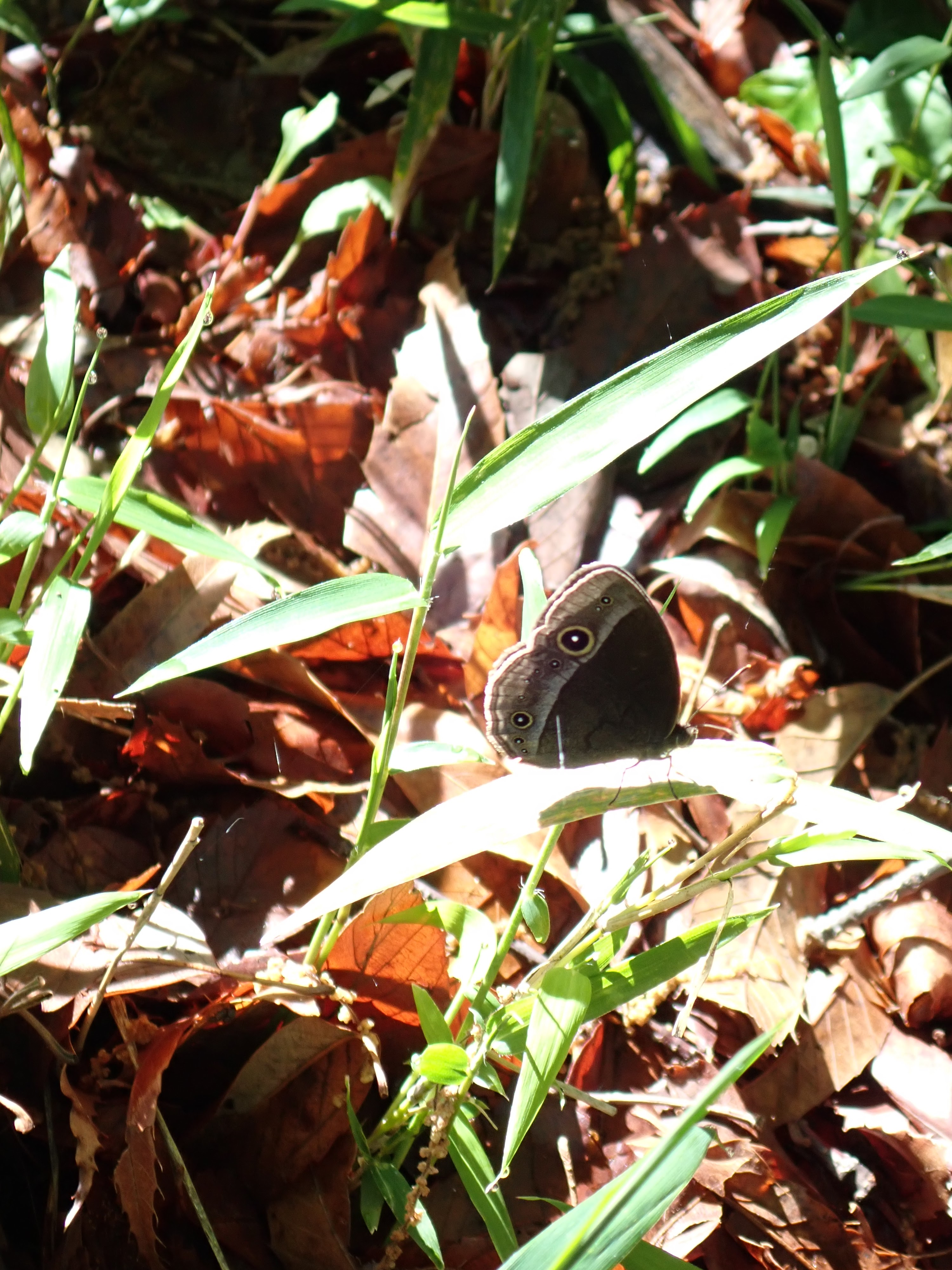
Minois dryas

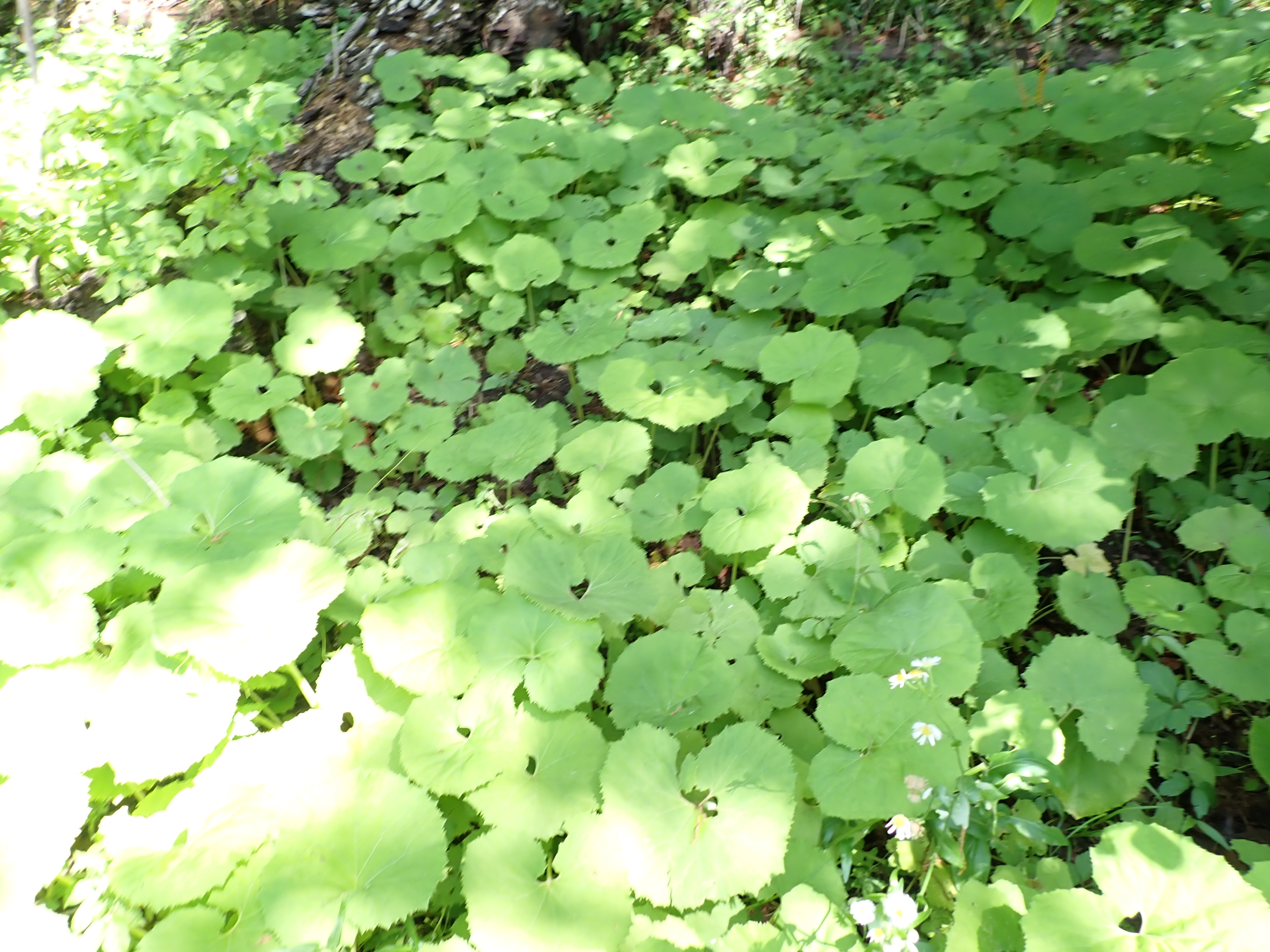
Butterbur, Petasites japonicus or Fuki in Japanese, is herbaceous plant native to Japan. Sometimes farmers nurture them for their business. And we can find wild Fuki in forests around us. It loves sunny, wet, and less windy margins of forest. They multiply through its underground stem, just like bamboos. From the rhizome, green stems shoot out and at the top is a heart-shaped large leaf. Kids can play with the leaves, making face masks or umbrellas of forest. In our climate of Kanagawa Prefecture, fuki won’t grow much tall nor with larger leaves compared with those in more northern areas of Japan. Still, in Yokohama they can be 50cm or so tall and with approx. 30cm in diameter leaves. As long as the condition is met, they dominate the field as “weed.” So, in Niiharu Citizen Forest we mow them at the end of spring to control their spread. Never mind. They will cover the ground again before winter. Oh, one more thing before cutting hard. We have to harvest them for our spring dish.


Fuki is covering completely the ground.

Yeah. Young fuki is edible. Professional farmers of colder climate distribute them for supermarkets as spring delicacy. Theirs can have 1m long with Ø1cm or more of stems. The way to cook them is similar to angelica. We peel the skin of it before cooking and stew in soy sauce, et al ... a bit cumbersome process. In Yokohama, we won’t expect that size from our fuki. Actually, it’s easier to cook Yokohama size. Let me tell you how.

Harvested fuki

First, we cut off the leaves from harvested fuki. In this recipe, we need a certain amount of fuki stems. They will be mowed as weed before long. i.e. Be greedy to have as much stem as possible! Several regional cuisines cook the leaves as well. I once tried it, and found they gave us an “acquired taste of bitterness.” Also, rhizome and roots of fuki are poisonous. Please be careful. In this post, I tell you about an easier dish with stems only.

Lots of stems

Next, cut the stems in 1 inch or so long BEFORE washing. Chopped fuki stems will be washed under running water until the downy hairs covering the surface are rinsed over. They can be removed easily in this way. If you find relatively thick stems, peel their skin. Otherwise, Yokohama-size, Ø0.5cm or so, can be prepared tender without peeling. Don’t worry.

Chopped fuki before washing.
I add salt for rinsing the fuki.
Though, it is not necessary.

By washing, hairs can be removed this much.

Chopped and washed stems are thrown in a pot. Cover with a lid, and heat it over medium heat for 30 to 50 minutes. The stems are steamed with their own moisture. I cooked 400g of fuki stems for 30 minutes. A senior of Niiharu Lovers who every year cooked fuki with this recipe said, “I normally cook 4 kg or more of it.” In her case probably 50 minutes of steaming would be appropriate. After heating, leave and cool the pot overnight with a lid.

Chopped and washed fuki stems

Next morning, add 6 tbspn (for 400g of fuki) of soy sauce, put a lid, and heat the pot until it resumes steaming. When the steam comes out, turn off the burner and leave it cool naturally. In the evening, shake the cooled pot to stir the content, then turn on the heat again until the pot emits the steam. Stop the fire and cool it naturally overnight.

After first steaming

On the third day, add 2 tbspn of sugar, and follow the same routine as above.

Cooled fuki after sugar added

And for the final day, add 5 tbspn of Sake in the same way as for soy sauce and sugar. Let it cool overnight. In the next morning, the dish is done.

Cooled fuki after sake added.
This recipe gives glaze over the veggie when it’s done.

It’s a nice dish for a spring breakfast with steamed rice. Mine was only 400g. The cooked fuki will be eaten up quickly. My Niiharu senior with 4kg of cooked fuki freezes her dish and defrosts necessary amount when she provides it for a family meal. “Oh, it can last for 10 months or so if you wish. But for my family it does not take that much to finish. 😊” Sweet and salty with Umami taste from glutamic acid of soy sauce softens the bitterness of fuki. It’s the end of spring treat. When you have a chance, please try.

Good morning!


If you have any questions about Yokohama’s Green Tax and Green Up Plan, please make a contact with

Strategic Planning Division, Green Environment Bureau, City of Yokohama
横浜市みどり環境局戦略企画課

Phone: 045-671-2712
FAX: 045-550-4093 

Sunday, May 4, 2025

Ebb and Flow: a small observation tour for water creatures of sea at Enoshima 湘南江の島


As a river water monitor for Kanagawa Prefecture, I’m getting familiar with observation sessions in rivers these days. But I haven’t done the same for creatures in sea … Er, to be exact, I haven’t done this for tens of years. When I was a first grader, I made a box of specimens I collected in the south rocky shore of Enoshima Island (; my post for June 30, 2017). At that time, the place was not so much gentrified for tourism, and finding crabs, sea shells, et al was an extreme fun for 6 years old. I was excited to many chitons and found sea slugs in tide pools ... Long time ago. Then, suddenly this spring I had a chance to join an observasion session for sea creatures in none other than Enoshima. This time, the place for the session was not the south shore facing Pacific Ocean, but the west shore of Sagami Bay. Beyond us was misty silouette of spring Mt. Fuji. The air was warm. Lots of people relaxing around Sagami Bay.

er … could you figure out Mt. Fuji over there?

The definite difference between the south and the west shores of Enoshima is, the south shore is very rocky thanks to the seafloor uplift by 1924 Great Kanto Earthquake. In contrast, the rocky area of the west shore is undersea unless it is the time of spring time. I recalled I visited there when we had observation session for wild birds a couple of years ago (; my post for 17, March 2023). The difference of geology between two places for a tiny island of Enoshima is due to the plate tectonics. Great Kanto Earthquake was caused by movements of Sagmi Trough which is continuously receiving humongous stress from the crush of Phillippines and North American Plates. The direction of pressure is from the Pacific Ocean to the north of Honshu Island. Enoshima is sitting on this squeeze, and so the south shore looks like washboards. The west shore of the island is spared from such stress to some extent, and the facing deeper area of Sagami Bay and so-so substantial mass of Izu Peninsula. The beach can maintain a continuation of sandy beach of Kugenuma. The wave is not so direct as from the Pacific Ocean.

When it‘s not spring tide,
the place we visited  for the above photo is undersea like this.

I’m not sure if such geological difference affect the findings we did during the observation session. But I haven’t met chitons or sea slugs at all. Instead, baby sardines in tidal pools are escaping around our looking eyes. Hermit crabs lived easygoing lives with sometimes broken shells. The spring tide lowered the tide by more than 20cm compared with the average. It locked up the dopy creatures in tidal pools. Many kids (and parents) were hooked on the mini expedition. “Dad, look, I caught a baby jellyfish!” Many people gathered around his proud handy aquarium where a jellyfish of less than 1cm diameter floating leisurely.

It’s indeed a wonder of the earth.
Such a wide open space for tidal pools we’ve met.

The wave was not much.


Below the seaweed, baby sardines quickly hide.

These two seashells are actually hermit crabs.

On that morning, we could observe tombolo connecting Honshu mainland and Enoshima. By the time we concluded the observation, the tide was returning and covering the tidal pools. We released our catch to the sea. Goodbye hermit crabs. We may see you again sometime, don’t you think so? It was a fun and relaxing holiday. I thought maybe the dragon forest on the mainland saw such easygoing and beautiful Enoshima Benten sisters and easily fell in love with them (; my post for June 30, 2017) … May peace on earth.

Tombolo is widening.
Warning: unless the city of Fujisawa opens the gate
 of steps at Enoshima side,
even if you walk tombolo from Honshu side,
you cannot land on Enoshima Island.
It is extremely dangerous
you try this when the gate is closed.
To walk seafloor,
please check the HP I listed below
if the City opens the gate on that tombolo day.

At the time of closing for our observation tour,
tombolo was closing.

And the tidal pool are submerging.

Before leaving the beach,
we returned our catch to the sea.

The session I‘ve joined was arranged by NPO Papalagi. They have several fun nature events around Sagami Bay, mainly for kids. If you and your family are interested in their future programme, please visit their homepage. Mind you, they are popular. For safety reason, each session has limited capacity, and so RSVP. The seats are taken quickly normally within a couple of days after opening. Good luck. 😉

Papalagi people explaining sea creatures
before we actually went the finding mission.


If you find environmental problems in Enoshima Island, please make a contact to

Local History Section, Continued Learning Promotion Division, Fujisawa City
Fujisawa Plaza, 1-2 Kugenuma-Higashi, Fujisawa, 251-0026
Phone: 0466-25-1111 (ext.) 5313,
FAX: 0466-27-0201

藤沢市生涯学習部郷土歴史課
〒251-0026 藤沢市鵠沼東1番2号 藤沢プラザ5階

You can send an enquiry to them from their homepage at https://www.city.fujisawa.kanagawa.jp/cgi-bin/simple_faq/form.cgi

Sunday, April 27, 2025

Anthropocene: 20th anniversary for Koajiro Forest 2 小網代の森


After local fishermen sold their property to TSE listed Keikyu Corporation in the 1960s, the ecosystem of Koajiro Forest was left to their own devices. Then in the early 1980s the academics of Keio University “found” the uniqueness of Koajiro Forest where the entire drainage basin for 1.3km Uranokawa River 浦の川 was escaped from being concreted. The group of third-party volunteers led by Prof. Yuji Kishi of Keio University acted in full throttle to stop the area becoming golf course and housing. How Prof. Kishi did this after being tired of the 1960s student political movement was written in detail in his book (co-written with Prof. Yanase), “How to Protect Miracle Nature 「奇跡の自然」の守りかた” (2016). They acted cleverly to persuade big companies, local governments, and the Ministry of Land, Infrastructure, Transport and Tourism, and in 2005 obtained “Suburban Green Zone 近郊緑地保全区域” status for the Forest.

Prof. Yanase on the symposium day

By 2005 it was already more than 40 years since humans last tended footpaths for rice fields and thinned jolcham oaks for fuel in Koajiro Forest. When 70ha of the Forest was secured as a nature reserve, the trees on the slope transited as they do in the wet and warm climate of Miura Peninsula. When the oaks planted by humans for fuel survived, they were huge trees it would have never become when people used them for daily life. Otherwise, evergreen broadleaved trees had overridden the deciduous oaks. The Koajiro slopes became dark. Undergrowth could not survive due to lack of sunshine. The soil started to collapse as anywhere else in the neglected forests of Miura Peninsula. The uncontrolled slope vegetation and insufficient flow control of Uranokawa River started failing to provide enough water for wetland downstream. Meanwhile those who wanted to make Koajiro Forest “miracle” worked further to make the area “Special Conservation Zone 近郊緑地特別保全地区” (; my post last week). In 2011 they obtained the title, and in 2012 Miura City and Kanagawa Prefecture decided to open the place as a nature park in 2014. Yet the former rice field was showing aridification. Reeds and bulrush were retreating to the level of near extinction. Instead, sasa bamboos covered the bottom of the valley. The stream itself was roofed by overgrown broadleaved trees and sasa bamboos. They prevented the stream from receiving sunshine. Diatoms could not live in Uranokawa River. Creatures such as aquatic lives needing diatoms for food and refuges had hard time for survival. In short, Koajiro Forest was on the verge of collapsing biodiversity.

The ridge area of Koajiro Forest, February 2025.
This is definitely improved version
in terms of invasion of sasa bamboos.
You may think why? Please read on.

So, with legally secured and stronger status of Special Conservation Zone, volunteers and local government entered the forest and started to work to stop further transition of the area, aiming opening of the nature park in 2014. Not only that, they intended to reverse the course and to recover the forest with fewer broadleaved evergreens and vibrant wetland and tideland. Big moneys from Keikyu and local government built boardwalk in the forest to stop stomping by the visitors. Prof. Yanase who was a young student engaged in all the process including hard manual toil of mowing and rebuilding the collapsing footpath, he said. Prof. Kishi and experts of hydrology directed to rebalance the flow of Uranokawa River to wet the drying former rice paddies. The entire operation of volunteers was “concrete free.” They cleared the vegetation covering the water system, then using logs harvested from their thinning and mowing to strategically build small weirs along Uranokawa River. When typhoons came, the flood of Uranokawa River paved the water ways along the weirs. River’s water returned to the area of former rice paddies. The “new” water path was covered by boardwalk, and so protected from drying up.

Mowed riverbank and “organic” weirs for Uranokawa River.
Yeah, still sasa bamboos are coming,
but
Polystichum longifrons Kurata,
which needs sunshine for photosynthesis, is recovering,
 thanks to cleaning up.

Uranokawa River still has the remnants of pipes
showing this place was once
a part of water supply system
 for the area.

After mowing in 2025. It is like this even today.
We imagine how it was
when the volunteer intervention started …

Looking the ridge from the beginning of wetland area.
Could you notice human world is just there.
And the mass of sasa bamboos obscure our sight.

The beginning of wetland for Koajiro Forest has
Japanese alders and Salix eriocarpa,
both need continuously boggy soil.
In Kanagawa Prefecture, this is
one of the rare places where such species can survive.
The environment was maintained as such
by heavy human interventions.

Could you notice in this photo there are two streams:
obvious one and another at the back of the picture?
When volunteers began to work,
there was only one river, the one in the back.
The one we can see clearly was created
by organic weirs situated upstream.

Volunteers mow the wetland during winter
to stop aridification.

Sorry for this photo being unclear.
The ground here is a continuation of
former rice terraces
 when people did rice cultivation.
At the end of each terrace,
they intentionally planted Chinese Hackberry
whose root can act as earth retainer.

This is also a restored water flow.

On March 11, 2011, huge tsunamis overflowed
every 10 minutes with the concrete bridge
 seen in the bottom of this photo.
This is the structure built when
fishermen used the place for their rice cultivation.
 Perhaps luckily, the attack of tsunamis quickened
 the recovery process for the wetland
from aridified downstream of Uranokawa River.
 The bridge is now off limit and no longer used.

Volunteers‘ labor was paid off. Now Koajiro Forest is a miracle nature in Tokyo’s suburbs. It has a dry ridgeway collecting rainwater as a water source of Uranokawa River. The water flows down safely covered by boardwalk, and steadily provides water to wetland. Moreover, volunteers are still patrolling the forest, engaging in mowing sasa bamboos et al in winter, and checking organic weirs to see if they do job to maintain waterflow. If an old log cannot do sufficiently or water flow changes the course again, humans build new weir with logs to keep water entering the wetland. Yes, Koajiro Forest looks very pristine with minimum artificial structure. But, to make it as such with rich biodiversity, the place definitely needs heavy and clever interventions of humans. The place is a secondary forest per excellence.

The wetland nearest to the mouth of the River is
now a site for making flower garden of daylilies.
 The flower has strong roots so that
 it is expected to act as earth retainer
when the garden is established.
The volunteers, now a Non-Profit Organization,
acts cleverly this time again to obtain grants
 from large corporations in Tokyo for this project.

Koajiro Bay.
Perhaps thanks to these efforts upstream for earth retaining,
 the depth of the bay is stable these days.
 Moreover, many kinds of sea crabs
compartmentalize
 each of their colony according to
the depth of the water and direction of tide.
Also, this is a quiet bay ideal for baby fish to nurture themselves.
 Local fishermen do a nice business
 outside the bay, beyond the conservation zone,
to catch grown up fishes and shrimps
 coming out from the nursery.

Koajiro was used lively for about 1000 years before petrol took over for fuel, et al. After petrol takeover, people skipped the task tending Koajiro and the forest was losing biodiversity. But now we have noticed it and engage in operation for recovering biodiversity of the time of rice field. Such place is ubiquitous in “forests” in megalopolis Tokyo Area. Another example? Niiharu Citizen Forest. It is a common knowledge in Japan probably more than 95% of our forest is the secondary forest, once used heavily for food, fuel, and tools production for human life. And this human usage of nature made our forest rich in biodiversity. Otherwise in Kanagawa, the climate lets broadleaved trees dominate and create dark forest where the floor lacks sunshine, and so of poor vegetation. In such places, the creatures dependent on a variety of flora cannot survive. Our task for the 21st century is preserving or recovering biodiversity of such secondary forests which were once used heavily but abandoned. This is the thing we have never done before: we no longer use the forest for fuel or rice cultivation, but keep it as nature reserve. It’s a new way of building relationships with our forest. Koajiro Forest is one of the vanguards for this Anthropocene world of environmental protection, I think.


If you find environmental issues in Koajiro Forest, please make a contact with

Greenery Section, Environment Division
Yokosuka-Miura Region Prefectural Administration Center
横須賀三浦地域県政総合センター環境部みどり課

2-9-19 Hinode-machi, Yokosuka 238-0006
〒238-0006 横須賀市日の出町2-9-19 
Phone: 046-823-0381