Showing posts with label Shonan Monorail. Show all posts

Sunday, March 16, 2025

Return of Citizen Power in Kamakura: the birth of Hiromachi Ryokuchi and Kamakura Hiromachi Forest Citizen Association 広町緑地


I tell you a bit the story of the birth of Hiromachi Ryokuchi Forest 広町緑地. Er, well, the forest itself has been there for centuries, but the place was once destined to be rows of houses. In 1970, two years after Japanese City Planning Act became effective, the city planner of Kamakura City designated the area for Urbanization Area (; my post for January 12, 2025). Of course, they did not think this place was suitable for a business district like Marunouchi 丸の内 of Tokyo. The place around Nishi-Kamakura Station had been an area for summer houses of rich people in Tokyo since the 1920s. As a natural extension, the land of now Hiromachi Ryokuchi was considered a good housing area for commuters to downtown. The public transportation for them, i.e. Shonan Monorail 湘南モノレール, was experimentally introduced to the area in 1964, and the full service between Ofuna 大船 and Shonan Enoshima 湘南江の島 stations began in 1970 = the year when the place became Urbanization Area. In 1973, landlords = 3 giga-developers from Tokyo submitted a master plan to the city for bulldozing 38ha forest.

Around Hiromachi Ryokuchi, ordinary suburbia is thriving.

I think the businesspeople from Tokyo failed to realize the “society” of yesteryear summer houses already well-established around the forest in the proud City of Kamakura. Local uproar ensued, voicing strong opinions against real estate business from downtown. The rollercoaster ride of this process is explained in detail here. By 2002, such a local movement gathered signatures asking for the preservation of the forest. The number of signatories was larger than the population of Kamakura City. The city office gave in. Already in 1986, Kanagawa Prefecture established the Kanagawa Trust Midori (= “green”) Fund inheriting the capital partially from the reorganized public corporation of forestry in Kanagawa Prefecture. (er … this part of economic history for Japanese forestry and the primary industry needs very long explanation, I guess. It’s beyond the zone of this fun blog … I might return to the topic someday …) The purpose of this money was to rescue “endangered” greenery in the mapping exercise of City Planning Act. Hiromachi Ryokuchi had a resume perfectly fit for the idea. In 2002 11.3 billion yen (about USD 87 million for 2002 rate) was deployed from the fund, and the title holder of the land was changed from private real estate business to the City of Kamakura.

The border between Hiromachi Ryokuchi and
housing area is this one ordinary commuter road.

To 38ha, the surrounding 10ha was added and the city designated the entire area as Urban Forest Park. By doing so, the city declared the natural ecosystem of Hiromachi Ryokuchi standing next to housing suburbia was to be protected. In 2004 the master plan for Hiromchi Ryokuchi protection was formulated to open the place as a park in 2015. Meanwhile, in 2003 the civic movement for saving the Hiromachi Ryokuchi incorporated their movement as non-profit and joined the planning and execution for the city’s master plan. Their movement, now named Kamakura Hiromachi Forest Citizen Association, received several awards from the prefecture and the national government. They became the official keeper of Hiromachi Ryokuchi Forest by contract with the City of Kamakura.

This is the admin office for Hiromachi Ryokuchi
where Citizen Association stations.


The staff from the Association station at the Admin Office for 8:30-17:15, and 5 teams of volunteers organized by the Association engage in preservation efforts of the forest. They are

1. A Team engaging forestry

2. A Team for organic rice cultivation

3. A Team for organic veggie cultivation

4. A Team for maintaining trekking routes in the Forest

5. A Team for researching and recording ecosystem of the Forest 

The Association welcomes donation, pecuniary and man-power-wise any time for supporting the protection of Hiromachi Ryokuchi. You can make contact from this HP of theirs, or visit/call the admin office of the Forest whose address is listed at the end of this post. I know a guy who is a member of rice cultivation team. He said “You know, organic rice cultivation is really labor-intensive task! We don’t use gas-powered tools like tractors or the like.” … I think before petrol-dominating farming, there was horses and cows … Also, several members of the team for ecosystem research are assisting professional researchers for Kanagawa Prefectural Museumof Natural History. Their nature observation tour of Hiromachi Ryokuchi is really a fun. Please check this event calendar if you’re interested in such things. In the calendar you can find other cultural events like traditional organic cooking and crafts. They are popular. You need to make a reservation ASAP when you find the opening.

Organic volunteer farmers are in action.

Of course, without joining such volunteering or events, we can stroll the forest as we like it. Next week, I tell you my adventure of walking in the nature of Hiromachi. I think their approach is a kind of extension from Retention Forestry. Please stay tuned!


The management office which is what we’ve found at the entrance is

Kamakura Hiromachi Ryokuchi Management Office 鎌倉広町緑地管理事務所
1133 Tsu, Kamakura, 248-0032
〒 248-0032 鎌倉市津1133番地
Phone/FAX:0467-32-5112

The city office who oversees the place is

Parks and Green Spaces Section, Kamakura Cityscape Division 都市景観部みどり公園課 
18-10 Onarimachi, Kamakura, 248-8686
〒248-8686鎌倉市御成町18-10 本庁舎3階
Phone: 0467-61-3491

Sunday, March 9, 2025

Another side of Slam Dunk: Kamakura Hiromachi Ryokuchi Forest 広町緑地


Kamakura 鎌倉 is an ancient city which was once the center of Japanese politics. They are also the place where in 1964 the Japanese first national trust movement was established (; my post on October 7, 2016). As such, it is said that Kamakura people have certainly THE character. For protecting their neighborhood environment, their will was once again deployed during the 1990s. Their effort gave birth to Hiromachi Ryokuchi Forest 広町緑地. This week I will begin telling you about my adventure there.


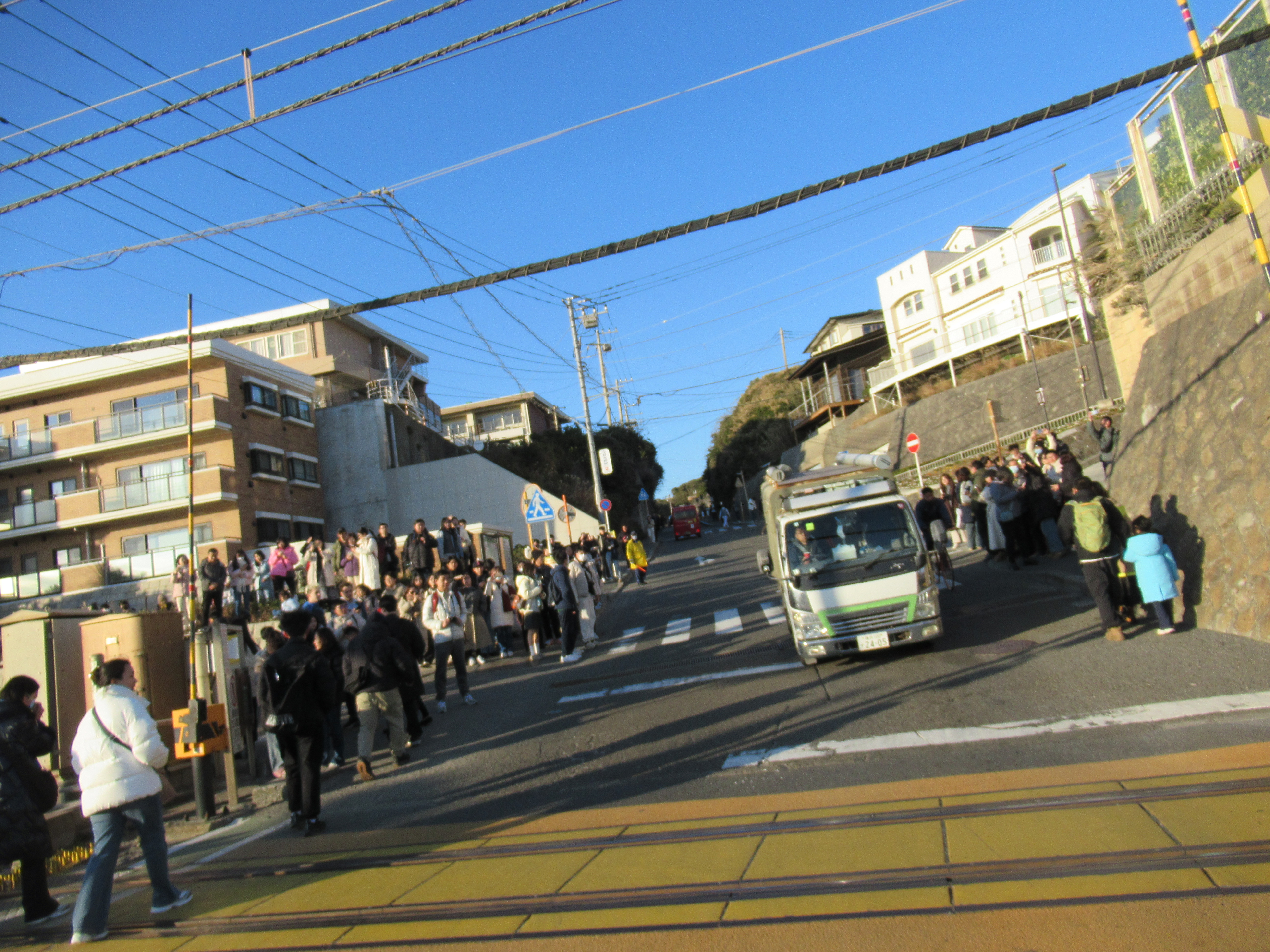
First, the location. Hiromachi Ryokuchi (“Hiromachi Greenery”) spreads at the back of nowadays internationally uber popular tourists’ site of the railroad crossing next to Shichirigahama Station 七里ガ浜駅, Enoden Line 江ノ電. You leave Shichirigahama Station and look north from that Slam Dunk crossing to the hillside. Beyond the heads of international tourists, there is greenery covering the ridge of a slope of housing. It is Hiromachi Ryokuchi. I don’t recommend you to enter the Forest from this direction. For one thing, entering the forest from the seaside requires climbing up steep slopes. Actually, locals who train themselves for trail running, it‘s a good enough course suitable for preparing a race.

The greenery at the back of this photo is Hiromachi Ryokuchi.

The exit from Hiromachi Ryokuchi to Shichirigahama.

From the exit, you walk to Shichirigahama Elementary, then

Simply go down to the sea.

Shichirigahama Station is on your right.

Another reason is, it’s extremely congested these days the Enoden Line reaches Shichirigahama Station. During morning and late afternoon around rush hours, the rail service sometimes, especially during the holiday season like the first week of May, could ask would-be passengers at both Fujisawa and Kamakura Terminal stations to show a special ID issued by the city halls. If that document clearly shows you must use the commuter service for job, schools, hospital, and/or inevitable reason of daily life like your grandpa living in the area is on the death bed, they accept you to pass the ticket gate. Otherwise, you wait until the time when highschoolers et al safely arrive at / leave from their school. Such a draconian approach has been popular among locals who have been disrupted ordinary daily life by the flood of tourists who practically occupied small train services for taking photos of anime scenes. i.e. If you choose the seaside to enter Hiromachi Ryokuchi, you have to navigate through packed tsunami of tourists. Unless you love these physically and mentally challenging situation, you‘d better choosing another route. If you like, you descend into the melee of tourism after enjoying the serene forest.

International crowd around the station and the crossing.

Oh, I have to add these. Sure, there are lots of fashionable cafés around Shichirigahama Station for tourists, while Hiromachi Ryokuchi has none. And you should not expect to catch train smoothly at Shichirigahama Station especially during weekends. Actually, I walked from Shichirigahama Station to Katase-Enoshima Station 片瀬江ノ島駅 of Odakyu Line 小田急 as I was intimidated by overflowing passengers on the platform. The walking to the Odakyu station itself is not bad. It is along the sealine although when I’ve been there during weekends cars also packed a narrow national Route 134.

I walked Route 134 to Katase-Enoshima Station.

So, the quieter approach to Hiromachi Ryokuchi Forest is from Nishi-Kamakura Station 西鎌倉駅 of 湘南モノレール Shonan Monorail. The service connects JR Ofuna Station 大船駅 and Shonan-Enoshima Station 湘南江の島駅 of Enoden. It goes through housing areas of the City of Kamakura and Fujisawa. The boring scenery of rows of houses spreading both sides of the monorail. It is really the reason why Hiromachi Ryokuchi was officially established. Please enjoy the monorail ride of ordinary commuter service to Nishi-Kamakura Station which is a tiny local station for commuters with only one gate. Please leave from the station and in front of you is Prefectural Road Route 304. Cross the zebra crossing from the station exit to go to the opposite side of the 304. Turn Right and keep on walking, passing the traffic light named Shinkamakurayama Entrance 新鎌倉山入口. Keep on going in the same direction you’ve come so far at the traffic light. Er … I tell you if you turn left at this corner, there is a patisserie on your left called Les Anges. They sell extremely delicious sweets, but their customer services need tons of improvement. It‘s up to your desire for cakes whether you try the premise ...

Nishi-Kamakura Station

Walking Route 304 to find Sinkamakurayama Entrance traffic light

Les Anges

Now from the station you keep on walking along the commuter car road of Route 304 for about 10 minutes or so. Eventually, you’ll meet the Gust Family Restaurant on your left. Turn left here for a narrow alley. Keep on taking this road to find a small stream, named Goudo River 神戸川 pouring into Sagami Bay 相模湾 some 1.8km down next to Koshigoe Fishing Harbor 腰越漁港. Please follow the stream upstream. The tiny stream becomes culvert at a small crossroads. Choose the road in front of you which carries you in the same direction you’ve taken so far. You walk a quiet local road goes in a complete housing area. The road naturally goes right at the end and soon you’re welcomed by a small single-story house for Hiromachi Ryokuchi Community Centre + bicycle parking space. Caution! No Car Parking! Next week let’s enter the Forest. 😊

Gust Family Restaurant.
Please turn right at this corner for an alley.

I mean, this road.

Goudo River there. Please turn left to go upstream.

Er, it’s the river, mate.

Take the straight road at the crossroads.

The road naturally turns right.

The entrance to the forest is over there.

Bike parking

The admin house of the forest

The management office which is what we’ve found at the entrance is

Kamakura Hiromachi Ryokuchi Management Office 鎌倉広町緑地管理事務所
1133 Tsu, Kamakura, 248-0032
〒 248-0032 鎌倉市津1133番地
Phone/FAX:0467-32-5112

The city office who oversees the place is

Parks and Green Spaces Section, Kamakura Cityscape Division 都市景観部みどり公園課 
18-10 Onarimachi, Kamakura, 248-8686
〒248-8686鎌倉市御成町18-10 本庁舎3階
Phone: 0467-61-3491
park@city.kamakura.kanagawa.jp