


If you have any questions about Yokohama’s Green Tax and Green Up Plan, please make a contact with
Strategic Planning Division, Green Environment Bureau, City of Yokohama
横浜市みどり環境局戦略企画課
Phone: 045-671-2712
FAX: 045-550-4093

 |
| Its buds are waiting to flower … |
 |
| Pollens
of Cephalanthera falcata. Their streaks look like some astronomical objects ... |
 |
| Sure,
gynostemium of Cephalanthera falcata is obvious. But do you think we can recognize pollens on it? |
 |
| Pollens of Fringed iris. They look like rolled oats, don’t you think? |
 |
| Fringed iris in Mt. Ogusu. Sure enough, the place was once for Japanese samurais. |
 |
| Pollens of flatweed |


 |
| The border line |
 |
| If we
leave the Sengokubara wetland to its own devises, it becomes like this within 10-20 years. |
 |
| And
this is the experimental area of Botanical Garden. In Hakone, Sengokubara is the only place where the wetland remains (; my post on October 29, 2021). |
 |
| We wash our feet first there in the gutter. |
 |
| Measuring the underground water level |
 |
| The result of water management |
 |
| The
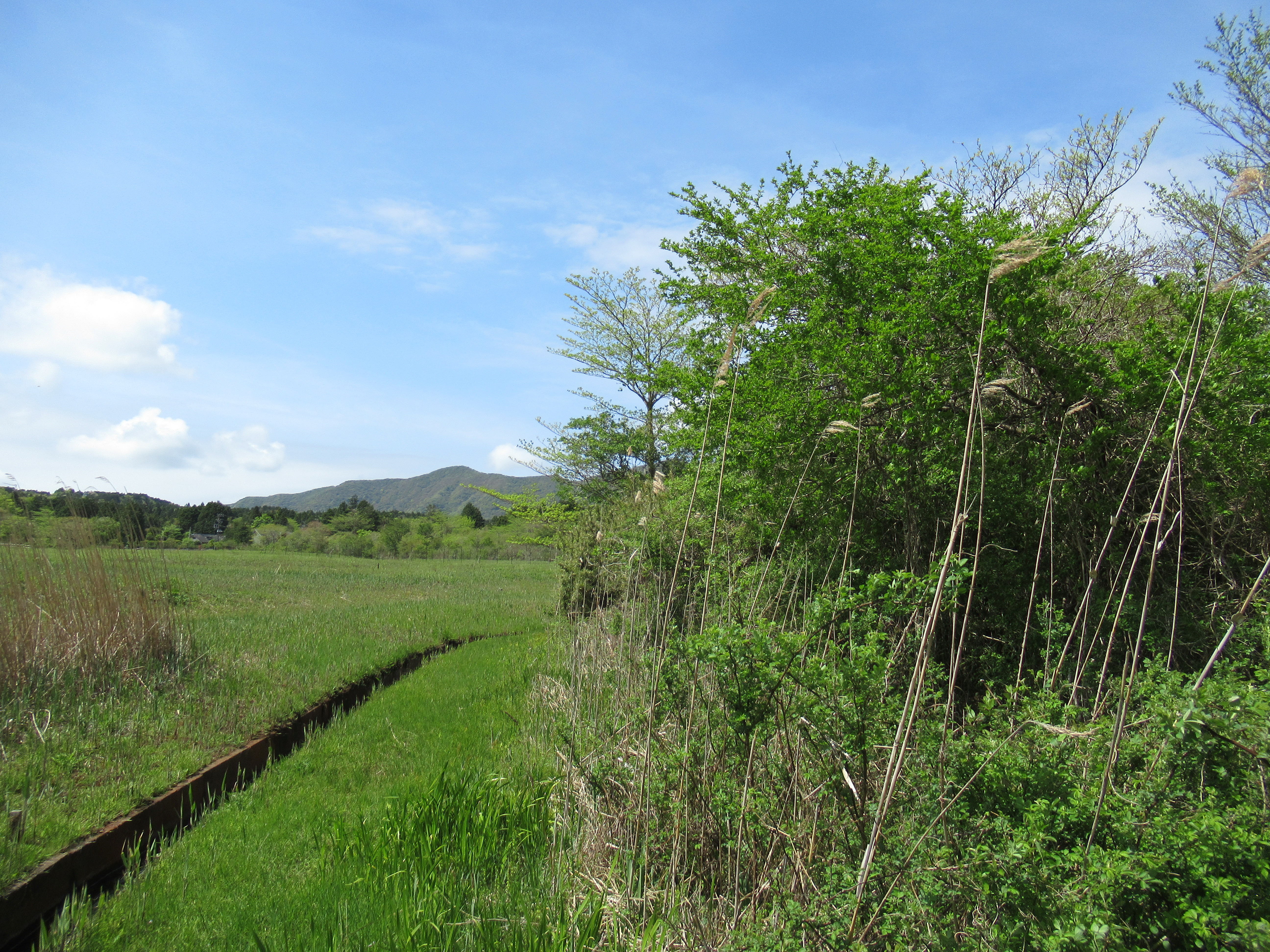
border between the forest and the wetland. After open burning, reeds will sprout from the wet ground on the rim of the forest. To begin burning, people first hand-mow these reeds adjacent to the forest, then ignite fire. The open space after mowing becomes a buffer against direct fire. The shrubs at the hedge of forest protect the life in deeper part of the forest. |
 |
| After
burning, new shoots of reeds are coming, but not overwhelming to cover the groundof Sengokubara proper. Potentilla freyniana won’t miss this opportunity of sunshine and flowering here and there. |
 |
| Cirsium sieboldii were
thriving this year in Sengokubara. There are many species of Asteraceae in Sengokubara. Some of them are in the Red List for endangered species. So, I don’t show you the photo of them today … Sorry. |
 |
| Actual place designated for
National Treasure is within the area surrounded by wood fences. It’s not much, really. |
 |
| Carex thunbergii Steudel that is common in Sengokubara in spring. In general, they thrive in wet soil and sunshine on footpaths between rice fields. Footpath is often mowed for easier access to the rice paddies that makes a happy environment for them. In contrast, in Sengokubara, once the tall reeds dominate the place, Carex thunbergii cannot win the game. Spring is a rare chance for them. |
 |
| Inside the surrounding forest of Japanese alders |
 |
| The ground was swampy and there were colonies of Carex dispalata with which people make sedge hats. |
 |
| They also flower in spring! |
 |
| There were lots of Viola verecunda in the forest. |

 |
| The Gate to Hakone Botanical Garden of Wetlands |
 |
| Sengoku An’naijo-mae Stop 仙谷案内所前 |
 |
| From the bus stop, there is this sign showing the way to the garden. Follow it! |
 |
| Entrance to the garden. Immediately after the gate, they have a souvenir shop that has several garden plants and bonsais. If you have a garden, the place could be for your interest. |
 |
| The map of the Garden … |
 |
| With the list of flowers in season |


 |
| The experiment area for wetland in Botanical
Garden. All the mowing here is done by hand. The effort is … huge, I guess. |
 |
| The spring fruit of such labour. Lots of Potentilla freyniana were flowering. |
 |
| The place is wet like this in
spring. Carex thunbergii were flowering. |

 |
| Here. The white sticker on the construction paper is to write down the name of flower. |
 |
| Flatweed flower with scotch tape. |
 |
| I pasted the tape with pollens on a construction paper card … |
 |
| and admire them under a microscope on my desk. |


