Showing posts with label Policy implementation. Show all posts

Sunday, February 2, 2025

Friends of Friends: Lovers Associations for Yokohama’s Citizen Forest


In a sense, the strategic designation of Urbanization Control Area and Lovers Association System are two sides of a coin for Yokohama’s environmental protection. First, the city secures green spaces from rampant urbanization pressure. Then, the policy introduces the forestry and “gardening” by Lovers Association to stop the preserved forests degrading into a damping ground for social nuisance. When the city gave preferential tax treatments for landlords allowing their property to be Control Area, the office put the condition in the contract for the title holders to form or collaborate with “citizen volunteers group” who engage in forest management. As a carrot, the city pays a Lovers Association based on the length of strolling path within the Citizen Forest, where the Lovers are expected to keep it safe for visitors enjoying the forest. By becoming the leader of a Lovers Association, the landlord shares this subsidy with the other members of the Lovers, and says “thank you” to the volunteers maintaining his/her property.


So, the majority of Yokohama’s Citizen Forest has Lovers Association which was formed by landlords, their relatives, and/or old acquaintances. It’s not anomaly for these groups to limit the membership. In this regard, Niiharu is one of the exceptions as the Lovers Association does not have any condition to be a member. Here is the latest list of Yokohama’s Forest Lovers Associations which allows anybody who can join the volunteering. The number of the groups in the catalogue are far smaller than the number of citizen forests and smaller forests registered at the city for environmental protection. Why are many Lovers closed community? The reason is obvious. The land is a private property. Yes, the landlord agreed to open his “garden” to the public for strolling. But yielding saws and sickles within his/her assets is a different matter ... It is already 50 years since the Citizen Forest System was inaugurated. The system has worked well. Yokohama has become a city with green spaces here and there. Yes, landlords are grumbling, but they also have preferential tax treatment and subsidy for maintenance of their estate. In the end it’s not so bad deal, is it?


Unfortunately, the scheme may be approaching a critical point. The culprit is rapid aging of society. Imagine, you landlord is now an octogenarian. You are the leader of a Lovers Association for your forest. The member of your team is long-time friends of yours. You guys have had a good time enjoying large-scale gardening in your asset. And the average age of your team is … octogenarian. Maybe you have kids. They are Hamakko, proud city slickers. They also are not young, maybe in their 40s or 50s, the prime age as working force for Japanese economy, i.e. busy. Yes, they know their dad has not so small land in Yokohama. They will inherit it. But

(1) they are not interested in dirt works of forest management, and/or

(2) they do not want to manage their dad’s human relation in Lovers Association. 

They plan to pay inheritance tax, period. No thank you for continuing dad’s pal-circle. The closed nature of Lovers Association guaranteed a certain level of forestry output, but it has now led to a serious problem of generational change and the resulted labor shortage. Lots of Lovers Association for Citizen Forests face currently the problem of continuation, i.e. sustainable existence.


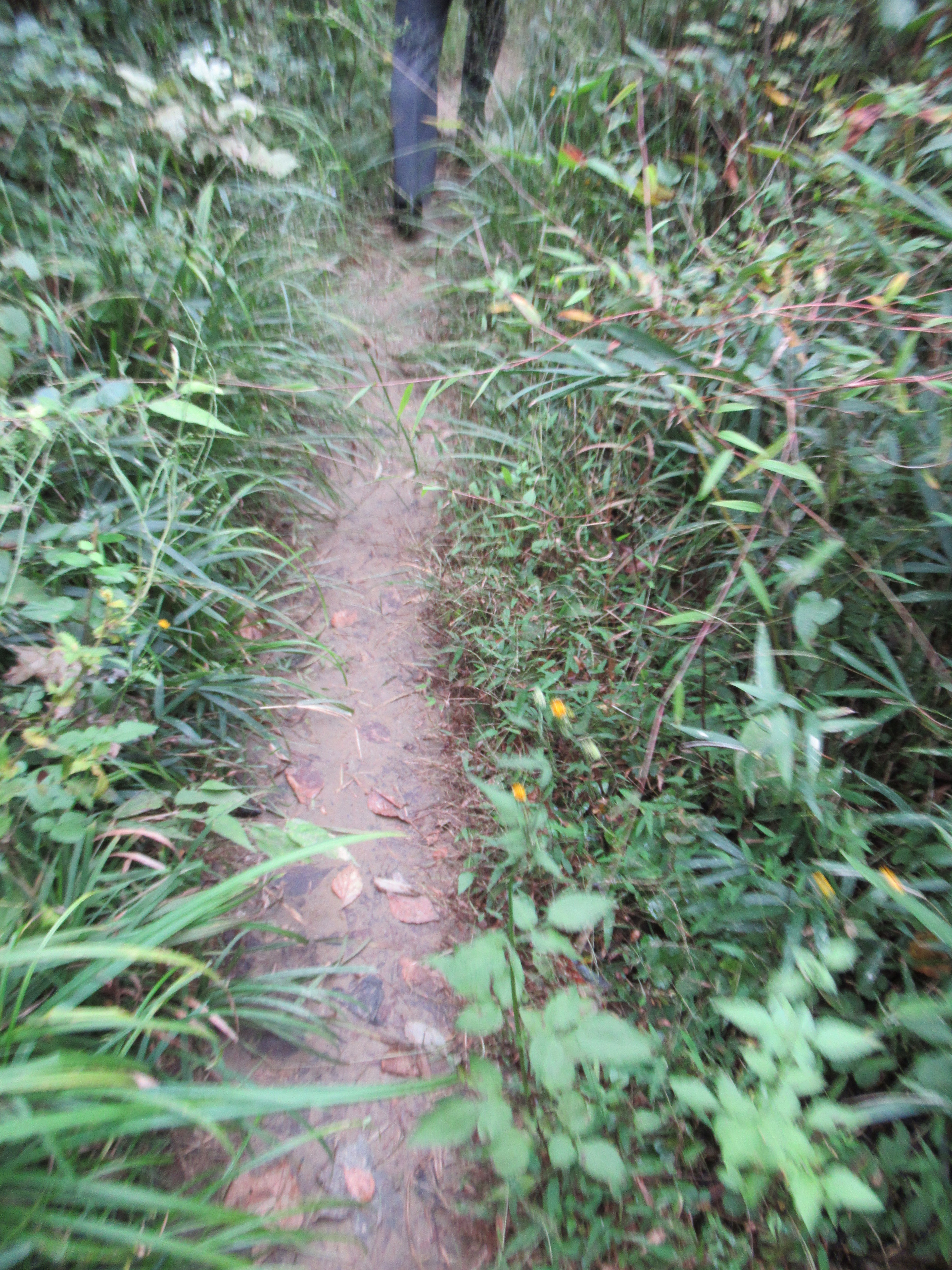
The city office is in damage control mode. For example, take Jike Citizen Forest (; my post on October 7, 2015) which is, maybe, a property of proud descendants of Samurai with family tradition of at least 900 years. Unfortunately, the forest now does not have a team of Lovers who takes care of the maintenance of ancestral land. It could mean some inheritance incidents would have occurred lately and heirs may have paid their inheritance tax with land ... I don’t know exactly what happened. But one thing is for sure: the City of Yokohama hires professional landscapers to clear the undergrowth along the strolling paths in Jike Forest, which is normally done by Lovers Associations. The office also organizes a couple of “fun forestry day for anybody who can come to the Jike forest” in a year. Is it enough? … Yokohama is in the climate zone for temperate rain forest. The maintenance requires more than a couple of days per year for the forest to be at least comfortable to walk, let alone preserving biodiversity. Jike’s forest is rapidly becoming dark due to overgrowing trees and bushes. Comparing, say, nearby Kurokawa Forest (; my post on December 15, 2024) on the edge of TamaHills, the difference is now apparent. I doubt if the Jike forest maintains variety of living creatures which just a couple of years ago welcomed us in a nicely maintained forest …

Commercial rice cultivation is continued in Jike community.

Though, the forest circling the rice paddies is …

Pro-landscapers mechanically mow the grass
to 1m inside the forest from the path.
Er, OK, good job.

It’s not a unique example. Shomyoji Temple Citizen Forest (; my post on December 4, 2015) does not have Lovers Association either. Masakarigafuchi Citizen Forest (; my post on August 21, 2015) is lucky. When its Lovers Association was seriously preparing for closure, a group of young neighbors happened to visit the forest. They were interested in the forestry work and the retiring guys and the City persuaded them to “inherit” the management of Masakarigafuchi Forest. Not all the forests in Yokohama are so fortunate …


And so, the conclusion comes to the word of “Coordination Saves the World” again. Tokyo was once engulfed with enthusiasm for bulldozers. Now it has only large parks. Yokohama has managed to keep neighborhood greenery in urban environments so far. But we are in the middle of rapid demographic change. In this new world, closed associations cannot achieve even status quo. To sustain our success, we need cooperation of neighbors, especially new and young people next door who have potential to pass the baton for the next 50 years and beyond. The problem is how to find such people. The saving grace is these days kids in Yokohama are taught SDGs in schools and know, at least in textbooks, the importance of sustainable greenery that can lead to poverty reduction and coordination for world peace. Let us see how we can go from here …


If you have any questions about Yokohama’s Green Tax and Green Up Plan, please make a contact with

Strategic Planning Division, Green Environment Bureau, City of Yokohama
横浜市みどり環境局戦略企画課

Phone: 045-671-2712
FAX: 045-550-4093
Email: mk-kikaku@city.yokohama.lg.jp


Sunday, January 26, 2025

Checkmate: Games of Chess and Yokohama’s Citizen Forest


Take Niiharu Citizen Forest. It‘s the largest Citizen Forest of Yokohama. The landlord who had the biggest acreage was Mr. Okutsu who unfortunately died in 2000 just before the inauguration of the Citizen Forest (; my post June 24, 2016). He did not have a person who could inherit his property or negotiate with the city what to do with the title of the land. Upon his death the land he owned became municipal property. The remaining landlords of large or else are still counted about 90 people for Niiharu. Do you think they easily agreed to aggregate their land for becoming urbanization control area? We Japanese were/are not so good people. Niiharu is not an exception. It’s a typical land-ownership pattern for Yokohama’s Citizen Forests, large and small. Under this constraint at the time of forming citizen forest network, the city’s planners must have worked strategically to make the forest “Citizen Forest” with the designation of Urbanization Control Area. They fully utilized small meshes covering the entire city.

Lots of landlords for Niiharu

Imagine you had a land, maybe 10m*10m?, within a certain mass of greenery of Yokohama. The next to your forest had another landlord. Actually your land was surrounded by several neighbours who owned ecologically similar forest of small patches. Now, one of the neighbours agreed to make his/her land Urbanization Control Area. Another neighbour decided to sell the property to the City, Prefecture, or even to the National Government. Maybe, the person or the heir used their property for tax purposes. (Well, Niiharu Citizen Forest has several small areas of national land. In a sense, Niiharu Forest has National Park within it.) They were tiny, but eventually, say in 10 or 20 years’ time, your land could be encircled by Urbanization Control Area. One day, you noticed you did not have access to your land unless you passed the Urbanization Control Area. You had insisted to keep your land OK for urbanization at least legally. But you did not have legitimate way anymore to bring bulldozers for constructing “urban“ place on your land. Moreover, did you think easy to connect your property with electricity, water and sewage system of the city? You had to run around many offices for permit etc. Finally, even if you planned to sell your 10m*10m land for a housing developer, did you think there was a buyer for such land?

This part of Niiharu is owned by
the mixture of private and municipal landlords.

For officials who plan to preserve green spaces within the city, that‘s the strategy exploiting the small meshes over the area. Lots of landlords with the equal property right means the diverse idea of land management for each mesh. Within about 100 landlords for 70ha, which is Niiharu‘s case, there is no single policy agreed to manage the greenery. That‘s the point of start. For an official who aims to expand the protected area, the first task is to find title holders who sympathize the environmental protection. The reasons why they think so could be different, but they all agree importance of preserving the ecology of the land. That’s more than enough. Such landlord could be persuaded to make the acreage Urbanization Control Area. If one corner of a land obtained the title, and the landlord started enjoying preferential tax treatment and/or almost free help for land management including weekend forestry by Lovers Society, their neighbour may begin to think the option of making their property also under the Control Area. The next job of the city officer is to find or nudge the neighbours into such direction. Little by little, the property of “against Control Area” would be checkmated. It has been a long, patient, and often unsung or even disliked duty for the city officers in order for keeping the city green. But they were/are very clever. They played chess games, or Go games, for a long haul. They have succeeded. Look. Now in 2025, Yokohama has 47 Citizen Forests and numerous smaller green spaces here and there.

Viola keiskei Miq in Niiharu,
preserved thanks to Urbanization Control Area designation.

The strategy game does not end with the demarcation for Urban Control Area. Yes, once awarded the title of “Urban Control Area,” removing the label requires long legal procedure that often does not match with the benefit from urbanization of the land. (In the end, it’s the system defined by national law passed and modified by National Diet.) Still, for landlords to enjoy the advantage offered by the municipal government, it is based on contract with the city. For example, basically every 10 years landlords for properties within a Citizen Forest have chance to revise and renew their contract with the city. Before, maybe, the title holders lived near the forest. During these 50 or so years, many original members passed away and their relatives inherit the property. The passing of legal title has done with preferential tax treatment for Urbanization Control Area … And now, not every heir lives near, or even in, Yokohama. Some of them may have established their own household in, say, the USA. To maintain Citizen Forest, the city officers must negotiate every landlord, for Niiharu’s case 90 of them, wherever they are on the planet to reach an agreement for the next 10 years’ land-usage. The discussion can take for years. Do you think it’s easy? The most difficult task for local civil servants in charge of Yokohama’s greenery is to get hold of the time-limited agreement with these various landlords.


That’s the way how Yokohama secures green spaces within the city, different from Tokyo. But it’s not all. Aside from the periodical revision of land contracts, the city must think about how to keep environmentally secured land free from nuisance or even crime. Under our climate of temperate rain forest whose dominant vegetation is evergreen broad-leaved trees, leaving the greenery without human intervention must make the forest very untidy and dark. The existence of such space in a crowded city of 4 million people invites crime next door. Besides, dark and untidy forest surely has lower biodiversity which is a perverted result for environmental management with Urbanization Control Area. Here comes the system of Lovers Association. I will tell you about it next week. 😉

This part of Niiharu was a veggie field around 1945
when the entire nation was starved due to the War.
80 years later, Lovers engage in regular maintenance
to make the forest floor bright,
which is important for the vegetation to sprout.

If you have any questions about Yokohama’s Green Tax and Green Up Plan, please make a contact with

Strategic Planning Division, Green Environment Bureau, City of Yokohama
横浜市みどり環境局戦略企画課

Phone: 045-671-2712
FAX: 045-550-4093