Showing posts with label Yadoriki Stream. Show all posts

Sunday, March 22, 2026

Why are you here? Strange DNA finding for 2025 Yadoriki Stream


The eDNA study for Yadoriki Stream 寄沢 completed the 4th year in 2025. The species found in the specimen indicated nice environment for the source of Kanagawa’s tap of water. The aquatic creatures which left their DNA in the stream were the ones that could live mainly in unpolluted water. It’s good news. Several interesting things came up. Mr. Hasebe for Kanagawa Environmental Research Center, who analyzed the specimen, found the amount of nucleobase was larger from the water collected in April, compared with that for November. Though humans love to dive in fresh water in mid-summer, the amount of nitrogenous base during summer is smaller than for April and November.

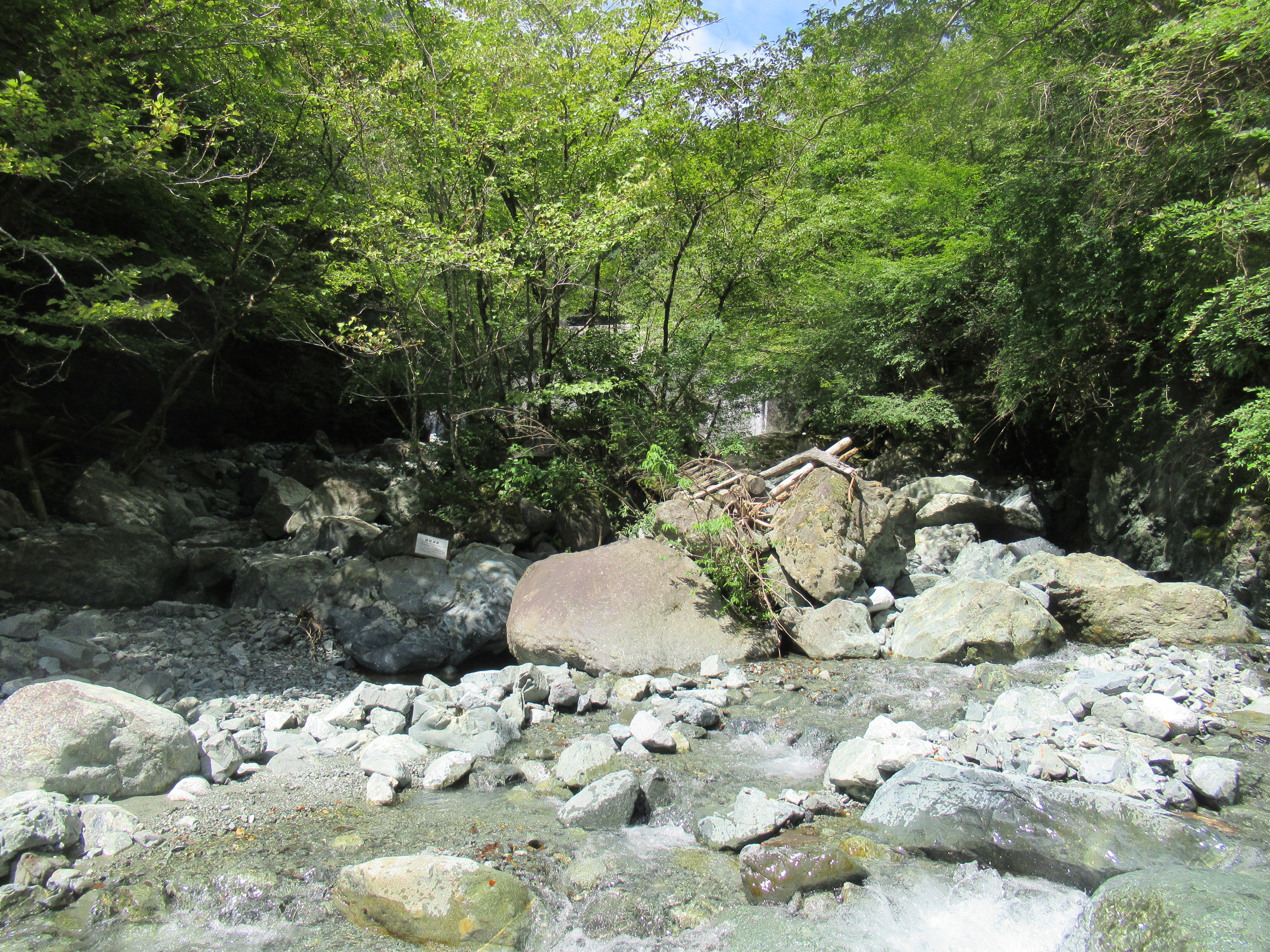
Yadoriki Stream in autumn

When we remember the life cycle of water insects, it would be a predictable conclusion. Many of them, including EPTs (Ephemeroptera, Plecoptera, Plecoptera; their existence can suggest the level of water quality), leave water by the end of spring as adult mayfly, stonefly, caddisfly, dragonfly, … They spend hot summer on land to find partners, to mate and to lay eggs in water for the next generations. When humans enjoy specimen “hunting” in summer, many waterborne bugs have already left their cradle water.

Yadoriki Stream in mid-summer.
Surprising, it contains the smallest nucleobase.

In autumn, tiny nymphs come out of the eggs. As they move around in water, they will leave tiny bits of their DNA in the stream. Since the absolute number of such water bugs is larger during fall than for summer, we can catch their DNA bits more. But they are still babies if not remaining in eggs. In April, many of them are now bigger final-instar larva ready for the launch pad to leave water as adults. The amount of DNA they shed in water would be bigger than for fall or summer. Mr. Hasebe said the next research agenda would be to verify these hypotheses and to think about the meaning of it for the evolving ecosystem under climate change. We citizens keep on draining water in regular way and send it to the lab. Easy. Let us see how it will turn out.

A larva of Nemoura is eating
a larva of Tipulidae.
And we made them fixed
in alcohol …

Having said that, there is a strange finding. This year, Yadoriki Stream contained DNA for Japanese crucian carp. It’s an endangered species, endemic to Japan, nay, to Lake Biwa 琵琶湖 and to Yodo River 淀川. These two large water systems in Kansai 関西 are, I would say, not mountain streams, but have relatively gentle flow. The carp should love such environment and must be perplexed by rapid current of Yadoriki. Why there? We naturally concluded somebody has introduced them from far Kansai Area. The carp is important ingredient for traditional meals in Kyoto 京都 and Osaka 大阪. People farm them for culinary reasons. Endangered ones are the fish in wild environments. Biologically speaking, wild and cultivated ones are the same species. It’s easy for somebody to bring it to mountainous Yadoriki beyond Hakone 箱根. Maybe that person expected fun to fish crucian carp in Yadoriki. (By the way, to fish in Yadoriki Stream, you need an official license. Otherwise, you’ll be defined as “thief” by the police.) Or, s/he may have nobler intention of “restoring the population of endangered species.” Er, well.

Fishing carp here? No way!

From the fish’s point of view they have moved in an environment VERY different from their ideal home. We can simply expect many will die out quickly before leaving the next generation. Let us pray for them … Or there might be stronger individuals that could survive quick water flow. The next question is, does Yadoriki Stream have sufficient ecosystem that could sustain voracious appetite of the carp? The fish can grow 30cm long within 3 years and reach 60cm or more at the adult stage. If they eat up all the algae and the other animal-based feed, what would happen to the local tiny creatures of Yadoriki stream, such as mayfly, et al? It may not happen, but we must be watchful in any case.

Eggs for montane brown frog
recently in Yadoriki Stream.
They would be gorgeous meal
for carnivorous larger animals, such as carps.

If the release turns out to be successful, it will contribute to saving endangered species in wild. But there is a high possibility in such a case the ecosystem of Yadoriki would be different from the place before the arrival of the carp. Is this a desirable outcome for environmental management in water sources? I simply wonder …


If you find environmental issues in Kanagawa Prefecture, please make contact with

Kanagawa Natural Environment Conservation Center
神奈川県自然環境保全センター
657 Nanasawa, Atsugi City, 243-0121
〒243-0121 厚木市七沢657
Phone: 046-248-0323

You can send an enquiry to them by clicking the bottom line of their homepage at http://www.pref.kanagawa.jp/div/1644/

Sunday, April 6, 2025

Our water from Sakawa River: water silk is gone from Yadoriki Stream


This week, we’ve been drenched with cold rain for April … It would do something good, though, for Yadoriki Water Source Forest. Here are photos I’ve taken before this rain.


You see? Dry, dry, dry. At least apparent water silk were not there. Maybe, water flow becomes so thin even for water silk …


Then, I saw this scenery in front of Iizumi Water Intake Weir 飯泉取水堰 at the downstream of Sakawa River.


Yap, the weir always keeps water inside the weir. That’s for sure. But don’t you think the flow of released water are too thin? This week, weather forecasters said the climate was like for February. But, at least it rained. I hope it would have done some good for water of Kanagawa Prefecture.

Then, after rain has gone,
cherry blossoms are in full-bloom in Yokohama
this weekend.

If you find environmental issues in Kanagawa Prefecture, please make a contact with Kanagawa Natural Environment Conservation Center 神奈川県自然環境保全センター

657 Nanasawa, Atsugi City, 243-0121
〒243-0121 厚木市七沢657
Phone: 046-248-0323

You can send an enquiry to them by clicking the bottom line of their homepage at http://www.pref.kanagawa.jp/div/1644/


Sunday, March 2, 2025

Very Dry: what’s happening in Yadoriki Water Source Forest やどりき水源林?


It’s dry these days in Kanagawa Prefecture. Although we do not suffer wildfires like in Ofunato 大船渡 or LA, the dryness of our atmosphere can prick our skin … Having said that, it might be a natural thing for our climate. Here is the total amount of rainfall for each January since 1997 around Lake Tanzawa, a neighbor of Yadoriki Water Source Forest.
Sure, 2025 is in the lower precipitation group for January. But there were drier years before … We may not have a problem. However,


These are water blankets found in Yadoriki Stream in January. It spread widely over the water surface.


Normally in our climate, water blankets proliferate when the temperature of water is warm enough, like around 20°C. During our research of the river in December, the average water temperature for Yadoriki Stream was around 10°C, chilly enough for preventing water blanket mushroomed. In January, the precipitation was small and … the water might have warmed more than for average years … Globally warm winter? We were alarmed, and reported the incident to the Prefecture. We‘re watching the situation.


If you find environmental issues in Kanagawa Prefecture, please make a contact with Kanagawa Natural Environment Conservation Center 神奈川県自然環境保全センター

657 Nanasawa, Atsugi City, 243-0121
〒243-0121 厚木市七沢657

Phone: 046-248-0323

You can send an enquiry to them by clicking the bottom line of their homepage at http://www.pref.kanagawa.jp/div/1644/


Sunday, October 6, 2024

Babys when the planet is boiling: aquatic animals in Yadoriki Water Source Forest, September 2024


Last month in September, it was still hot even in Yadoriki Water Source Forest, ASL 390m+. We forest instructors did a little research in Yadoriki Stream to see what kind of water animals we could find in late September. The high season for water play in the Water Source Forest was supposed to be over by the end of August. But this year it was still boiling hot. Inevitably, Water Source Forest had lots of visitors during weekends to have a chill with Yadoriki Stream. It was still summer. We were delighted to wade in the stream and have a chill. Several families leisurely had picnics in a quiet but gargling sound of the river. Ahhhhhhhhhhhh … summer.


We expected the thing we found in water might not have been different from July or August. Nah. Already a little bit of algae started to establish in the nooks of torrent. They were absent just a couple of weeks ago. The algae will be more by December when all the deciduous trees shed their leaves and started their winter sleep. Confused? Well, while trees have lots of leaves and cover water, the amount of sunlight reaches inside the water is limited. It’s not an algae-friendly environment, mate. Finding algae in Yadoriki Stream would mean fall is approaching, perhaps ... already different from the river during high summer. Then, what our hand nets scooped from the river was definitely different from those a month ago. In September, they were few, and tiny, tiny, tiny. “Hmmmmm. No large larva of Tipulidae or Stoneflies …” “Even Japanese freshwater crabs are pequeños.” The largest specimen we could make on that day was only 2cm or so in body length. Cuties. But in terms of “Gotcha!” feeling … er, you know?

Yadoriki Stream, September 2024
I intentionally scooped the point of algae
as it can cradle the aquatic animals.
But no large ones here …

Tiny crab

In the lab

Lots of tiny heptagenioidea. They are cute!

When we recall a standard lifecycle of water animals, there is no secret for these tiny trophies we could have in September. They mate, lay eggs in water, mum and dad died after that, eggs hatch and larvae spend their child days in water, pupate, and emerge to mate. On average, this cycle takes about 1-2 years, but the time they mate is from spring to early autumn. If the eggs hatch early spring, say March, the babies start to dwell in water from that time, together with those which take more than a year before pupating. i.e. If we do research early spring, or winter, we can catch both big and small aquatic animals. In contrast, from late summer to early autumn, those remaining in water are small babies that come out from the egg recently. Larger aquatic animals in July or August already have become adults and lie eggs by September.

Er … sky was very summer on that day.

OK, OK. What I was surprised was, even in this boiling climate, these creatures follow their traditional lifecycle. Or, maybe they cannot change it easily. Procreation for them is often a one-shot event. It’s not uncommon the bugs to die immediately after a successful egg lying. Unlike humans that can enjoy a long summer for reproduction, they have to do it just once with whatever conditions they are thrown at. I don’t know if the baby water animals are OK with ever-lasting summer. Maybe we should continue collecting data to have some idea what is happening for the baby gadflies under climate change …


Though, fruits of Japanese peppers
already took red autumn red color.


If you find environmental issues in waters of Kanagawa Prefecture, please make a contact with Kanagawa Environmental Research Center 神奈川県環境科学センター

1-3-39 Shinomiya, Hiratsuka City, 254-0014
〒254-0014平塚市四之宮1-3-39
Phone: 0463-24-3311
FAX: 0463-24-3300

k-center@k-erc.pref.kanagawa.jp 

Friday, March 3, 2023

Sense of Wonder from the Estuary of Yadoriki Stream; DNA sampling for water quality monitoring in Kanagawa Prefecture, 2


Alternative approach for sampling DNA from Kanagawa’s rivers is simply drawing a bottle of water, refrigerating, and sending it to the lab. We’re given a plastic bottle for 1L and asked to take river water. Simple. We have to be careful about just two things. One is avoiding contamination during water collection. We wear gloves, wash the bottle carefully before packing water, and always stand downstream during water collection. After gathering water into the bottle, we add RNAlater to suppress the break-down of DNA. Another important thing is trickier. The researcher must start processing the contents of the bottle within 48 hours of the collection, provided the water is preserved as is from the river. So, we refrigerate it immediately after the collection in a freezer bag, and rush to a courier’s office for express delivery to the Prefecture’s lab.

Collecting water

In any case, compared with the syringe method, it is far easier to collect DNA samples this way. In addition, it is guaranteed 1L of screening as we don’t have a problem of clogged-up filter. Maybe the only problem is the weight of 1L especially when we bring water from deep mountain. Mr. Hasebe originally worried about the burden and recommended the syringe-method. But in the middle of the year, he said the difference in amount of water possible to be checked could be crucial for studying the sample. So, he started to recommend the bottle-method “if you can carry additional 1K in your backpack.” In Yadoriki Stream 寄沢, I tried syringe-method twice; once during summer, and another in December. I also did bottle-method in December. All three samples showed different results. Curious. Let me explain.

Yadoriki Stream in one December weekend last year

My first trial for DNA was during summer at the place where a forestry road from the gate for Yadoriki Water Source Forest やどりき水源林 ended by meeting with Yadoriki Stream. From that point, there is no road accessible for mechanized vehicles. Immediately beyond the spot, there is a weir to mitigate the impacts of debris flow from upstream. Do you remember there is a famous “always collapsing” south-west slope of Mt. Nabewari 鍋割山 that has the name “Collapse in Hell” (; my post on January 3rd, 2020)? Also, the physical power of stream at the point is perhaps the text-book example for torrent. From the fishes’ point of view, it would be difficult to go further up when they come from downstream. So, the water I filtered there at that time would reflect the lives of fishes swimming above the weir, near to ones of the very origins of Yadoriki Stream, and hence Sakawa River 酒匂川. The result of DNA analysis was … (drum rolls, please) ZILCH, nada, nobody.

Zilch-point

The end of the forestry road is like this
in Yadoriki Water Source Forest.
 Could you figure out the weir at the bottom of this photo?

Yeah, come to think of it I don’t have a memory of somebody saying “Oh, you see? I met a shadow of fishes at XYZ (beyond the end of forestry road in Yadoriki Stream).” But, even so, if that part of the estuary for Yadoriki Stream has a certain closed “community” of non-migratory fishes, like small Japanese fluvial sculpin, we might be able to catch the trace of them through DNA. The result may have influenced the design of DNA collecting in Mr. Hasebe’s head. He said “Well, straining the water in the field may have influenced the analysis. Besides, the amount of water is inevitably smaller with syringe compared with a bottle of water … Let’s continue monitoring for next year.” Roger. Very interestingly, a point slightly downstream from the Zilch-point, we had totally different result with bottle-method in December.

Actually, there are another two weirs
beyond the Zilch-point in Yadoriki Stream …

We tried the bottle-method in the estuary of Yadoriki Stream at a point slightly before Ushiro-zawa Stream 後沢 joining to Yadoriki Stream. When you take the standard route to Mt. Nabewari from Okura 大倉, the beginning of the final ascend to the peak is named Ushiro-zawa Nokkoshi 後沢乗越 which is a watershed for the east and west of the ridgeway of Mt. Nabewari. Ushiro-zawa Stream gathers water from that very steep western slope and joins with Yadoriki Stream when it meets with the forestry road. It’s a tiny flow of less than 500m long. Having said that, people often boast they spotted the fishes in Ushiro-zawa. (Oh, by the way, the road along Ushiro-zawa reaching Mt. Nabewari is closed for hikers. We need a permit to use the route from the landlord, aka Kanagawa Prefecture. Forest Instructors are OKed. 😊) So, we tried our DNA quest at the very end of Ushiro-zawa just before it joins with Yadoriki Stream. Bingo. Mr. Hasebe found DNAs for Japanese fluvial sculpin, Amur minnow, and Cherry trout.

This is the point we collected DNA from Ushiro-zawa.

Ushiro-zawa

We collected the Ushiro-zawa’s water about 10m before it joined with Yadoriki Stream. So, it might contain the trace of dwellers of larger Yadoriki Stream. But After Typhoon Hagibis of 2019 (my post on October 18, 2019), the prefecture almost “closed” the joint of two streams and laid an earthen pipe, some 1m in diameter, for Ushiro-zawa Stream to pour to Yadoriki Stream. The aqueduct often clogged after a storm. I don’t think fishes are regular commuters to use such unfriendly route … Maybe short Ushiro-zawa stream has very rich biodiversity, and fishes have their own exclusive community thriving happily there. Impressive …

Actually, the living things above water are
 also very rich along Ushiro-zawa.
Last summer, we met a blue-and-white-flycatcher there.
It sung a beautiful song …

The third point we did DNA sampling in Yadoriki Stream last year was at waterfall basin of Takigo-no-taki Fall 滝郷の滝, which is the end of Takigo-sawa Stream 滝郷沢. The water of Takigo-sawa dropped some 20m down at the point where it joins Yadoriki Stream. The water in waterfall basin would concentrate the entire water of Takigo-sawa Stream, we guessed. In December, we used syringe-method to collect DNA. At the time, we could figure out 2 shadows of fishes swimming at the very end of the basin … Promising! The result was … DNAs of Cherry trouts ONLY. The length of Takigo-sawa is more than 1k long, i.e. 3 times longer than Ushiro-zawa. On the other hand, the access to Yadoriki Stream from the waterfall basin is far easier there; constant and relatively shallow stream of some 10m long between the basin and the Yadoriki Stream. During casual summer visits of the Yadoriki Stream near Takigo-no-taki Fall, we can meet Japanese fluvial sculpin here and there. So, we expected the waterfall basin could have contained more variation in terms of DNA. This time, no. It may be due to syringe-method … Or, the 20m difference in elevation could prevent other fishes from entering Takigo-sawa? Curious, curious, curious …

Takigo-no-taki Fall point

When we visit Yadoriki Stream, we first notice large red Yadoriki-oh-hashi Bridge 寄大橋, and a high weir, maybe 10m high or more, below the bridge. Swimming beyond the weir could be impossible for a fish. It means all the fishes we meet beyond that point would be non-migratory and endemic. Stray fishes from fish farms downstream are unlikely, unless somebody deliberately discharged one, which is criminal offence in quasi-national parks of Japan. Actually, between the high weir below the red bridge and the one at the end of forestry road, there is another weir before the joints of Ushiro-zawa Stream with Yadoriki Stream. It is also relatively high, maybe of 5m or so. This one would also be difficult to pass for tiny fishes. Is it affecting the privateness of Ushiro-zawa? From last year’s trial, the stream of the richest biodiversity was the tiny Ushiro-zawa Stream. The lives there would be contained in a very small area … Or, was it a temporary result just for 2022? Mr. Hasebe, it seems to me, is wondering if the syringe method misses something due to a small amount of water sample. The quest continues this year … I’ll report you what we’ve met in 2023. Meanwhile, next week, I tell you more about the DNA sampling from Kanagawa’s water source rivers from prefectural policy’s point of view. Pls. stay tuned. 😊


Yadoriki-oh-hashi Bridge

Oh, I have to tell you this. Takigo-no-taki Fall is famous as it has handful of victims who tried to climb it up and fell to death. It is constantly washed by gushing water, i.e. very slippery. This is in the south of Mt. Nabewari where the fall can be almost vertical and the Greenschist is dominating rocks. The condition makes the wall for the waterfall easily collapsible against stresses the human weight of supporting points put. By now, we know very well the place does not have value to risk our lives. It’s better to admire it from below. Or, use the waterfall basin as a prayer spot … several religious groups use the place during summer … Please keep it safe.

Takigo-no-taki Fall

If you find environmental issues in waters of Kanagawa Prefecture, please make a contact with Kanagawa Environmental Research Center 神奈川県環境科学センター

1-3-39 Shinomiya, Hiratsuka City, 254-0014
〒254-0014平塚市四之宮1-3-39
Phone: 0463-24-3311
FAX: 0463-24-3300
k-center@k-erc.pref.kanagawa.jp 

Friday, February 17, 2023

Biodiversity at gene level; DNA sampling for water quality monitoring in Kanagawa Prefecture, 1


Since last year, I listed myself as a citizen monitor for the water quality of Kanagawa‘s rivers. They supply tap water to us living in Kanagawa (; my 5 consecutive posts from October 21 to November18, and one for 30 December). Our main approach for the task is good-ol‘ nature observation, sometimes with lab study with stereo microscopes. The method has its history starting 2007. It has accumulated data for biodiversity of the river environment and its surrounding forests and towns. Of course, it has limitation. Aside from familiar man-power or the like problems, there is inevitable difficulty to check wild habitat by humans. Not every point of earth is easy for homo sapience to go near, even if it‘s with simple landing nets and vats.

What‘s there?

Say, you walk in Tanzawa mountains and try to collect specimens of aquatic creatures for water monitoring. You encounter an almost vertical fall of stream. It has large and extremly slippery stone wall. The wall looks suspiciously rich for water lifes. They could cling to moss-eaten rock 5m high above from our narrow and precarious trecking route. CAUTION: don‘t try to collect specimen from such dangerous part of water flow. Or, below your feet on a simple mountain bridge, some 20m below, there is a waterfall basin. With binoculars we recognize fishes down there. But fishing from narrow and unstable mountain crossing cannot guarantee you a catch … CAUTION: don’t try to collect specimen from such dangerous part of water flow. You got the point, don’t you? Don’t worry. There is a possible solution for studying ecosystem of this kind of environment, thanks to the 21st century technology. It’s DNA sampling.

DNA sampling demonstration

Originally, the method of using DNA for cataloguing water creatures was started to study ocean. Well, no one expects humans to study comprehensively the entire sea of this planet. On the other hand, all the living things shed and spread the remnants of gene within the environment. Majority of us wash away our dirt peeled from the body in regular shower, or using toilet, don‘t we? It means our body accumulates and discards old body parts made by gene everytime. (er ... it sounds ... yack. But let‘s face the reality!) Same is happening for the water dwellers. Living or dead, they continuously leave the traces of their gene, aka DNA, in water they live. Scientists noticed this, and develped the way to collect DNA from a bucket of sea and the other natural waters. They feed the DNA data from water to powerful computer and analyze the result. Starting this fiscal year, Kanagawa Prefecture introduced this way of monitoring water quality by citizen monitors ... For more detail of the project scheme, I tell you later. This post and next are for my adventure with actual DNA collecting in Yadoriki Water Source Forest やどりき水源林.

Pacific Ocean!

Kanagawa‘s way to collect DNA from rivers has two approaches. One is using syringes. Another is literly collecting a bucket of water. For both approaches once the sample is taken, they must be at least cilled or frozen. Monitors must rush to a courier’s office to send it to the Prefecture’s lab by express. I realized, yeah DNA is ubiquitous in natural water but they are very fragile. DNA is broken apart quickly unless treated carefully. That’s the reason why there is no “DNA pollution” of river, lake, pond, sea, … Come to think of it, it would be why the ecosystem is happy to accept “natural” garbage and circulate everything in a sustainable way ... Anyway, let me show you what kind of thing we’ve done this fiscal year for DNA sampling. Let’s start with the syringe method. Here is a kit I received from the lab of the Prefecture.


The first thing we monitors must do is to wear gloves before collecting water. In the same token, we’re to stand downstream, when we collect water in a stream. It’s to avoid contamination. Researchers don’t need human DNA in the sample, you know.

Wearing rubber gloves

Or, standing downstream.

Next, a usage of bucket. Unlike oceanic study, we don’t need a large bucket to collect water. So, a plastic cup in a size of coffee mag is enough. I attached a rope to it in order to collect water from a point where we cannot have direct access, like a waterfall basin. Throwing the “mag” and pulling the string toward us would do the job. Also, we have to sanitize it before usage with dishwashing liquid, dry it under sunshine completely, then rinse the cup just before collecting sample with the same natural water from which we collect water.

A washed cup with a rope attached.

With it, we can collect water from a point like this, or

From a waterfall basin like this.

For syringe method, 50ml of collected water is sucked up into a syringe from a cup and discard the remaining water downstream. At the tip of the tool, we attach a Sterivex that is a filter to catch DNA. We push water from a syringe through the filter. Once 50ml is filtered, we repeat the same process until we draw1000m through the filter. But it is often the case we cannot filtrate 1000ml as the pump of syringe reaches to the point where it cannot go any further. Inorganic material like dust? Some other things? Very large DNA? We stop the process at this point, and record how much water we filtered for the Sterivex.


A syringe with Sterivex.
The amount of water is for one cycle.

Filtering ...

Once the filtering reaches to the max, we pump it for the last with air and squeez any remaining water inside the Sterivex. Mr. Hasebe of Prefecture told us, “This is VERY IMPORTANT process to preserve DNA!“ Then, remove the Sterivex from the syringe and seal the tip with a rubber cap securely.


We then pour 2mL of RNAlater in the Sterivex with a sterilized dropper. It‘s to suppress the break-down of DNA. Once all the RNAlater is added, close the end of Sterivex tightly, like this.


The next step must be taken quickly. We enclose the DNA sample filter in a cooler bag with frozen ice packs, and send it in prompt as a “frozen matter” from the nearest courier office. If the preservation of DNA goes OK with RNAlater and frozen packs, the DNA can reach the freezer of the Prefecture office in no time and the sample can be kept for a long period as long as the freezer works OK. Some people said the process is very tedious, but I found it very interesting. Actually the most difficult part of the task was to reach to the courier office smoothly (because traffic jam, etc.) and to send the sample as “water filter,” not a biological matter … sending biological or medical thing as courier is EXTREMELY difficult in Japan, of course ... I think I don’t tell a lie at the courier … It’s filtered water, to be sure. Phew! Next week, I tell you the “bucket method,” and more about the adventure of dipping up water in Yadoriki Water Source Forest for DNA. Please stay tuned!


If you find environmental issues in waters of Kanagawa Prefecture, please make a contact with Kanagawa Environmental Research Center 神奈川県環境科学センター

1-3-39 Shinomiya, Hiratsuka City, 254-0014
〒254-0014平塚市四之宮1-3-39
Phone: 0463-24-3311
FAX: 0463-24-3300

k-center@k-erc.pref.kanagawa.jp

https://www.pref.kanagawa.jp/docs/b4f/index.html