Showing posts with label Satoyama. Show all posts

Friday, April 15, 2022

Secret Cuisine: Bamboo Charcoal Salt


Although charcoal made from bamboo has lower calorie than wood charcoal (and so it’s inferior as energy), it has several usages. Bamboos dead or alive have lots of holes in their body. After we bake them into charcoal, it keeps its porous property with numerous micro-holes. When a material is porous, its surface area is far larger than its appearance. For 1g of wood charcoal, the average superficial area is 200-400 m2. For 1g of bamboo charcoal, it’s 700 m2. Smelly molecules wafting in the air would be plugged in the nano pits from which is difficult to escape. The more porous, the more space to capture molecules. Purifying power of bamboo charcoal > Power of wood charcoal. Got it? People are studying to utilize such characteristics to make sustainable activated carbon for industrial use. Or, it can be used for cooking. There are several charcoal products that can be used for cooking rice. How-to is simple. Wash charcoal with tap of water sans soap, dry them well, throw it in a rice cooker above rice and water, and cook it as usual. Chemically treated tap of water will be purified by bamboo charcoal, and the taste of cooked rice is softer and N-I-C-E. We can do the same with the highest-grade wood charcoal, but the cost performance we get from cheaper bamboo charcoal can beat the luxurious Binchotan 備長炭. Not bad, huh?


Charcoal Baking Hut, Spring 2022,
Niiharu CitizenForest
新治市民の森

Niiharu Lovers bake bamboo charcoal since its inauguration some 22 years ago (; my posts on March 3 and 10, 2017). We sell them as a fund-raiser to support our forest maintenance activity. Having said that, we cannot peddle our product good for rice cooker. Reason? In Japan in order to sell any food the supplier must hold business license based on Food Sanitation Act. Yap, we do not eat charcoal itself when we use bamboo charcoal for rice cooker. But the minerals of charcoal will inevitably dissolve in water and absorbed by cooked material. On the other hand, Niiharu Lovers do not have money, or more precisely, enough sales to cover license application fee to sell our bamboo charcoal for cooking. i.e. We cannot market Niiharu’s bamboo charcoal for food. But it does not stop us to use personally our product for cuisine. Japan is a free country! Using our charcoal for rice cooking privately is a start. Then one day, I found there is another gastronomy fun to bake bamboo charcoal. That’s about salt. It’s Bamboo Charcoal Salt.

Preparing for the charcoal baking kiln

I’m sure porous property of bamboo trunk should do wonder when we make bamboo charcoal salt. The way to baking bamboo charcoal salt is easy, as long as you have an access for bamboo charcoal kiln. It goes like this.

Ingredients: Nice sized bamboo trunk, salt. And just in case for the salt bursting out from the bamboo, I used aluminum foil, small pebbles from Yadoriki, and hemp string for a cap.


First, punch inside of bamboo trunk to pierce node(s) of bamboo, except the lowest knot that will be the bottom of a “bamboo vessel.” I made a hole and washed the whole bamboo with running tap of water. You see, it will contain food …


Next, stuff the bamboo with salt. I used crude salt that is used to pickle vegetables in Japan.


I precautionarily made room at the top of bamboo pipe to stuff the pebbles in case the contents boiling over. In retrospect, that was not a problem in the end. But in order to protect the product from charcoal dust, the cap was useful.


Here, the cap, typical tuff of Tanzawa Mountains including lapillistone, on aluminum foil.


We capped the above prepared bamboo vessel with another bamboo piece.


It then stuffed in the kiln with the other bamboos for baking.


We simply fired the kiln as usual (; my post on March 3, 2017). When we opened the lid of the kiln, the salt staffed bamboo trunk looked like this. Here we go! How did it turn out …?


The bamboo vessel simply lost the shape of pipe after baked in 800-900+Co for 24 hours. But the mass of salt was kept in a sort of cup of bamboo pipe like this. Could you see on our left there is a cap part? I mean, baked pebbles and aluminum foil. It was a sort of impressive scenery for me. Tanzawa’s tuff was made from volcanic activity. Especially the greenish lapillistone was cooled lava. It did not kept its color after charcoal baking …


The lower part of the vessel turned into baked salt.


I threw away the pebble and aluminum part of the contents and ground the rest. Here! Bamboo Charcoal Salt!


According to Google search (for example, here, here and here), the recipe for bamboo charcoal salt was first created by Buddhist monks in Korean Peninsula some 1300 years ago. They bake salt in a bamboo trunk capped by loess, with fire from pine logs. The whole process takes 3 months, and the baking is done 9 times. I wonder how they keep the bamboo vessel during the process. Bamboos will crumble just after one trial ... Anyway, their aim was / is to create medicine. When such precious drug came to Japan, the recipe was modified. No loess, and logs are chosen from our backyard forests, not limited to pines. In the 21st century, several makers in Noto Peninsula 能登半島 provide this special salt about 1000 yen for 100g salt (for example, here). It is served in the exclusive restaurants in Japan for Tempura and Sashimi. I tried my product and found certainly the edge of regular salt has gone. The heat reached to the stuffed salt via miniscule holes transferred the essence of bamboo to the salt. It smells like hot spring egg. So, for sure we have to choose for which dish we can use this salt. But, for example, fried veggies go superb with this salt! Niiharu Lovers secretly shared the product after baking the last bamboo charcoal for this season. Our portion is like 3 tablespoons per person … we are treasuring it and waiting for the next charcoal baking season. Ahem! We are law abiding citizens. This salt is for us only, Not For Sale 😉.


If you find a problem in the greenery of north-half of Yokohama, please make a contact with

Office for the Park Greeneries in the North
北部公園緑地事務所
Yokohama Municipal Government Creative Environment Policy Bureau
横浜市環境創造局
Phone: 045-311-2016
FAX: 045-316-8420

Friday, April 1, 2022

Good things come to those who wait: Yubeshi part 2


So, from the ingredients for Yubeshi, you may think “Hmmmmm … it’s vegetable protein and fat, isn’t it?” Right. The main ingredients of miso paste is soy. Nuts are for unsaturated fatty acid. For yuzu peel, here is 2015 data from Ministry of Education of Japan:

For 100g of yuzu peel, the main nutrients are

59 kcal
Protein 1.2g
Fat 0.5g
Carbohydrate 14.2g
Vitamin E 3.4mg
Vitamin C 160mg


As reference, 100g of yuzu juice contains

21 kcal
Protein 0.5g
Fat 0.1g
Carbohydrate 7.0g
Vitamin E 0.2mg
Vitamin C 40mg


It’s obvious yuzu peel is more nutritious than its juice. I guess that’s why ancient warriors carried them as ration. Now we’ve completed mise en place. Let’s start cooking.


First, we mix well Miso paste, Sugar, and Flour of your choice. You can skip flour if you prefer. The taste of Yubeshi will be stronger, i.e., saltier.


Next, add nuts and sesame. Mix well.


Finally, add sake and mirin. Fold them thoroughly to make a sticky dough. Or, you could skip adding such liquid in the dough. Again, the taste of Yubeshi will be stronger and saltier without these ingredients.


Put the miso mixture in a cup of yuzu peel. I think this is the most important part of cooking Yubeshi. If you economize the mixture, when you cook the peel, it could collapse and Yubeshi won’t be a shape of power ball. When you add too much of miso and nuts paste, the dough will expand during the cooking and overflow from the cup at best, or tear the cup and no ball will come out. The key is just nice amount of miso mixture in a cup. It would be like 70% of a cup, which could be …


like these. For this amount of dough, when you put the lid on a cup, it sunks in the cup. Don’t worry this dropped-in. It will turn out a nice Yubeshi ball.


Steam Yubeshi balls for 60 minutes, or …


until the fat of the peel and sugar covers the ball thoroughly and turns the balls shiny like these. Could you see the peel cups also have color of miso paste? That’s pretty much OK.


The miso oozed out and turned the color of the peel. No problem.


Next, wrap each cooked yuzu balls with a parchment paper and fasten it with a rubber band. It’s like making heads of dolls. Frankly, it’s fun! Now we reach to the last process for preparing Yubeshi balls. Let’s hung them somewhere to dry. I used old laundry nets for economizing the space (;hey, we’re in Japan!). Add one ball in a net, fasten the net at the top of the ball with a twine, then add another ball. Continue this until all the space of a net is full. I then hung them from a hanger. Very luckily when I steamed Yubeshi balls, it was a damned fine January weekend so that I started my drying outside. But letting balls to be wet by rain is HUGE no-no. The place to dry Yubeshi balls are somewhere with nice air circulation, and dry. If you care, you can check the form of the ball while the cup is still wet. You massage them to make them rounder, just like making a snowball.


It depends on the dryness of the climate of your place. In normally very dry Yokohama’s January, Yubeshi balls will be hardened within 7 days or so. I’m not sure when it is OK for the cooked Yubeshi balls are still soft after 7 days … I guess in such a case there is a danger the cooked yuze cups are getting moldy and started to rotten, i.e. the failure of the cooking. That’s the reason people say cooking Yubeshi balls must be completed by the end of January in Kanto region, Yokohama included ... Metropolis Tokyo in December to January has very dry but not so harsh winter. Having said that, as long as the air is dry enough it won’t be a problem, I surmise. Traditionally, this Yubeshi balls are made not only in Nara Prefecture but also in Ishikawa Prefecture where they have huge amount of snow fall in winter. Heavy snow does not mean wet weather, you see?


The next step of this recipe is, W-A-I-T. Once the Yubeshi balls are hardened in the net, let them keep drying for at least one more month in a place of good air circulation. It means when you’ve completed cooking yuzu cups at the end of January, Yubeshi balls will become power balls in the first or second week of March. After the long waiting, the wrapped Yubeshi cups shrink in the paper to become like these.


Inside the paper wrap is completely dried Yubeshi balls. Once the Yubeshi reaches to this stage, it can be stored in room temperature.


To eat Yubeshi, the standard is to slice them. A ball Yubeshi is very hard, but cutting them is not hard. Come to think of it the inside of the cup was the mixture of miso paste that was once creamy. The taste of Yubeshi is salty (because of miso) and sweet (thanks to sugar). It has flavor of yuzu fruits, nuts, and sesame. As they have been folded by miso which is fermented by yeast, these peels and nuts are also matured in a cup and create complex harmony of savor. I tell you they are D-E-L-I-C-I-O-U-S!!!! No wonder one Yubeshi ball could cost 10 USD when we search them in stores. They can be very good tapas by themselves. People say combining the slice of Yubeshi with cheese goes superbly with wine. Naomi is enjoying them occasionally as luxurious afternoon snack with tea. Cherry blossoms are in full swing now …😊


If you find a problem in the greenery of north-half of Yokohama, please make a contact with

Office for the Park Greeneries in the North
北部公園緑地事務所
Yokohama Municipal Government Creative Environment Policy Bureau
横浜市環境創造局
Phone: 045-311-2016 
FAX: 045-316-8420


Friday, March 25, 2022

Ancient Power Bar: Yubeshi part 1


So, last January when I still held at hand lots of ripen yuzu fruits, I was searching for the way to store my harvest without using fridge. Oh-so-global-warming-approaches to save food in 2022 … It was difficult to encounter such non-fridge preservation of fresh produce unless sun-drying them completely. Yeah, drying fresh juice of yuzu fruits might be an option for manufacturers … maybe they can make yuzu powder from sour squeeze. I don’t have such nice equipment to perform the magic. I was becoming desperate ... Then, one night I vaguely watched tele. A travelogue by a comedian began. He went into a deep mountain of Yoshino area 吉野, Totsukawa Village 十津川村 of Nara Prefecture 奈良県. People of that community served him lots of local gourmet, like wild herbs, trout, gibier meats … They then gave him a slice of something. He asked, “What is it?” A lady replied with smile. “It’s Yubeshi, an ultimate preserved food. It’s traditional delicacy of our area. It is made of yuzu fruits.” Bingo.

Store-bought version of Yuzu vinegar

In that tele, the ladies of Yoshino explained there is a legend the food was brought from Kyoto 京都 some 900 years ago by samurai warriors of Heike Clan 平家. Between 1180 and 1185, Japan was in turmoil of civil war. Two big clans of samurai, Genji 源氏 and Heike, crushed for power grab of the nation. In the end, Heike clan was defeated completely. Many soldiers who fought for Heike escaped with their bare life and hid into deep mountains. Yoshino mountains were one of such chosen areas. According to the ladies in the tele, at that time mountain people who gave shelter for Heike survivors noticed the samurais wore formerly-gorgeous but now dirty and blood-stained armour without much provisions. Even though, they dangled few brown balls and bamboo-made water bottle from their waist. Villagers asked what these balls were. The warriors answered they were popular preserved food in fashionable Kyoto, made of yuzu fruits. The country people learned how to make it, and it became Yubeshi, or Yuubeshi. As they were suitable for soldiers to carry, they were like power-bar for athletes some 900 years ago. i.e. They are nutritious, and can be carried at room temperature. IDEAL!!!

Er, this is Yubeshi,
approx. USD 2 for about a dozen bite size.
 It’s not that we’ll make.
 For this one, please see below.

Thanks to electricity-eating method of google search, I could do research for the recipe of Yubeshi. You could do the same, but I have to warn you if you google “Yubeshi, recipe,” you probably found that for sweet rice cake with walnuts, or walnuts and sweet yuzu peels for yuzu fragrance (like here). They are lovely treat by themselves, but not Yubeshi as preserved food. We have to consume rice cake Yubeshi before it becomes hardened, maybe within 2 or 3 days. Yubeshi of Totsukawa can really be stored at room temperature for long, more than 6 months. Another difference between regular Yubeshi and power bar version is their commercial availability. Sweet rice cake Yubeshi can easily be found in supermarkets, like the photo above. They cost 1000 or so yen for large 9 Yubeshi cakes (for online shopping, please check here). For warrior Yubeshi, its price is 1000 or so yen for 1 Yubeshi, i.e. VEEEEERY EXPENSIVE. After checking the recipe you’ll know why it is such a gourmet delicacy … (Hmmmmm … I’ve heard similar food is found in Taiwan, but they sell them at more reasonable price …) Nonperishable Yubeshi is not difficult to make, but it takes time to complete cooking. That’s why I report you my adventure of Yubeshi at the end of March, after harvesting them in January. This week, let’s start from mise en place to make power bar Yubeshi.


First, wash ripen yuzu fruits, then cut the head of them to hollow out the fresh. Please be very careful not to break the peel of yuzu, and better to remove remaining membrane as much as possible. Don’t forget cleaning up inside the cut head as well.


The removed segments can be cooked for jam. Strip off the piths and seeds as much as possible, and stew them with sugar. I add sugar of 60% weight of the segments. The fruits have lots of pectin. Simply stewing the segments with sugar is enough to make yuzu jam. The skin of segments is somehow melted away in jam. You don’t have to fuss about them before cooking.


The Yuzu seeds can be used to make a natural skin lotion. The way to make it is simple. Put seeds (please do not wash them) in a jar and add distilled alcohol whose content is at least 35%. Rough amount of alcohol is max 10 times of the volume (NOT weight!) of seeds. Leave them as such for at least 10 days in a cool + dark place. When the liquid becomes slightly thick, it’s ready for use. It won’t make radical difference on your skin in a day or two. But my experience says using this for 6 more months as body lotion turns the skin smooth. Actually, yuzu seeds have the highest rate of pectin for their content, more than segments or peels. In addition, the lotion’s viscosity helps the potion to remain on the skin longer. So, the yuzu lotion can a powerful moisturizer, you see?

Magic fruits!


For about 10 yuzu fruits, other ingredients for Yubeshi are

  • Miso paste: of whatever of your choice. 250-500g, depends on your taste. Do you remember miso is salty (my post last week)? More miso means saltier Yubeshi.
  • Sugar: half or less amount of miso. The choice for the kinds of sugar is totally up to your taste. Using brown sugar, the taste of Yubeshi becomes earthier, but flavor of citrus could be overwhelmed.
  • Flour of your choice: wheat or rice, or even soy or almond. You can skip it if you like. I add them in order to retain some carb in the protein-heavy power bar. The amount of flour is the same as the sugar.
  • Sake: this is must if you use flour. For 500g of miso, 200cc of sake is a benchmark.
  • Mirin: it also is for flour. 500g of miso and 100cc of Mirin would do.
  • Sesame seeds: Lots of it, maybe 100cc or more for 10 yuzu fruits. White seeds could give straighter sesame flavor to Yubeshi than black one.
  • Walnuts: Chopped for the same amount of sesame. So, for 100cc of sesame, I use 100cc of shopped walnuts.
  • Other ingredients could be chopped peanuts. You can replace walnuts with peanuts, or use both.

From these components, don’t you think it will be a powerful power bar? Next week I tell you how to cook them. Please stay tuned!

I used fine rice flour called
Joshinko
上新粉 for my Yubeshi.

If you find a problem in the greenery of north-half of Yokohama, please make a contact with

Office for the Park Greeneries in the North
北部公園緑地事務所
Yokohama Municipal Government Creative Environment Policy Bureau
横浜市環境創造局
Phone: 045-311-2016 
FAX: 045-316-8420

Friday, March 18, 2022

Harvest Time: how to eat Yuzu fruits


Last October, I posted my adventure with Yuzu tree in our family’s garden. I thinned green fruits, hoping ripen yellow citrus in better shape and without blemish. I more or less succeeded. The ripen fruits were better shaped, but after enduring several typhoons and storms some of them had scars on their yellow skin. OK, unless we grow the treen in a well-built glass house, it would be the best our family can achieve with the tree, I reasoned. We had more than 200 yellow fruits from our only 2 or so meters tree. It’s amazing observing the plant’s fecundity! Though, after harvesting I faced a huge task. What to do with these yellow balls? Yuzu fruits are very sour despite of their lovely, sweet smell. It’s just like lemon: not for direct consumption under normal circumstances ... I supported one Paralympian in Tokyo who needed to bite and eat up fresh lemons just before competition. That person said that’s the way to calm and concentrate the mind for the very important moment. Er, OK. The next hurdle for us was to procure enough number of fresh lemons in the Paralympic Village, bubbled due to COVID … Anyway!

I left the most damaged fruits on the tree,
thinking birds may take it.
Nah. Many remained on the branch, shriveled.

Standard usages of Japanese ripen yuzu fruits are

1. Squeeze juice, mix it with rice vinegar (of the same or slightly less amount of the juice) and store them in a fridge as yuzu vinegar. Oh, storing fresh juice sans rice vinegar could be an option if you plan to use it up within a week. In this case, due to the amount we could extract from our harvest, vinegar was added as a sort of preservative;

2. Peel bright yellow skin, and store them in a fridge for cooking usage;

3. Cooking jam, preserve, or marmalade from them.

Inevitably, our fridge rapidly lost the space for Yuzu. I deployed freezer space for solution ... I hope we can enjoy the harvest at least until the end of coming summer … The way to make jam or marmalade from the fruit is same as for oranges. That’s that, and we ended up with more than 10 jars of yuzu jam. I was busy distributing them among my friends this winter. And there still remained the fruits in a basket. Before they shrivel, I have to do something!

My 2022 Yuzu jam

The easiest to make and rapidly consumed product with ripen yuzu fruits has been “Yuzu-honey.” The recipe is uber simple. (1) slice the fruit and soak them in honey. (2) wait for at least 24 hour until the juice of the fruit mixed completely with honey. (3) pour hot water or soda to yuzu-honey mixture of the amount you fancy. (4) Enjoy! It’s very sweet drink for deep winter … It must be packed with Vitamin C. The drink could be a strong defense against flu, at least! I My advice for storing yuzu honey is “Fridge, Fridge, Fridge.” It’s easy for the concoction to be moldy at room temperature. Corollary: making yuzu honey is not enough to use up more than 200 fruits without pressure for fridge. I needed next move.

Yuzu-honey.
I did not add any H2O for making it.
They were very juicy fruits!

The recipe I’ve found was to make Yuzu-miso paste. There are at least 2 versions: one for short-term consumption, another for long-term (er, but I guess for less than 1 year) preservation. Short-term Yuzu-miso is a standard ingredient for winter cuisine in Kyoto. The way to make goes like this:

<Ingredients>

2-3 tbsp. of grated Yuzu peel

2 tsp. of squeezed Yuzu juice (no need to add rice vinegar)

150g of white miso paste

2 tbsp. of sugar

3 tbsp. of Mirin

White miso paste is made of soy beans, salt, and malted rice, just as red paste. But the amount of malted rice to ferment soy is far larger than that for regular red miso paste. (If you try making it by yourself, please check here.) The result is sweet taste overwhelming the average saltiness of miso. Mirin is rice wine which is also sweet. So, the Yuzu-miso of this recipe not only salty, but also sweet. The way to make it is simple. Mix white miso paste, sugar and mirin well in a pan. Then you put the pan on slow fire and mix the contents until it started to have a shiny texture. Mind you, it won’t take much the mixture changes their feel, maybe in less than 5 minutes. In addition, it is easy to be burned, due to natural sugar of the miso. Please keep on watching the pan carefully. When the sugar-mirin-miso concoction alters their feel into polished, remove the pan from heat. Add the grated peel and juice in the pan and mix well. Voila! You can use it to graze your meat, fish, or simply on your morning toast.

Half-used up white yuzu-miso.
Could you get “shiny” feel from the photo?


The way to make long-term version is basically the same. The difference is, we use regular red miso paste. It goes like this:

<Ingredients>

100g of yuzu, peels grated, and juice squeezed. We use 1/3 amount of yuzu juice procured from 100g (no need to add rice vinegar)

400g of red miso paste

400g of sugar, preferably brown

2 tbsp. of Mirin

Red miso paste is standard miso paste you could find in supermarket. The way to make longer-storage Yuzu-miso is (1) Mix well miso paste and sugar in a pan. (2) put the pan over very weak fire and keep on mixing slowly for 5-6 minutes, i.e. longer than the short-term version. (3) add Mirin and continue blending gently the mixture over slow heat for 10 or so minutes more. (4) remove the pan from heat just before the miso becomes sticky. The concoction should be still slightly watery. (5) add grated peels and yuzu juice to mix well. Have you noticed for both white and red yuzu-miso, grated yuzu peel and juice are added after the pan is removed from heat? It is to preserve the fragrance and taste of citrus in the miso. People say it’s OK to store red yuzu-miso at room temperature. But I guess it would be safer to store them in a fridge … er, it means my problem with tons of yuzu fruits continues. I did further research and found a solution. Next week, I report you my answer for the situation. Phew. 😂

My red yuzu-miso, 2022.

If you find a problem in the greenery of north-half of Yokohama, please make a contact with

Office for the Park Greeneries in the North
北部公園緑地事務所
Yokohama Municipal Government Creative Environment Policy Bureau
横浜市環境創造局
Phone: 045-311-2016 
FAX: 045-316-8420

Friday, November 12, 2021

Mom’s Garden


At the end of summer, my mom broke her thigh bone. She had an operation and now staying a rehabilitation hospital. She’s of great age, and med-doc said it was of osteoporosis. Our family hope she’ll come home before Christmas and tending her precious garden as much as possible, if not as before … Meanwhile, her garden has not had regular care for a couple of months. One day, suddenly, I noticed the change.


I don’t know why, but many many many seedlings of bush clover (Lespedeza bicolor) sprouted all over. At first, I had a sort of “OK, we neglected the care here …” kind of detached attitude. But soon I realized if we left it as such mom would be upset when she comes home. So, these days I pull the bush clovers out when I can find time … and the task is still going on. Not only Japanese clover, but also many other wild vegetation is eyeing for the pole position for sunshine. American Gamochaeta pensylvanica (Pennsylvania everlasting) and sedges begun spreading their root firmly. (Whoops, gosh, gosh, gosh …) Creeping woodsorrels are still flowering even in November in order to spread their seed widely during winter. (Hey, hey, hey, what are you doing!)


In contrast those pretty flowers from garden centers in Yokohama started to be buried under the vigorous leaves of wild comers. I’m a sort of amazed to witness vital force of undomesticated ones. They don’t miss well-fertilized ground that has been unattended for some time. And good-looking varieties are no match for these worriers … Er, OK. I have to make the place presentable to mom when she returns in few weeks’ time. Tasks are waiting!


If you find a problem in the greenery of north-half of Yokohama, please make a contact with

Office for the Park Greeneries in the North
北部公園緑地事務所
Yokohama Municipal Government Creative Environment Policy Bureau
横浜市環境創造局
Phone: 045-311-2016
FAX: 045-316-8420

Friday, October 15, 2021

For the memory of Paralympians: Thinning Yuzu fruits

Over the Village for Tokyo 2020, one early evening,
 a flock of migratory water birds was passing by.
 They were beautiful …


A nephew of a friend of my family is a grape farmer in Yamanashi 山梨, a neighboring prefecture for Kanagawa. He quitted his office job in Tokyo some 20 years or so ago to nurture gorgeous dessert grapes. After so many trials and errors, his vineyard becomes to earn top prizes regularly in Yamanashi. His grape has golden color of very large fruits, 2cm or 3cm in diameter, and de-li-ci-ous. It is very sweet and juicy preserving slight tanginess of grape. Ya-mmmmmmy!!! Every year, he sends his harvest to our family, in a large box. This year, it arrived during Tokyo 2020 Paralympics. I brought some grapes to National Paralympics Team for a certain country. The athletes and the staff or the delegation loved it and asked if there is more. Er, sorry, it’s once in a year treat …

Japanese residential block
 in the Village during Tokyo 2020.
 Oh, I was not an assistant for
 Japanese National Team, for sure.


To grow that size of grape, it is very important to thin out fruits from very early stage of its growth. I once saw a farmer thinned sesame-sized grape from a bunch of still 5cm or so in length. He had to drop fruits in a strategic way, imagining the final product of perfect shape with grapes of 3cm in diameter. He then does the same at the different point of growth for his crop. It’s a job requires patience.

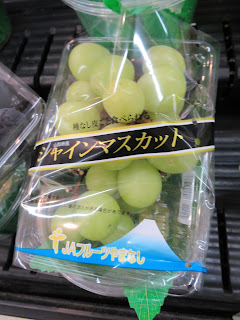
That grape was definitely larger than this supermarket version.

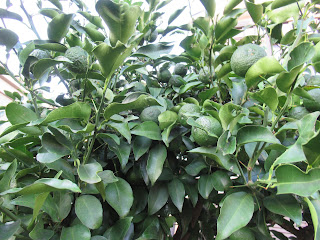
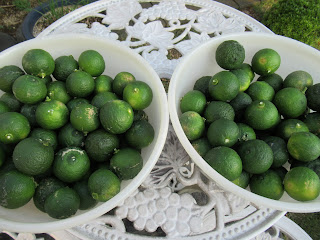
After Paralympics were over, I cast my eyes to a Yuzu tree in a garden of our family. September is the time when young Yuzu fruits start to have 4 or 5cm of diameter. Our tree had a lots of fruits, for sure. Many of them, still very green, were dangling from the same brunch, rubbing each other’s shoulder … they won’t have blemish-less skin when they turn yellow … I gawped the tree … You know, I was completely exhausted after Tokyo 2020 … It then clicked. Why not thin the green yuzu fruits, and make Yuzu chili sauce? So, I thinned Yuzu fruits from the tree in our garden. I had a bumper crop.

Congested

My harvest!

From these green Yuzu fruits, I’ve made Yuzu Chili Sauce, Green Yuzu Juice for Yuzu Sour, and Green Yuzu liquor. All have a simple recipe, but it takes time for them to mature. Here are recipes.

<Yuzu Chili Sauce>

1. Peel green yuzu. The point here is in order to prevent tart taste to avoid white cushy staff just below the green peel, and any damaged skin of Yuzu fruits.

2. In food processor, mix the green Yuzu peel with salt and green hot chili peppers. The ratio of these ingredients is Yuzu peel 6 and hot chili pepper is 4. Salt is in the weight of 23% of peel and chili pepper combined. Yap, it’ll be very salty condiment. 

3. Store the mixture in a clean jar in refrigerator. The sauce is ready to eat immediately after the food processor. But it matures along several years …

Yuzu Chili Sauce, 2021

The same condiment of 2019.
Could you see how this mixture matures?


<Yuzu Sour Juice / Yuzu wine>

Actually, the process is same for both drinks. First throw in a large jar Yuzu fruits after denuding them. Add the same volume of rock sugar as the fruits, then pour vinegar or distilled liquor such as vodka, gin, whisky … to cover fully the fruits and the sugar. In 1-to-2-month time, the contents of the jar becomes fruits sour (with vinegar) or Yuzu wine (with alcohol).

Yuzu wine some 2 weeks later after preparation …

The thinned green yuzu fruits are now maturing in dark corners of our house. I’m crossing my fingers for them to be a nice company of our table. Let me see how they will turn out …


If you find a problem in the greenery of north-half of Yokohama, please make a contact with

Office for the Park Greeneries in the North
北部公園緑地事務所
Yokohama Municipal Government Creative Environment Policy Bureau
横浜市環境創造局

Phone: 045-311-2016
FAX: 045-316-8420