Friday, April 3, 2020

Biohazard II: Japanese Oak Wilt in Niiharu Citizen Forest, update


Homo sapience is in extreme ado about COVID-19 these days. But it’s not only we with infectious diseases. Do you remember I posted the problem of Japanese Oak Wilt last summer (on August 23, and September 6, 2019)? At that time, the City had not decided yet what to do with this infectious disease for mighty oaks in Yokohama. Here’s the update. In the end, they cut the tree standing on the popular strolling way in Niiharu Citizen Forest 新治市民の森. Now there is only a stump where I first found the infection.

There was a lot of wood powder for the infected tree …


At that time, I’ve heard it costs fortune to protect forest from the rapidly spreading disease. (It sounds familiar, doesn’t it?) Once infected, it’s hopeless to rescue the tree. The only possible way for humans to guard the rest is to vaccinate them, with the cost of 10,000 yen (USD 100) per tree. (In this regard, oaks are luckier than we with COVID-19 without vaccine.) For 67ha of Niiharu Forest with countless number of trees in oak family, it’s a fortune. My seniors murmured that the City did not have money to do that (,of course). “Well, they cannot leave the tree situated on the most popular road in the forest, can they?” “No, no.” Ultimately the Office has settled in felling the dying tree, but they did not have money to excavate the roots and sanitize the soil. (It is the standard way to treat this disease. Please see my post on August 23.) Having said that, we are not sure if it is wise to take such a complete measure especially for the area in question.


The stump of an infected oak.
 Inside the
oak infested with Raffaelea quercivora,
 the virus spreads like cottony mold
 to clog vascular cambium rapidly,
 just like blood clots for heart attack, stroke, et al.
 Could you see the difference between
 the whitish core and the reddish rim?
 Cambium is the outer part of a trunk,
 and here, they have almost entirely changed the color.
 This is an evidence the tree was infected by the disease.
 It was dying …


Near to that point, there is a place where people could find a plant nearing the extinction and on the red list of IUCN. My seniors told me they have not spotted it for more than 10 years already. But hope springs eternal. If we treat the area chemically, perhaps the probability for us to meet that plant again in Yokohama becomes almost zero ... Though, what would happen this summer in Niiharu without complete treatment against the Oak Wilt? Will we have sudden tree deaths spreading to the entire forest? “Huh, no one knows.” It’s just like us with COVID-19. Who can say for 100% sure Tokyo Olympics and Paralympics will be held in the next year free of global pandemic? Never underestimate viruses …

Still, spring has come … Viola keiskei


If you find environmental issues in Kanagawa Prefecture, please make a contact with Kanagawa Natural Environment Conservation Center 神奈川県自然環境保全センター

657 Nanasawa, Atsugi City, 243-0121
〒243-0121 厚木市七沢657
Phone: 046-248-0323

You can send an enquiry to them by clicking the bottom line of their homepage at http://www.pref.kanagawa.jp/div/1644/

Friday, March 27, 2020

Still Rhapsody in (spring) Blue: Cherry Blossoms in Yokohama, this year


Spring has come, no matter what COVID-19 is doing for our community. Although the City of Yokohama is not yet under lockdown, the Governor of Kanagawa Prefecture is asking us self-restraint to go out except for absolute necessity. Schools enter spring recess after 2 weeks of closure. People are telecommuting ... The saving grace is our parks and gardens are not yet closed off. And as every spring in Japan, we are now in the season of cherry blossoms. Having said that, this year’s flowers are somewhat strange.


Cerasus ×yedoensis (Matsum.)
 Masam. & Suzuki 'Somei-yoshino'


Local Meteorological Agencies in Japan declare opening of cherry blossoms for their prefecture when more than 5 buds open in the benchmark tree.  People are eager to know when it would be. So, the Agency forecasts the arrival of the flowers. They have complicated formula to deliver the date based on scientific studies by botanists (; we can find related academic articles here). The abbreviated version of this math is to calculate the sum of average daily temperature from February 1st. The benchmark is the day when the total becomes more than 400°C for a location. The forecasted date is plus or minus from the date when the sum reaches to 400. This year in Yokohama, it is like

8.9*29 + 12.3 + 7.9 + 11.4 + 9.7 + 9.6 + 9.7 + 7.7 + 7.4 + 13.3 + 14.9 + 16.2 + 11.4 + 13.1

= (Average daily temperature of February 2020 in Yokohama)*(29 days)+(Sum of daily average until March 13)

= 402.7

i.e. The Yokohama’s arrival date of the flower was plus or minus from March 13th.


Somei-yoshino in Niiharu this year


Actually it was March 18th this year when more than 5 flowers were observed in the benchmark tree planted in the campus of Yokohama Meteorological Observatory. This itself was super-early, 8 days earlier than the average of last 30 years. Yeah, we have had very mild winter. No wonder cherries have flowered this quick. But that’s not all.


Cerasus jamasakura, aka wild cherry


Normally, cherry blossoms burst into open almost at once. It seems to me, this year it’s not that simple. One part of a branch is fully open, but not the other sections. Trees have jumbles of flowers, half-open blossoms, and still very young buds. When we see them from afar, they are often not a familiar pink clouds, but wispy smokes with lots of holes. Hmmmmmmmmmm … Cherry trees complete forming their buds before winter comes. Then, they sleep under cold weather until an occasional warm spell in February kicks them out of dormancy. Just like we jump out of bed with alarm clocks every morning for morning java, they wake up and burst into the flowery frenzy. But, if winter is not chilly enough … it could be like a morning for us after insomnia. I’ve found an academic bibliography here that discusses this issue. Maybe, this year’s frail blooming is something of global warming …


A confusion … I hope it won’t be an epitaph
 … (Yes, Naomi loves King Crimson!)


By the way, the forecast date of full-bloom in Yokohama is 27th, i.e. today. Yes, facing COVID-19, we are good boys and girls of self-restraint!


If you find environmental issues in Kanagawa Prefecture, please make a contact with Kanagawa Natural Environment Conservation Center 神奈川県自然環境保全センター

657 Nanasawa, Atsugi City, 243-0121
〒243-0121 厚木市七沢657
Phone: 046-248-0323

You can send an enquiry to them by clicking the bottom line of their homepage at http://www.pref.kanagawa.jp/div/1644/

Friday, March 20, 2020

Rhapsody in (spring) Blue, on and on: the 20th Anniversary for Niiharu Citizen Forest and Covid-19 新治市民の森


On February 12, 2000, Niiharu Forest became Niiharu Citizen Forest 新治市民の森. Till then, the landlords of the forest did not allow general public to enter their property. From that time, the majority (but not all, I tell you) of the area has been OK for the visitors walking along the trekking roads. The Lovers Association of Niiharu Citizen Forest 新治市民の森愛護会 already engaged in the forest management before the opening as a member of preparation committee. (More to it in my later post this year. Please stay tuned!) At the time of Citizen Forest inauguration, the group was officially named as the Lovers Association. So, 2020 is our 20th Anniversary Year. To celebrate this glorious calendar for community-based environmental management and protection in Japan, we Lovers have prepared several events. This March, we planned to have the anniversary party inviting the Diet member, Prefectural Assembly member, City Council member, the headperson of Midori Ward (where the Forest situates), the headperson of … you’ve got the idea, haven’t you? COVID-19 coughed off all of these.


They are the people who have stayed active
 as the Lovers member since the beginning.
 Many original members have passed away already …


Anyway, the Lovers come to Niiharu Citizen Forest every weekend, rain or shine. It’s open air space. It’s early spring getting warmer. Many tasks of forestry do not have to form a scrum in closed proximity. So far, none of us gets COVID-19. One of the events for anniversary this month was planting saplings of oaks and acers. For this, we researched the place and moved several species to another area of the Forest for protection. We cleared an area of over-grown afforested area of cedars and cypresses in order to prepare the ground for young broadleaved trees. After cutting trees, we carried out the heavy logs and roots by men-power alone. We nurtured the seedlings of oaks from acorns harvested in Niiharu. We layered the established acers in Niiharu to collect the young trees, etc, etc ... All in all, it took more than 2 years for preparation. Standing in front of the rows of young trees perfectly ready to be transferred in their place, we are determined to work and fight against COVID-19. So, last Sunday, we did a small celebration and planting the baby trees by ourselves alone.


This part of the forest was an orchard for mulberries some 70 years ago.
 Till that time, sericulture was a good business for farmers in Yokohama
 … After-war reconstruction urged briefly landlords  to cut mulberry trees
and plant cedars and cypresses for construction, like here.
 In 1960, trade liberalization of timbers changed the condition.
 Such afforested coniferous trees were practically abandoned.
 Now this is the City’s property since
 the new landlord paid their inheritance tax with land.
 Niiharu Lovers regularly mow the forest floor of such afforested areas,
 without any scope of selling the logs as originally planned.
 For the occasion of the 20th anniversary,
 the City Office told us OK to deforest the area
 to plant deciduous trees which dominated the place 150 years ago.
The area is cleared for replanting broadleaved trees.
Oaks are growing from seeds, aka acorns.


It was warm and cozy Sunday. Yeah, there was no grand speeches from the guests. But, so what? With the virus or not, the forest must remain. We will do our best for Niiharu Forest to be so. Many people visited Niiharu Forest for their weekend (wearing masks). Teenagers (wearing masks) sat on picnic tables, 1m apart each other for sure, and talked their things for hours under budding cherry blossoms … Families (wearing masks) leisurely walked along the trekking road, cheering early flowers of violets. We (wearing masks) easily finished planting the trees. “Hey, you stomp the soil over the root ball. Yeah, that’s right.” “Now make a well around. Where are water bottles?” “Here.” “Well, you’ll be bigger, won’t you, baby oak?” How will they look like in 20 more years? Shall I see how they are in 2040?


We are planting.


We Lovers also made a small booklet recording our activity since the inauguration. At least the Library system of Yokohama City will have it in open shelf from someday this year. (Naomi was a member of the editorial committee. I’m now busy persuading senior Lovers to make it downloadable online.) Please stay tuned for my later post about this booklet. I’ve learned there were so many helps from the people to make this volunteer-based environmental project successfully lasting this long. Come to think of it, the Lovers Association is older than Ms. Greta Thunberg. Yeah, raising awareness about environmental issues by marching in well-paved plazas and boulevards of OECD cities is very important, when many people are not interested in the subject. But, actually working in the ground for a sustained period of history with soiled shoes and hands is also crucial, I think.


If you find a problem in Niiharu Forest, please make a contact with

Office for the Park Greeneries in the North 北部公園緑地事務所
Yokohama Municipal Government Creative Environment Policy Bureau 横浜市環境創造局
Phone: 045-311-2016
FAX: 045-316-8420

Niiharu Administrative Office / Satoyama Exchange Center 新治管理事務所・里山交流センター
Phone: 045-931-4947
Fax: 045-937-0898
http://www.niiharu.jp/


If you find environmental issues in Kanagawa Prefecture, please make a contact with Kanagawa Natural Environment Conservation Center 神奈川県自然環境保全センター

657 Nanasawa, Atsugi City, 243-0121
〒243-0121 厚木市七沢657
Phone: 046-248-0323

You can send an enquiry to them by clicking the bottom line of their homepage at http://www.pref.kanagawa.jp/div/1644/

Friday, March 13, 2020

Rhapsody in (spring) Blue, ctd.: Covid-19 in early spring for Yadoriki Water Source Forest


On March 10th, to tackle Covid-19 the PM of Japan asked us to keep steady-on for at least 10 more days with school closures and national “well-behaviors.” The annual tree-planting event for Kanagawa Forest of Growth かながわ県成長の森 was cancelled. This March, there is no tour for admiring Edgeworthia chrysantha in Yadoriki Water Source Forest やどりき水源林. (Please see my post last year on March 29.) Frankly, we Kanagawa Forest Instructors are bored. So, although we do not do instructor-things, we are checking how Yadoriki Forest is doing in March 2020 after super-typhoons last year. The Prefecture, the landlord of Yadoriki Forest, limits public entrance to the Forest (; for the detail by map, please check here), yep. My seniors obtained a sort of OK from the Office that we enter the forest for patrol, provided we do not congregate in closed cabins for lunch or meeting. Sure, we are good boys and girls of out-door types. We do not like to picnic indoors when we’re in a forest. No problem. We’ve been there recently to see how Edgeworthia chrysantha was this year. We have found some scars of storms …


Probably, the biggest cedar in Yadoriki Forst.
 It was planted around 1900.


As I posted several times since last autumn (; the latests were the posts on January 3rd and 10th), Yadoriki Water Source Forest has received substantial changes, such as broken and fallen trees and massive landslides, with the storms. I imagined chrysnatha’s bushy trees of fragrant yellow flowers could have been affected. In addition, this unusually warm winter may have done something for the flowers. Yeah. My guess was right. The Edgeworthia chrysantha this year has reached its peak flowering early March, 2-3 weeks earlier than usual. They did not smell much as they did last year. Their yellow looked weaker … Many have been hit by fallen branches of surrounding cedars and cypresses. The droppings of larger trees were still dangling in the canopy of Edgeworthia here and there. Worse, some of them were completely knocked down and uprooted by the impact. Sad.


Hmmmmm.
 It looks not that bad in this photo this year
 … Is it because of me choosing this angle?
But don’t you think their flowers are
 not that much plump this year as in last year?


We had lunch surrounded by the not-so-vigorous yellow flowers, listening singing of Eurasian wren. My senior instructors were philosophical. “You see? I’m entering in this area for 20 years every spring to check Edgeworthia chrysantha. When I first came, they were more on that ridge, but not here. Now they have moved this much, and the place where once they were does not have any.” “During all of these years, they flower spectacularly one year, and disappointing for the next. It’s just a natural thing.” Pro foresters were busy clearing up broken cypress with chainsaw over there. The singing stopped. “It would take more time to sort out the mess here, don’t you think?” “At least, this year we will not invite visitors. Not much dangers. In the end, Covid-19 might have done something OK.” … 


Men at work, over there.
Edgeworthia chrysantha were once
 spreading on the ridge with sunshine over there.
 It is some 100m away from the points where they are now.
 Wow.


Although hikers to Mt. Nabewari (鍋割山 ASL 1272m) hurried to Ameyama Pass 雨山峠 in the morning, not many people hung around in Yadoriki Forest. It was very calm and quiet, unless motorized sound of chainsaw roared. As a forest instructor, I should have felt upsetting for the situation … Instead, I found myself relaxed, and relieved. Omphalodes japonica has started flowering. Even violets opened their petals. Mosses already shot up their sporophyte for their procreation. Eurasian wren, Japanese bush warblers, Varied tit, … early birds were singing. Spring has come! Under blue open sky, I didn’t feel Covid-19 threatening …


Omphalodes japonica.
They are positively cute, aren’t they?
Sporophyte for Bryum capillare
Skimmia japonica has large buds, as usual


And now, I have a problem. When can I go to my hair salon!? I’m watching my untidy hair every morning in the mirror. It would take more time to sort out the mess here ... I don’t like Covid-19!


Lindera obtusiloba, the first caller of spring in Yadoriki
Lindera unbellata is still sleeping …


If you find environmental issues in Kanagawa Prefecture, please make a contact with Kanagawa Natural Environment Conservation Center 神奈川県自然環境保全センター

657 Nanasawa, Atsugi City, 243-0121
〒243-0121 厚木市七沢657
Phone: 046-248-0323

You can send an enquiry to them by clicking the bottom line of their homepage at http://www.pref.kanagawa.jp/div/1644/

Friday, March 6, 2020

Rhapsody in (spring) Blue: Covid-19 in early spring for Yokohama’s Forests


Last Friday, PM of Japan abruptly requested us to behave to control the spread of COVID-19. Majority of schools in Japan are closed now. Kids in Yokohama will have a long “Pre-spring recess Recess” at least till March 13th. Further closure is in high possibility. Last weekend was almost the first days for this unexpected holiday. Not many people came out to shopping centers or using public transportation. Only a few senior citizens ventured out for Sunday lunch in restaurant … Having said that, it seems to me, we have not locked off ourselves in our room. Rather, we’ve changed our destination for holiday. Last weekend happened to have warm and fine weather. Many people enjoyed picnic in open space, I tell you.


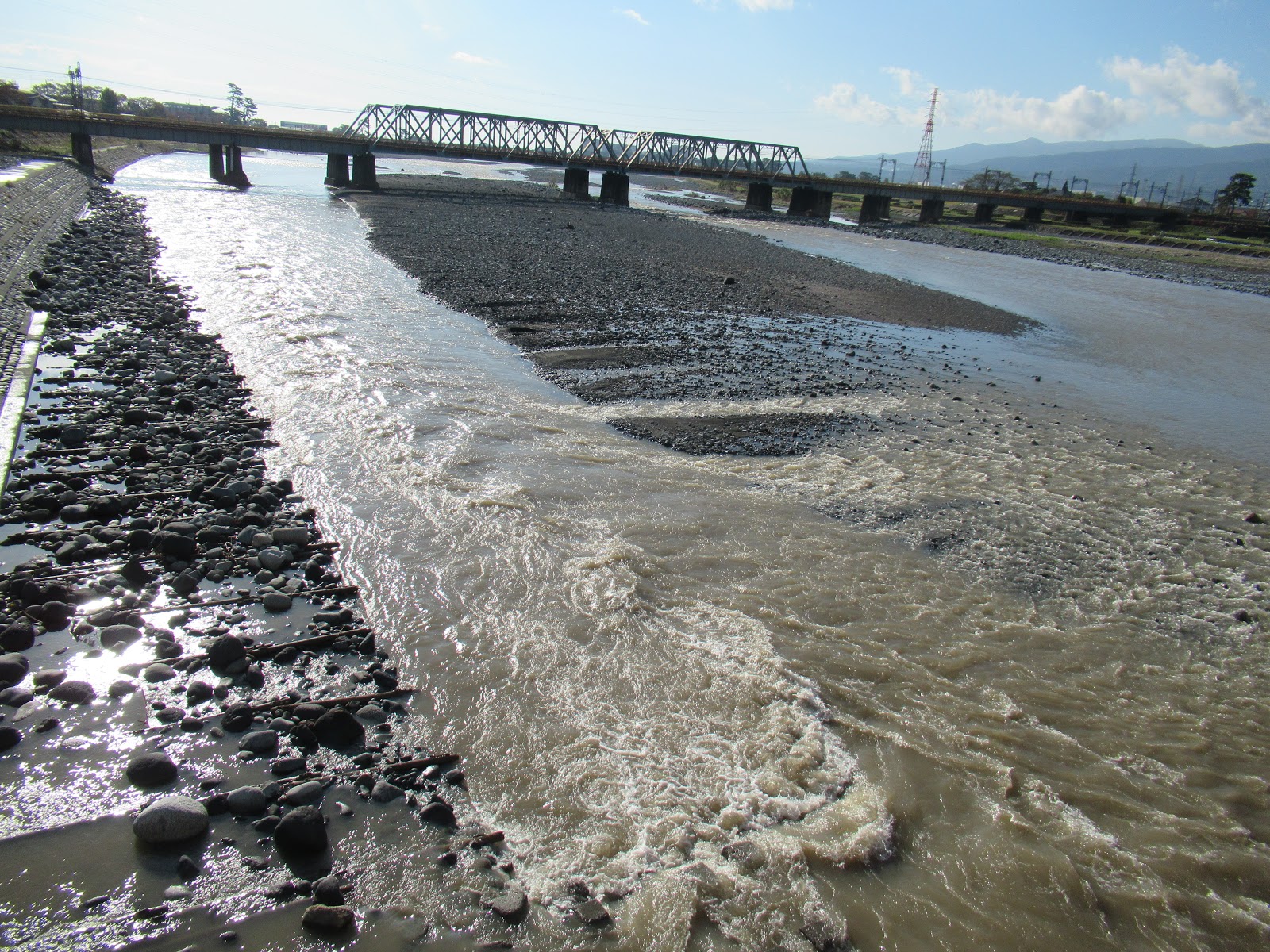
Many people strolled on the banks of
Tsurumi River last weekend.


The statement of the PM or not, Niiharu Lovers did our regular weekend activities for Niiharu Citizen Forest 新治市民の森. We noticed there were more family outing in the forest. Some families actually had parties in the forest with their neighbors. We’ve met many toddlers, with parents of course, venturing out the trekking roads of hilly Niiharu. They looked happy. One of my senior volunteers even started to get angry. “It’s a travesty! The reason schools are going to close is to prevent spreading virus outside. Kids should stay indoors!” To his statement, many other volunteers voiced the opposition. “Look. Sky is blue. Air is getting warmer. Birds have started to sing. Staying indoors surrounded by four walls is for prisoners. Kids must enjoy nature, especially when flu-like virus is spreading indoors!” Point taken. The governmental committee for COVID-19 has issued advisory. “Don’t enclose yourself in a closed space without smooth circulation of air. Dangerous locations include indoor gyms, concert halls, and restaurants. Instead, please take a nice walk in parks.” Corollary: let’s enjoy forest!


Last Sunday was also good for birdwatching.
 I think one of them is common pochard …


Last Saturday I’ve met a girl with an old lady picking Tsukushi (; my post on April 13, 2018) along a small stream in Niiharu. I tell you, for decades I haven’t met kids enjoying spring herb-gathering in my neighborhood. Kids are normally very busy for attending some after-school lessons or video-games. They have no time breathing open air of spring ... Then, I’ve found a gang of 3 boys slipped into the forest beyond the fence along the trekking road. You see? These days Japanese kids have too good manners. Unless we forest instructors tell them to venture out to see by themselves what kind of creatures are there in the forest, they simply stand in line and listen quietly a boring speech of instructors. But these 3 boys with their own will crossed into the shield-off area! I noticed they caught 4 big toads which were still sleepy in the mud. They carried the prize to the baskets attached to their bikes and busy admiring still drowsy croaks of amphibians. “We caught toads! … Oh, stay here, you toad.” One of them proudly showed me off their game in the wire basket. That’s something. Yeah, COVID-19 is still unknown virus that could kill. But the capriccio it created among our daily life has brought time for busy kids in Yokohama to experience the forests in their neighborhood. Well, the request of the PM is to close schools until early April. Kids have a month to explore the spring of our backyard. Hurrah!


Tsukushi (Field horsetail, Equisetum arvense), this year


If you find environmental issues in Kanagawa Prefecture, please make a contact with Kanagawa Natural Environment Conservation Center 神奈川県自然環境保全センター

657 Nanasawa, Atsugi City, 243-0121
〒243-0121 厚木市七沢657
Phone: 046-248-0323

You can send an enquiry to them by clicking the bottom line of their homepage at http://www.pref.kanagawa.jp/div/1644/

Friday, February 28, 2020

Here be Dragons: A bit of info if you meet with natural disasters in Japan


Hm. This week, my post deviates a bit from the theme of this blog, “about forests in Yokohama and Kanagawa.” After writing last week’s post, I realized I may be of some help for you guys who happen to be in Megalopolis Tokyo, or in Japan, when natural disaster hits. Many people say especially casual visitors, or people who don’t understand Japanese, have difficulty to obtain vital info for typhoon, floods, tsunami, etc. Yeah. Earthquake is terrible, but it comes suddenly. The level of preparedness, at least mentally, for it would be the same between locals and visitors. In contrast, natural disasters with water, like storms and tsunamis, take some time to come. A monster tsunami took 10 minutes to gulp Manazuru Peninsula 真鶴半島 in 1923. Having good info as quickly as possible could be a matter of life or death. So, today, I tell you some sources for info issued by local and national pubic entities about natural disasters.


The first line of defense of this matter in Japan is local offices. Say, you live in one of those wards in Yokohama or Tokyo. Then, the ward office has many information for disaster risk reduction. It includes

a.      Map for the location of designated evacuation center near you,
b.      Map for the location of delivery for water and any other emergency supplies by the public office,
c.      Map of medical services ready for opening the door whatever happens,
d.      Map of the area where the office thinks it has a high possibility to suffer water disaster, and earthquake; these two things can mean the same thing, i.e. fragile land = landslides and flood-prone swamp,
e.      Nice booklets for you to prepare for the disaster. The most famous one is by Tokyo, called “Tokyo Bousai 東京防災“ which was distributed for Tokyoites. This book keeps its #1 Best Seller position in this genre in Japan, and downloadable as Kindle, free of charge, from here.

If you have any question you can ask to the desk they have in the local government office building. Actually, their HP has the above info so that you can go there first before physically visiting the place. They also have services for emergency alert system to the people who stay in their ward / city / town, like living there, or working in the area. You go to their HP, and register your email address, or SNS account. When an evacuation order is issued, they will notify via your contact addresses you’ve left in this page.


Inside Tokyo Bousai, showing the evacuation flow chart.


But sometimes we need info for much larger geographical coverage. If a heavy rain causes trouble in upper stream, people in the region of lower down will have problems eventually. Or, knowing a super-typhoon is approaching from the east of the Philippines, we can have more time to prepare. About the weather forecast in general, there are several apps for your phone. You can choose whichever you like during your stay in Japan. We locals check NHK news in TV or, with their app, downloadable from any app store, free of charge. NHK has obtained the trust of us through decades of major disasters like last years’ super typhoons, Fukushima Nukes, or numerous earthquakes. They also have English app pages so that you don’t have to rely heavily on Google translation to know the latest info. Their info is not only for weather but also evacuation order or the like. In terms of detail, NHK is inevitably not so good as the info delivered from your registered ward. But, say, if you happen to be in the affected area which is away from your registration, you may know what is going on around you from the NHK site.


In Google Play, app for NHK news looks like this.


These two places I mentioned above are a sort of info aggregators who receive the data from the public offices such as Japan Meteorological Agency, and Ministry of Land, Infrastructure, Transport, and Tourism. The primary sources also have their HP whose info is constantly updated, especially when the disaster is hitting. Needless to say, their info is the fastest, but we need finesse to navigate such pages as they are mainly for experts. Having said that, they have, er, well, a kind of, one-stop shop for the general public to obtain info directly from them. From the Meteorological Agency, you can go there, and your phone or PC’s GPS automatically sends your location data for the Agency to show the relevant disaster-related weather condition. I’ve found out they do not make this particular page in foreign language. That’s a pity. But if you find somebody who can tell you what’s on the page, it is the info for that translating someone would love to know urgently.


English version of Japanese Met Agency HP
 starts from the general portal.
 You have to dig into from here.
 It’s cumbersome …


About the condition of dams, banks, and water flows for the river, bays, sea, … the primary info comes from the Ministry. You go there, and click whatever info you need from the icons. The same info is available from your smartphone from


and, hurrrrah, they have an English version from


 (er, yeah, it’s a bit abbreviated info.)
They contain live video streaming from ministerial cameras situated at the strategic points for possible disaster. We can also combine data such as the risk of tsunami, flood, volcano, and (known) active faults to assess comprehensively a location, and to make a hazard map. Please play around with the site for a while, and we can prepare before the next one comes. Also, the Ministry has this site of detailed hazard map. There, we can layer the risks of flood, landslides, tsunami, road-related disasters on particular address within Japan. Not only for preparing evacuation, but also in case you plan to purchase a real estate in Japan, this info could be vital. Please check it.


Japanese portal for the HP of River Info looks like this.
 We click any of these boxes and play around.


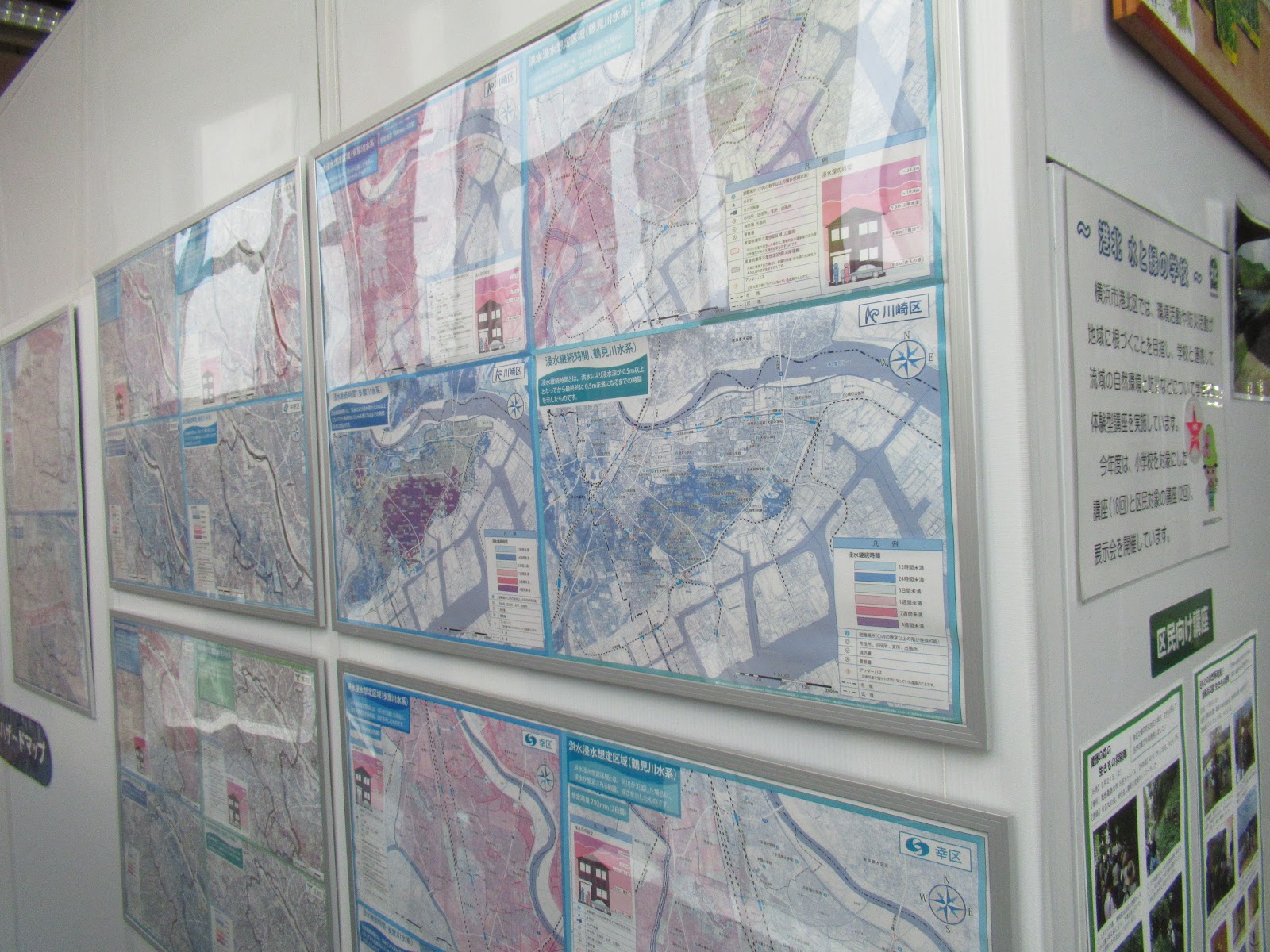
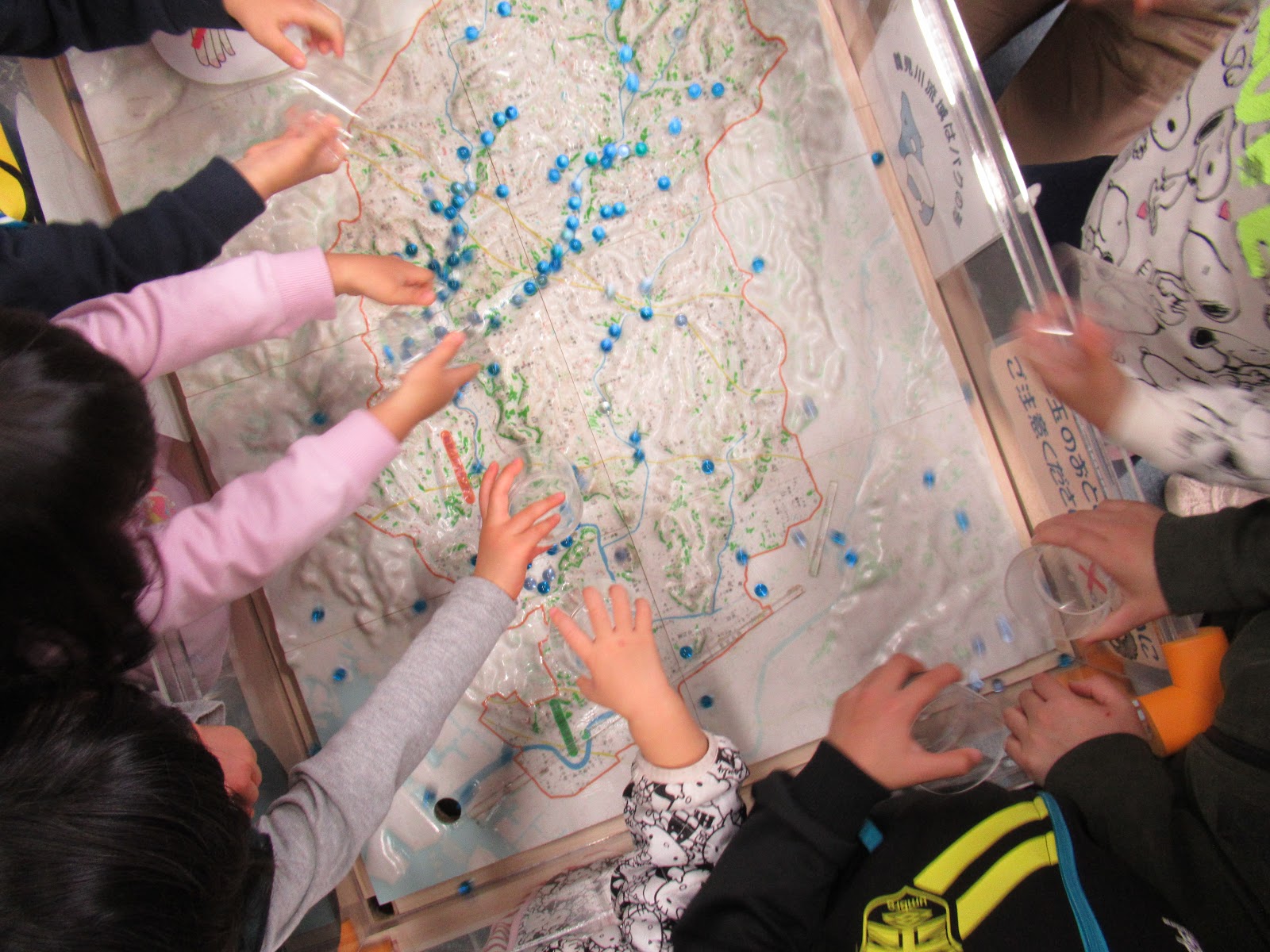
Speaking of having fun to prepare for disaster, Tsurumi River has a nice facility by the Ministry. It’s Tsurumi River Watershed Center 鶴見川流域センター, next to the New Yokohama Sports Park 新横浜公園. Basically, the place is to offer info about Tsurumi River, including geological feature, history, biodiversity, the volunteers for the River, and advises for preparing possible flood, tsunami, and the other disasters caused by the River. It’s a family-friendly place with aquarium for water creatures living in Tsurumi River. They have a mini-library where we can borrow encyclopedia for nature, history and any other books about the area. The place also organizes public event such as workshops like I introduced you last week, concerts, movies, etc. They are often free of charge, or only for a nominal fee. The Center has a large display of hazard maps for towns in Machida, Kawasaki, and Yokohama that are along Tsurumi River. It covers the area of Kawasaki next to Tama River. It could be a vital info for your survival in the area. If you have any chance to visit the New Yokohama Sports Park, please consider visiting the Center. It’s fun there!


Tsurumi River Watershed Center.
 Could you see a forest in their back?
 It’s Kozukue Citizen Forest.
A photo when the Sports Park was hit by the largest flood in 2014,
 shown in the Center.
 Yeah, it’s a scary photo,
 but the park did not reach to the max.
 Amazing.
He’s from Tsurumi River.
Hazard maps shown for the cities along Tsurumi River.
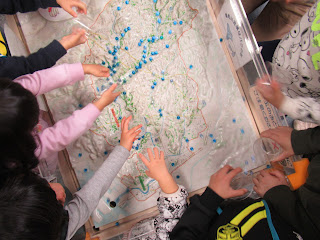
Every Sunday at 13:00, the Center has a fun event
 for kids to know how rainwater runs in Tsurumi River Basin,
 using diorama and marbles.
 It’s really an eye-opening experiment for adults as well.
 We can understand why the Sports Park
 and Nissan Stadium must be in that location
 to tame the damage of flood
 on population and industry center of Tokyo Bay.


And finally, those are the tree lingo for alert during the emergency. Yap, they are mouthful even for locals (; they are legal terms, in the end), but it’s not useless to know the meaning of it.

1.      Hinanjunbi-Koreisha-toh-Hinankaishi 避難準備・高齢者等避難開始 “Be ready to evacuate, and if you’re in a certain condition, move to the evacuation center.” That is to say, you must be ready to evacuate if this alert is issued, but do not have to move yet. Though, if you are handicapped due to physical and /or mental condition, or you’re a senior citizen, you should move to the evacuation shelter now.

2.      Hinankankoku 避難勧告 “Recommendation to evacuate.” Now is the time for all of us to move to the evacuation shelter.

3.      Hinanshiji (Kinkyu) 避難指示(緊急)”Immediate evacuation order.” People say if the situation reaches to this point, your travel for evacuation is very likely to be in Hollywood’s action movie. Better avoiding it, and act while the level is still in Hinankankoku, I suppose.

The local offices, Meteorological Agency, or any other governmental entity will use one of these three words when the time comes. Furthermore, for the preparation of us citizens, last December Japanese government started a campaign to create “Our timeline for evacuation” by ourselves. To support the task, they have this portal. Although the content is for 10 years’ old kids and up, it’s not in English, regrettably. If you know somebody who can read Japanese, please try together. The process completing the timeline is a fun group work, and very educational experience, I bet.


My Time Line portal by the Ministry


Tsurumi River Watershed Center
Open: 10:00-17:00, Wed-Mon
2081 Kozukue-cho, Kohoku-ku, Yokohama 222-0036
〒230-0051 神奈川県横浜市港北区2081
Phone: 045-475-1998
FAX: 045-475-1999

Also, Keihin River Office of Kanto Development Bureau is asking people to send digital photos of water disaster from Tsurumi/Tama/Sagami River. The picture will be used for PR to inform general public about the risk of flood. (Copywrite will be of the Ministry.) You can send a JPG file to
with you name, contact address, the place and time you took the photo in your email, titled: Flood photo of Tsurumi or Tama or Sagami River. If you prefer you can send CD-R or DVD-R to

Keihin River Office, Kanto Development Bureau
Ministry of Land, Infrastructure and Transport of Japan
国土交通省 関東地方整備局 京浜河川事務所
2-18-1 Tsurumi-chuoh, Tsurumi Ward, Yokohama, 230-0051
〒230-0051 神奈川県横浜市鶴見区鶴見中央2-18-1
Phone: 045-503-4000