Friday, November 8, 2019

BBQ? Or Quiet Lunch? Nanasawa Forest Park 神奈川県立七沢森林公園


Now we are in November, and finally air gets chilly in Yokohama. Though, Meteorological Agency says compared with the annual average it’s still about a week late for having this temperature … As I posted on 11 October 2019, in Yokohama and Kanagawa we have time for prep to enjoy the climax of autumn colors till early December. This week, I tell you one of the picnic spots for autumn leaves in Kanagawa’s forest, i.e., Kanagawa Prefectural Nanasawa Forest Park 神奈川県立七沢森林公園 in Atsugi City 厚木市.


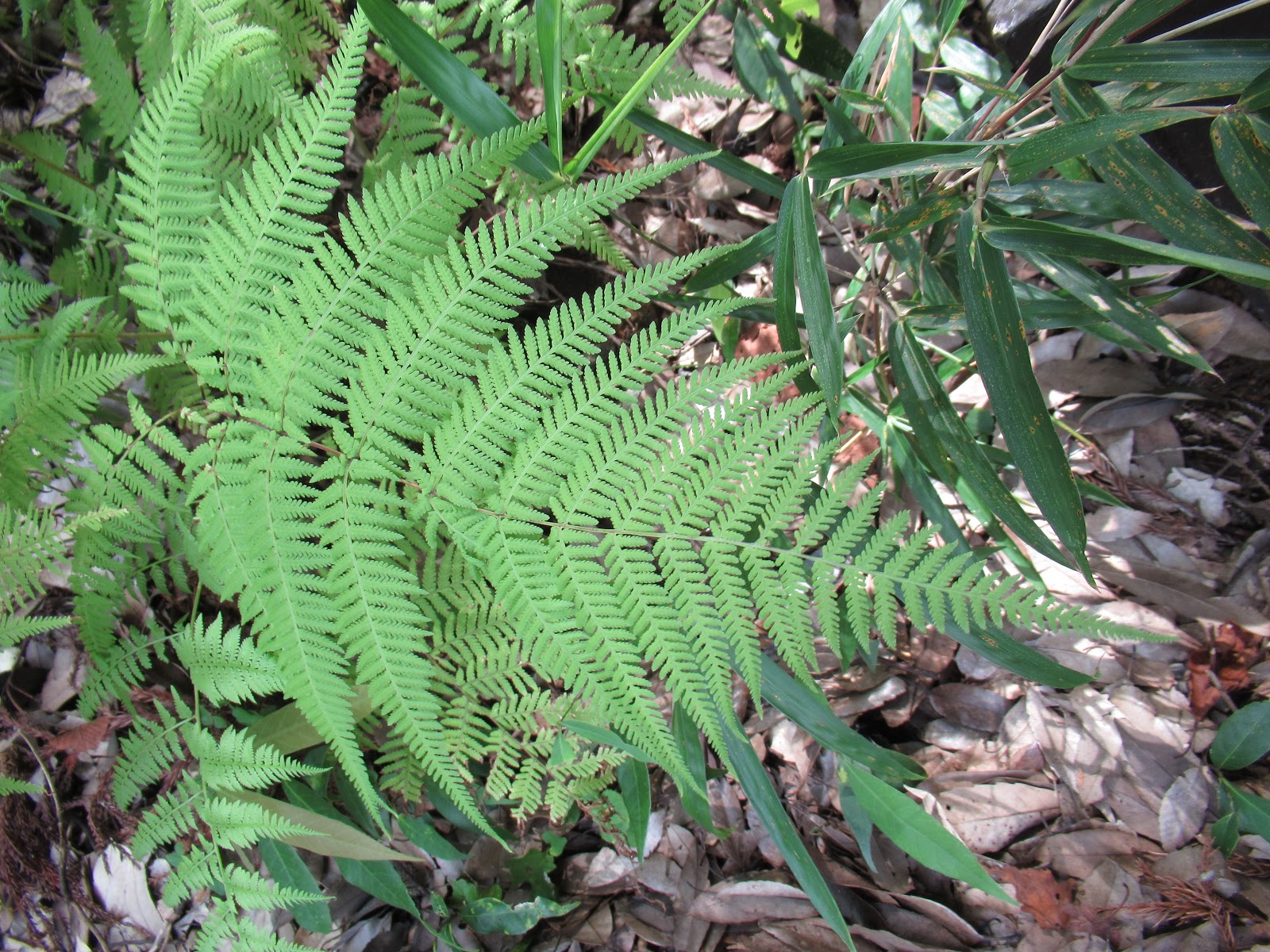
Pertya scandens


The park locates itself at the entrance to Nanasawa Spa village (Nanasawa Onsen 七沢温泉), and so, it has 3 ample parking spaces for tourists (; map of the Park is here). If you go there by car, please set your navigation system to Nanasawa Onsen, and done. The Park has three car-accessible entrances. One, Central Parking Lot, is at the main gate from Nanasawa community 七沢, and another two, Third Parking Lot, and North Parking Lot, are from residential Morinosato community 森の里. From the Third Parking Lot, the entry to the Park is Morinosato Entrance. From the North Parking Lot, the entrance is from North Entrance, obviously. The Main Gate area has park’s admin office and a multipurpose hall named Mori-no-Minwa-kan (Folk Tale House of the Forest 森の民話館). North Entrance area has Mori-no-Atelier 森のアトリエ where artists and crafts people come and create their work using the material mainly harvested from the forest. Both places have maps and the other information about the park, but inevitably the amount of info available is larger in the main entrance area. Please choose your gate.


The Central Parking of Nanasawa Forest Park
Approach to the Main Gate is recognizable
 from Nanasawa side with this bridge
 which connects north and south of the forest.
 The car road goes through a tunnel
 after this bridge to Morinosato side.
Admin Office of Nanasawa Forest Park
Inside of Mori-no-Minwa-kan
When you enter from Morinosato Entrance,
 you’ll find this wooden chair comfortably situated
 at the view point named Yamayuri (Golden-rayed lily)
 which is the official flower of Kanagawa Prefecture.
Mori-no-Atelier


If you use public transportation, please take Kanachu bus services from Odakyu Hon’atsugi, Aiko-Ishida, or Isehara Stations. (From Hon’atsugi, we have to go Atsugi Bus Center, 5 minutes, walk from the station.) To the main entrance of the Park, catch Atsu 厚-33, 34, or 39 services from Atsugi Bus Center (; time table is here), Ai 愛-11 service from Aiko-Ishida Station (; time table), or I 伊-31, 34, 36 from Isehara Station (; time table). The nearest stop to the main entrance of Nanasawa Park is Nanasawa On’sen Iriguchi 七沢温泉入口 that is a 30-45 minutes’ bus ride. To Morinosato entrances, please take Atsu-43, 44, 45 from Atsugi Bus Center (; time table here and here), or Ai-15, 16, 17 (time table is here and here) from Aiko-Ishida Station. To Morinosato Entrance, the destination bus stop is either Morinosato 3-chome 森の里三丁目, or Morinosato Chugakko (Morinosato Middle-high) Mae 森の里中学校前. To the Atelier, please get off at the terminal stop, Morinosato 森の里. These are also 30-45 minutes’ drive by bus.


Nanasawa On’sen Iriguchi Bus Stop, near the fire station.
 Next to the fire station is Tourism Info Office
 where we can have info about Nanasawa Spa area.
 One option of your weekend is
 spending a day in Nanasawa Park,
 and relax in Spa afterwards.
 How’s that?


I think the best approach to a park anywhere is to visit its info center first. For the case of Nanasawa Forest, the admin office of the main gate distributes a free English map so that you may find this route is easier to enjoy the park. Bonus: the admin office is doing a questionnaire survey (in Japanese) about the park. If you answer, and submit it to the office, you can have a small objet d’art in pottery created in Mori-no Atelier, free of charge, as a souvenir. They are cute. 😊 All the roads, paved or otherwise, in the park are well-maintained. Fully equipped toilets (in western and Japanese styles) are here and there. In the middle of the park, they have an amphitheatre where regular performances are held several times in a year. Near Morinosato Entrance, they have a space of field athletics equipment for kids. Mori-no-Atelier and Mori-no-Minwa-kan have regular classes for crafts, music, yoga, and physical activities. (Please check here for enrollment.) Walking leisurely from the main entrance for about 15minutes, there is a quasi-restaurant for BBQ, open during March to November. RSVP (from here; you have to complete your order by 5 days before of your visit). We can go there without any preparation, rent tools and buy BBQ ingredients from them. Or, you can bring your veggies, meats, et al and pay only for rental fees of tools and places. I guess final weeks of November would be the best time to have an outdoor BBQ party there surrounded by autumn color. All in all, Nanasawa Forest Park is a nicely prepared and taken-care-of place for family. So, you may think “Huh, it would be a boring place.” Please, not so fast.


The toilets near the admin office. Fully equipped!
The park has traditional Japanese pond gardens
 near the admin office, with carps.
Nanasawa Park’s amphitheatre
My souvenir 😊.
 We can choose one out of about 20 pieces.
The road to BBQ place.
Going up these steps leads us to …
A picnic open space,
 called Oyama Open Space
おおやま広場,
 observing Mt. Oyama (ASL 1252m) in front.
Before BBQ place, we have this forest scene.
 This is a well-maintained Kanagawa’s forest.
 Trees are thinned and mantle vegetation is
 nicely developed with sunshine.
 i.e. The park is managed enough.
BBQ Place.


The facilities within the Nanasawa forests are connected not only by paved ways but also standard trekking roads. They are fun. If lucky, we can meet wild animals like sika deer, Japanese serow, and Japanese macaque within the Nanasawa Forest Park (as I did). From any entrance of the Park, we go up to the ridge way that has several view spots to observe Kanto Plain to the east. Near Mori-no-Atelier, the ridgeway meets with Junrei Pass 巡礼峠. The place has a legend. The roads in Nanasawa forests were once utility roads for villagers of the area. One of the routes was a pilgrimage road to Mt. Oyama 大山. Once upon a time, a farther and a daughter came to the point now it is Junrei Pass for praying in temples and shrines along the route. Alas, they were so unlucky to meet with burglars there and killed. Villagers found them dead in the pass, and mourned them by locating a Jizo statue (Kṣitigarbha) there. We are still welcomed by the statue at Junrei Pass …


The ridge way.
 Could you see the road sign in the left corner?
They are ubiquitous within the Park
 so that we can walk safely.
And the ridge repeats ups and downs.
 It is a popular training route for local trail runners.
Looking Kanto Plain and Pacific Ocean.
Beautiful silver grasses …
Junrei Pass
The exhibit at the Pass explains the story.
For the killed …


Actually, we have visited this place, a bit, last year (my post on November 30, 2018). The exit from Hakusan 白山 - Iiyama Kan’non 飯山観音 Hiking Course was Nanasawa Forest Park. At that time, we’ve just gone down the park to Nanasawa On’sen Iriguchi bus stop. Hakusan - Iiyama Kan’non Hiking Course is a part of registered trekking route for Kanto Fureai no Michi (関東ふれあいの道・首都圏自然歩道 Metropolitan Natural Walk Way). Park’s ridge way going from Morinosato Entrance meets with Kanto Fureai no Michi from Hakusan Hiking Course at Junrei Pass. It then descends into Nanasawa Spa and goes to Hinata Yakushi Temple 日向薬師 and Mt. Oyama 大山 we’ve visited on 21 April 2017. Area-wise, the park situates itself within the atmosphere of Oyama Pilgrimage Road.


An approach to Junrei Pass
 from Hakusan-Iiyama Kan’non Hiking Course


Junrei Pass is a crossing of 5 roads, one from Hakusan Hiking Course, the road to Nanasawa and Hinata Yakushi Temple, another to Mori-no-Atelier, the ridge way of Nanasawa Park, and the road going down along a small stream, and ending with the main entrance of the Park. The flow is a tributary of Tama River 玉川 which runs through Nanasawa Spa and joins with Sagami River 相模川 eventually. This route, though steep, is a gorgeous trekking course with well-maintained board passes and mini suspension bridges. It goes within afforested cedar forest whose floor is covered by large ferns. Chirping of birds is above somewhere near tree canopy. Sounds of water stream is very calming. It’s amazing to enjoy such adventure so near the residential area. I loved that.


The direction to the road
 along a stream from Junrei Pass.
One of the suspension bridges.
 Don’t you think it’s a nice scenery?


Eating lunch in one of the view spots along the ridge way of Nanasawa Forest Park, I find it interesting to be on the border between the busy metropolitan Tokyo and calm forest pass. In front of me was an expansion of Kanto Plain, and just below me were several research labs for Nissan, NTT, and the other big names. Around me was a chorus of brambling waiting for my bread crumbles … Birds, could you please wait for just few more minutes before I complete my lunch?


This was a nice point for lunch!


<Park administrator>
Park Administration Office, Kanagawa Prefectural Park Association
901 Nanasawa, Atsugi, 243-0121
Phone: 046-223-1711

If you find environmental issues in Kanagawa Prefecture, please make a contact with Kanagawa Natural Environment Conservation Center 神奈川県自然環境保全センター

657 Nanasawa, Atsugi City, 243-0121
〒243-0121 厚木市七沢657
Phone: 046-248-0323


You can send an enquiry to them by clicking the bottom line of their homepage at http://www.pref.kanagawa.jp/div/1644/


Friday, November 1, 2019

Disturbance: Typhoon Hagibis for Yadoriki Water Source Forest


Yadoriki Water Source Forest やどりき水源林 also had substantial disturbance by Typhoon Hagibis. At this moment, the Forest is off limit for visitors, and the gate for the forestry roads to Yadoriki Forest is locked. As of November 1st, after Hagibis, the area had two more long torrential rains, and numerous mini squalls. Yadoriki Forest’s recovery from the Hagibis is unpredictable at best.  We Kanagawa Forest Instructors have not received information from the Prefectural Office when the gate is open ... This week, I report you scars I’ve found in Yadoriki two weeks after the visit of Hagibis. I hope you could have some idea about the situation.


The way Nakatsugawa River 中津川 / Yadoriki Stream 寄沢 flows has changed. Above photo was taken at the point before Hadano Forestry Road begins. The river goes around nearer to the banks so that many points have collapsed by strong rains from Hagibis and others. (Oh, yes, Nakatsugawa River and Yadoriki Stream are the same flow. It changes name at Yadoriki Bridge 寄大橋.)


Mini landslides are here and there along the community road from Yadoriki community 寄 to the gate of Yadoriki Water Source Forest. It would take a couple or so of dry months before the soil stabilizes. As we have to think the effect of frost and frozen ground during winter in this part of our prefecture, it may be difficult to expect the situation improves quicker. If you plan to drive to red Yadoriki Bridge, please be very careful.


Red Yadoriki Bridge over there.
 Could you see a large log was caught by the weir?


Inside the gate for Yadoriki Water Source Forest, the road condition is worse. Its forestry road which was passable for a city car before is now for off-road types only.


It seems to me
 animals are taking the advantage of
 human-less environment in Yadoriki now.


Yadoriki stream inside the Yadoriki Water Source Forest has changed its shape drastically after the rains. It destroyed trekking roads along the stream from the gate and eroded the open space. It seems to me substantial amount of large rocks and logs were carried by the flood to the downstream.


Destruction
It’s a matter of time before these picnic benches are gone.


Forestry road in the Water Source Forest collapsed in the middle. So, beyond this point it is strictly closed for the unauthorized visitors. The soil was washed away below the asphalt.


Here and there, Yodoriki’s utility forestry roads are covered by landslides like this. Though, these points could be cleared soon as the season of logging is approaching.


And cones of conifers promptly utilize the chance
of sunshine for sprouting thanks to the land collapses.
 Mini-forest. Cute.
 (And they will be gone quickly by the next slide …)


It seems to me Hadano Forestry Road 秦野林道 also has large disturbances due to these rains by typhoons and others. The streams along the road certainly experienced large flows and landslides. This is Teshiro Stream 手代沢. Before we could not see the waterfall from the forestry road. Now both sides of the valley collapsed and trees that concealed the vista were broken or washed away. Yeah, the view from Teshiro Bridge 手代橋 is nicer now, but can the bridge last when the next big storm comes?

Map of Hadano Forestry Road


Above is a stream that is filled with soil avalanches. This is a naturally made dam creating a pond whose surface was just few inches below the paved forestry road. I will not be surprised if Hadano Forestry Road collapses here when the next large rain comes.

Majority of Yadoriki Forest is owned by the Prefectural Government so that how to deal with the situation is, in the end, totally up to the budgetary condition of Kanagawa Prefecture 神奈川県. Geologically Tanzawa mountains are very fragile. (More to this soon.) Scars in the forest by 2019 storms can easily expand. They may turn into debris-avalanche that would swallow human settlements downstream … I don’t know. I’ve heard all the people in Yadoriki Community inherited a warning from their ancestors, saying “When the water of Nakatsugawa River turns white, run!” Fingers crossed.


If you find environmental issues in Kanagawa Prefecture, please make a contact with Kanagawa Natural Environment Conservation Center 神奈川県自然環境保全センター

657 Nanasawa, Atsugi City, 243-0121 

〒243-0121 厚木市七沢657

Phone: 046-248-0323


You can send an enquiry to them by clicking the bottom line of their homepage at http://www.pref.kanagawa.jp/div/1644/

Friday, October 25, 2019

Sori under Microscope, or “Why did Pre-Raphaelites not depict much ferns in their creation?”


I find ferns are attractive. I don’t know why, but their presence in forests recalls my memory when I admired paintings of Pre-Raphaelites … Oh-so-magical world of Fairly Feller’s Master-Stroke (with the voice of Freddy Mercury 😍)! Don’t you think ferns are the images the Victorian Avant-gardes should have loved to include in their fantasy world? However! To my surprise, I discovered there is no clear image of ferns in “The Fairly Feller’s Master-stroke.” In “Ophelia” there might be a depiction of Lygodium, but perhaps they did not exist in England 150 years ago ... did they? In my short google search, I could find only one painting with ferns in the Pre-Raphaelite school. It’s “Rabbit amid Ferns and Flowering Plants” for Boston MFA. There the ferns look like Polypodium Vulgare. Why did the imaginary world of Pre-Raphaelite not incorporate more Pteridophytes? Ferns are ubiquitous all over the world in the end. England surely has had them for millennia. And at least for me, their form is VERY dreamy. I’ve found something else in the “Rabbit” painting. The painter depicted sori, just a bit. It might be the reason for Pre-Raphaelite not painting ferns much.

Lygodium.

They are ubiquitous in Niiharu Citizen Forest 新治市民の森.


When we observe their back, ferns have sorus unless you happened to encounter a sorus-less part of upside-down fern (Arachniodes standishii; oh, do you know they have sori on their back in the other parts?). Those lumps could be the things that drive away some people. “Oh, these granular patterns are so creepy. They are hideous!” You see? There could be psychological reasoning for such feeling among humans ... Maybe, those English painters of the 19th century did not like sori in ferns. BUT! You just get used to it, and it’s possible to admire the wonder of the wild ferns more with sori. Recently, I found it’s fun to observe fern sori. Especially with microscope, that’s the magical world!


Thelypteris viridifrons in Niiharu


Their sori situate themselves neatly.

Could you figure out their indusium

(a shield covering a sorus) look fluffy?
It’s typical for Thelypteris viridifrons.


This photo is my treasure.

Microscopic view (about 90x) of

the indusium for Thelypteris viridifrons.
Don’t you think they really look like jewels?


Weeping fern (Lepisorus thunbergiaus) near Niiharu.

When they are dry,

they shrivel like those on the right of this photo.


Weeping fern in Yadoriki Water Source Forest やどりき水源林.

Its sori are well-developed so that we can see them from the front.


Sori of a weeping fern.

They are in the upper half of the frond.

The species do not have indusium.


Holly Fern (Cyrtomium devexiscapulae) in Yadoriki


The positioning of sori of a Holly Fern.

It’s really interesting to see the variety

of sori for each species, don’t you think?


A zoomed-in photo for frond back of holly fern.

Sori of this species looks typically like mount of powder.


A microscopic view (about 80x)

of a sorus for the above holly fern.

Psychedelic …


Ubiquitous Pteris cretia L. in Yadoriki.

Could you figure out two kinds of frond for this species?

The ones with slightly jagged frame
which we can find in the back do not have sori
and specialize in photosynthesis.
The front fronds with somehow curled edges
are carrying sori along the rim in their back …


Zoomed-in version of the back of Pteris cretia L.

It looks like from the world of “Dew-drenched Furze” in Tate.

But it’s not furze!


A microscopic view of sori for Pteris cretia.

Woooooooooooooow.


Taking microscopic photos of sori is not at all difficult. I use a toy-like field microscope which grade-schoolers can bring for their school excursion. I focus the object under this microscope, and situate the lens of my small digital camera on the eyepiece. In “auto” mode, my clever machine does all the works of focusing, shutter speed, and aperture. There would be a better way to take microscopic photos, of course. At least for now it’s enough for me. I imagine if we play with the ferns in Britain, we can also enjoy similar kind of pleasure with microscopes. Perhaps those artists in the 19th century England did not have an access of such handy tools to know the beauty of their forest … Recently, we Kanagawa Forest Instructors entered in a forest of one art gallery in Hakone 箱根 to mow overgrown sasa-bamboos. It was a requested volunteering activity from the museum. When we returned from the site after the operation, our boots became muddy inevitably. To our cars, we had to walk on a white stone-paved road running to the entrance of the museum. Then, staff of the gallery yelled at us, “Hey, don’t put your dirty shoes here!” … Yeah. Clean paved way surrounded by forests would be an important item for pin-heeled tourists to high-blow art gallery in Hakone … We apologize our dirty shoes, but, if you need to know, there was no other route to the parking for us … Or was it a reason why Pre-Raphaelites did not include whimsical ferns in their world?


My microscope


If you find an environmental issues in Kanagawa Prefecture, please make a contact with Kanagawa Natural Environment Conservation Center 神奈川県自然環境保全センター

657 Nanasawa, Atsugi City, 243-0121 〒243-0121 厚木市七沢657
Phone: 046-248-0323

You can send an enquiry to them by clicking the bottom line of their homepage at http://www.pref.kanagawa.jp/div/1644/