Showing posts with label bamboo shoots. Show all posts

Friday, April 21, 2023

Bamboo shoots in the new era? 2023 bamboo shoot harvesting in Kanagawa Prefecture


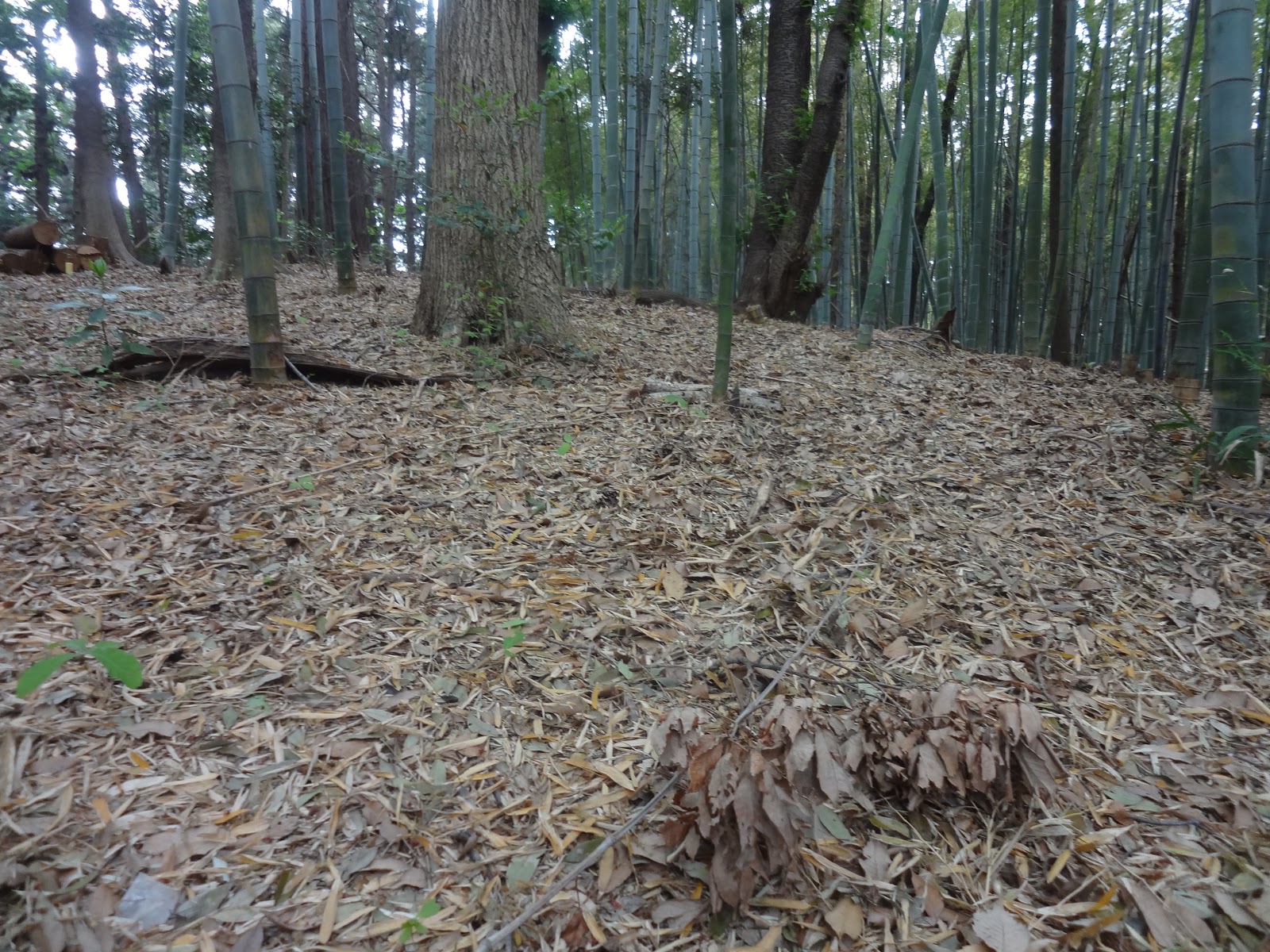
A bit strange this spring is not limited to cherry blossoms. The case in point is bamboo shoots, aka Takenoko. I don’t know how professional Takenoko farmers do for stable production of their produce. But, in general in Kanagawa Prefecture, bamboo shoots that can be harvested from bamboo forests managed by volunteers have a sort of pattern in annual yield. It alternates bumper and poor years. We volunteers dig bamboo shoots not for harvesting ag produce, but for controlling the wild spread of bamboos that can damage the ecosystem of entire forest. Poor year is poor year, and we accept it philosophically. Last year, 2022, was a bumper year. This year was not much. OK. Then I noticed a bit strange thing in bamboo forests. It’s not about bamboo shoots but the ground.


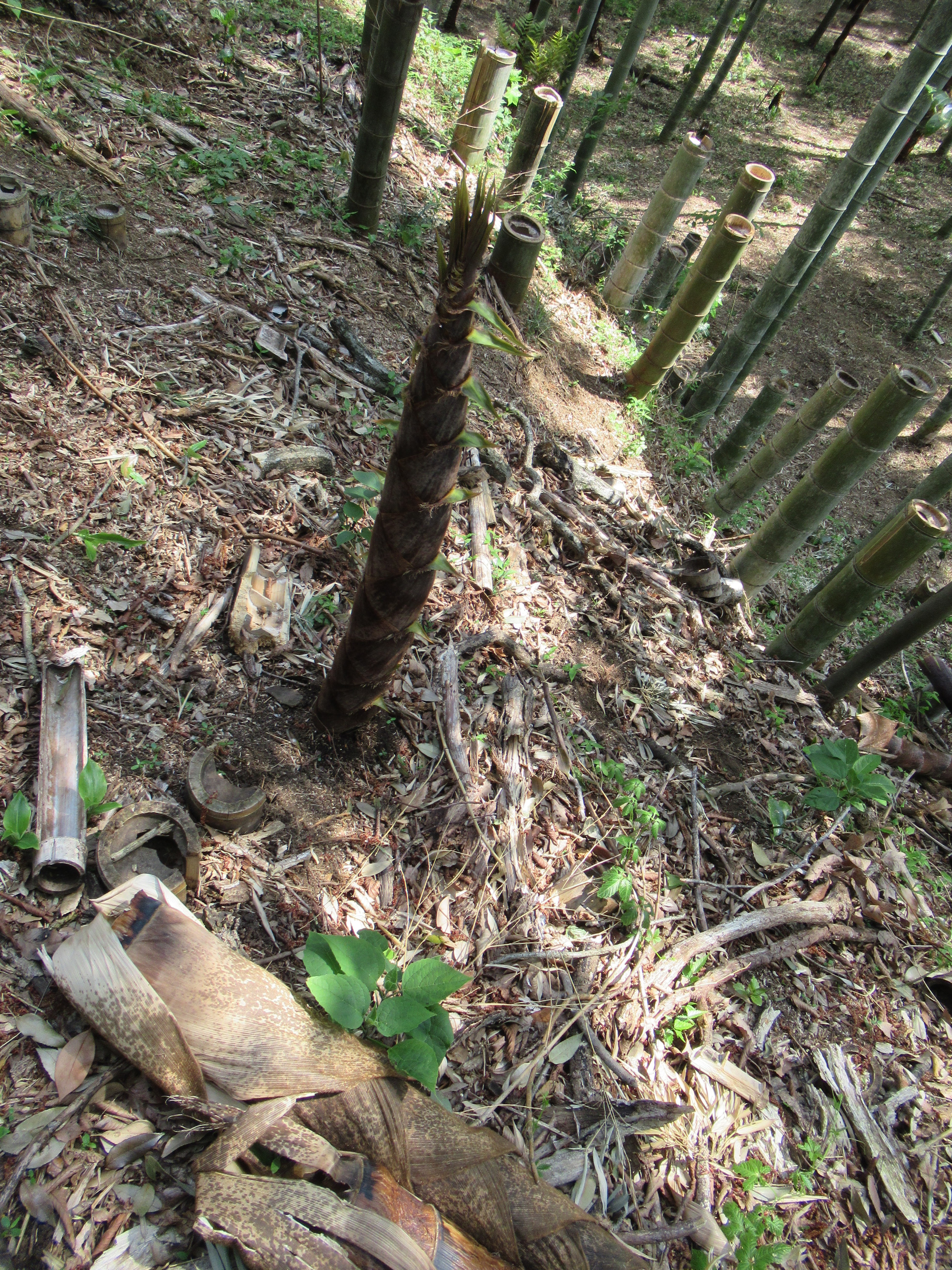
As I told you in my post for May13, 2016, for digging up bamboo shoots, we remove soil around the shoot, then strike down the root part. How deep we have to dig is actually not much regardless of the size of the shoot. It’s about 20cm or so deep and we reach the connection point of the shoot and its underground rhizome. When we meet with that joint, it’s time to strike and remove the shoot from the rhizome. This year, I noticed when we dig the ground around a shoot, the soil that is moist is top 5cm or so at best. Below that, it is dry. Sometimes my hoe finds even crumbly underground around the rhizome. That’s strange. Yeah, it’s easy when the root does not stick to the ground when we harvest a bamboo shoot. Thank God. But I feel a slight discomfort. Bamboo forest is a dim place. Botanically speaking, bamboos are not trees, but extremely tall grass many of whose leaves remain bushy and green all year long. They shed older leaves gradually, just like evergreen trees. Their leaves tend to remain on the ground but not so fine as cypresses so it can keep rainwater that reach to the ground more. Bamboo forest is a dim and humid place. Its ground tends to retain water. But this year …

Could you see the crumbling soil around the shoot?

March 2023 was an average year for Yokohama in terms of precipitation. According to the stats from Yokohama Meteorological Station, we had 140mm rainfall for March 2023. 1991-2020 average is 139.5, so we had a bit more rain last month than the average. Not bad for Takenoko to come out. Though the way rain fell may not have been the same as, say, 40 years ago. Below is the scatter plots I’ve created from the precipitation data for Yokohama.


To keep the graph easier to see, I intentionally dropped the March 1st data since in 2003, when Yokohama had a huge rain, 153.5mm to be exact. The horizontal axis is for days of March for 2023, 2022, 2003, 1993, and 1983. Each colored dot is amount or H2O dropped from heaven. 2023 rain has light green, 2022 is pale blue, 2003 is tangerine yellow, 1993 smoky green, and 1983 is marine blue. Don’t you think dots for 2003, 1993 and 1983 spread more for the entire moth, but 2023 and 2022 colors tend to gather around a particular day or a week?

Lifting!

The other day in a public seminar, Prof. Kishi of Keio University speculated on the influence of global warming on riskiness of large flood for Tsurumi and Tama Rivers. He doubted the possibility of an increase in total amount of rain our area receives in a year because of climate change. But the way for the clouds gathered above our head may have become different from those of yesteryears, he said. Sea waters are warmer and the westerlies meander that mix warm and cold air above unexpected way. He guessed it may make a linear rainband formed more easily than the time of less warming era. So, “When it rains, it pours,” and in-between days are very dry … Is the soil around bamboo shoots affected?

Raining …

For Japanese ordinary supermarkets, roughly 90% of bamboo shoots are imported from China and South-east Asia. So, pricewise, the effect of climate change may not appear much and Japanese could enjoy meals unnoticed the difference in bamboo forests around us. In any case, bamboos in Japanese residential areas now are nuisance, which invade non-bamboo forests and wither the other vegetation ... Er … they may be telling something to us silently …


If you find environmental issues in Kanagawa Prefecture, please make a contact with Kanagawa Natural Environment Conservation Center 神奈川県自然環境保全センター

657 Nanasawa, Atsugi City, 243-0121
〒243-0121 厚木市七沢657
Phone: 046-248-0323

You can send an enquiry to them by clicking the bottom line of their homepage at http://www.pref.kanagawa.jp/div/1644/


Friday, May 17, 2019

Dry: a Back Year for Bamboo Shoots in Yokohama

Cephalanthera erecta in Niiharu Citizen Forest 新治市民の森


Spring delicacy for Japanese cuisine is bamboo shoots. Harvesting bamboo shoots is tiresome but necessary task to manage healthy bamboo forest. If we skip it, bamboos sprout here and there too tightly. A forest becomes unpassable for humans because of too congested bamboos. The forest could die soon compared with managed bamboos. We can find such example along Keikyu Line 京急, near Jin’muji Station 神武寺駅. There, the bamboo forest is in Ikego Housing Detachment of the US Navy. I guess (1) Americans don’t know how to manage bamboo forest and/or (2) the area is off-limit due to not-yet decommissioned explosives left by Japanese Imperial Navy. Anyway, we can see “packed” bamboos along the wired fence running by the railroad. I think Keikyu does a formidable job to keep their train track usable with ferociously encroaching bamboos roots. The journey along the area could be lined with browned bamboos sooner or later. In contrast, if we manage the density properly, we can maintain bamboo forest for generations. Harvesting bamboo shoots is one of the most important tasks for this purpose. It must be done in a brief period of spring, a month or so. We Lovers for Niiharu Citizen Forest 新治市民の森愛護会 do this every year. Of course, doing this needs permit from landlords (otherwise, it’s a criminal offence, i.e. theft). It’s a kind of reward for Niiharu Lovers after our year-round maintenance activities for bamboo forests.


It’s a part of Niiharu’s bamboo forest.
 Could you see the bamboos on the left look a touch jammed?
 This part becomes recently an area
 Lovers of Niiharu are allowed to manage
 by the City of Yokohama.
 The former landlord finally gave up
 to deal with it by himself … he’s now very old …

As Niiharu Lovers do our forestry weekends, we often could not finish digging out bamboo shoots during this narrow window of a year. Bamboo shoots can become young bamboos in a matter of a day or two. If it happens, we have to thin them by kicking down, provided you have enough muscle power for your legs. Else, we must use our handsaw. That’s another wearisome undertaking. There is a talk among Lovers to buy chainsaws for bamboos (; they have a different spec), but we need money … Worse, young bamboos are not edible. Er, it might be possible to use them as materials for handcrafts, but it takes time and effort to create such things. Besides, the amount of bamboo “timber,” young and old, we have from thinning the forests is too much to consume in a year. In the end, we have to drag out those stroke-down bamboos from hilly forests of Niiharu and to ask the City collecting them as garbage. Waste! That’s the standard for Niiharu every year … Luckily or not, this year it is not.


Last winter was very dry at least in Kanto region of Japan. In Yokohama, official meteorological stats says this;

<Rainfalls in Yokohama, in mm, data from Japan Meteorological Agency>


1981-2010 Average
2018-19
November
107
56
December
54.8
70
January
58.9
14.5
February
67.5
48.5
March
140.7
101


Very dry winter for Niiharu

I suspect that’s one of the reasons why we have a “Back Year” for bamboo shoots. In past 3 years, Niiharu Lovers had to start digging out bamboo shoots during the last week of March, and we continued to do so till the first week of May. This year, no. In March no shoot was found in bamboo forests of Niiharu. Frankly, we were disappointed. “We have to wait for spring dishes a bit more this year …” So we waited, waited, and waited. In the fourth week of April, we finally encountered tiny tips of bamboo shoots poking out from the forest floor. It’s almost a month later, compared with normal years. “Wow, finally! Let’s dig!”


Cephalanthera falcate is regulars
 for bamboo forests in Niiharu.


In ordinary years, as we could not catch up with the growth of shoots, we often dig them while their tips are already at 20 or 30cm above the ground. This year, we literally had to dig out the entire body of shoots. As a rule of thumb, if we can harvest bamboo shoots while they almost stay underground, they are the softest. Ho ho ho ho ho 😁 … Another principle is, the fresher the bamboo shoots, the tastier, just like summer cones. So, we brought them back home ASAP, in haste peeled the shoots and boiled them with rice bran within 3 hours after digging. The result was “Oh, Naomi, this year’s bamboo shoots are very soft and tasty! Well done!” So my mum said. Everything comes to those who wait. 😌


Could you find a tip of bamboo shoot in this photo?
 It’s in One O’clock from the center …
I did a bit of digging …
Done!
Phew!
Tiny, tiny, tiny …


But, the shoots are really really small this year. I’m checking prices and sizes of bamboo shoots in supermarkets. Sure enough, they are comparatively shorter, and their price has not gone down even when it is supposed to be a peak period. Moreover, in Yokohama this year, not many areas of production are shown in store shelves for bamboo shoots. They started to come in the final week of March from Kyushu 九州, the southern-most island of Japan. As of early May, this is as yet almost an exclusive area for this year’s bamboo shoots sold in Yokohama. That’s strange. We’re in metropolitan area of Tokyo, you know. My seniors of Niiharu Lovers concluded, “This is definitely a Back Year.” “Yes. Well, this is how nature goes. (Philosophical nods around.)” Hmmmmmm. Before, I was not much sensitive to yearly fluctuation of qualities for veggies. In the end, we can buy tomato while it’s snowing outside skyscrapers. Now, I’m entering neighborhood forests weekly, and amazed to experience infinite variety of nature … or to be exact for the matter, to know a Back Year for bamboo shoots. I think it’s a kind of progress for me. Yeah.


A scene in a supermarket
We definitely need to work more here …


If you find an environmental issues in Kanagawa Prefecture, please make a contact with Kanagawa Natural Environment Conservation Center 神奈川県自然環境保全センター

657 Nanasawa, Atsugi City, 243-0121 2430121 厚木市七沢657
Phone: 046-248-0323

You can send an enquiry to them by clicking the bottom line of their homepage at http://www.pref.kanagawa.jp/div/1644/

Friday, April 13, 2018

Where have all the memories gone? Gathering Tsukushi in my neighborhood


Spring has come! There are lots of ways to enjoy warm weather in Japan. One of them is welcoming spring wild herbs in kitchen. Er, well, we can go to supermarket and buy some of these commercially grown from somewhere, with price tags reflecting the food mileage. As you may know it already, they are not cheap. When a head of cabbage is 200 yen ($2), 50g of wild herb could cost more than 500 yen ($5) … If you know well wild edible plants of the area, AND (which would be the most important) the landlord of the place, with the permission of the property-owner we can gather wild herbs by ourselves. Unfortunately, here in Japan the power of proprietor over land is strong, and normally it’s difficult to have blessing from landlords to enjoy wild herb gathering …


My family lives in “rural” part of the city of Yokohama where there still are lots of bamboo forests. Last spring, when my dad did his daily walking exercise with his backpack for purse, his driver’s license and a water bottle, a policeman stopped him to check his bag. He was astonished but obliged by opening his almost empty knapsack. The police apologized to my dad “many many times” (so he said) and explained why the officer had to do this. According to him, thanks to a revival in appreciating “country life,” many people from the downtown ventured into the field and forests of our neighborhood. (Our town is in just a 15-minutes’ commuter train ride from Yokohama Station 横浜駅.) Downtown people didn’t know anything, and without any permission of the owner of the land “collected tomato from a field or dug bamboo shoots from the ground right next to landlord’s house.” Hence, these 2 or 3 years when spring comes, the local police receive lots of 110 (which is 911 for the US) from the local farmers, reporting “burglary of bamboo shoots” and “theft of cabbage.” Police rushed into a bamboo forest and “arrested” thieves red-handed when they were smiling and staffing their bag with bamboo shoots. The “criminals” were often dumbfounded and asked the authority “Huh? Is it a crime?” So, in spring, the policemen of our neighborhood are busy in a park asking people with a daypack to open their bag for inspection. Listening the story of my dad’s experience, the Chairman of Niiharu Lovers’ Association 新治市民の森愛護会 who is one of the landlords of Niiharu Citizen Forest 新治市民の森 said “Oh, yes, that’s very serious in Niiharu as well. It’s a lamentable situation in Yokohama …” I thought my dad’s conversation with a police was evidence how far we in city have been separated from the nature of our neighborhood … City rats simply don’t know how to enjoy spring bounty in a civilized manner. Recently, I’ve noticed another thing for not many people knowing a very easy spring herb which I took for granted as elementary. That’s Tsukushi of Equisetum arvense, or a reproductive shoot of the field horsetail.


A photo taken in a park near my home.
The majority of plants here are wild
and edible in spring.
No Tsukushi here, though.


Equisetum arvense is of fern family ubiquitous in Japan. It loves sunny wetlands but can thrive in farm field. The plant rapidly spreads by rhizome and pore. For agriculture, it’s simply a weed to be removed. We can find it at edges of commercial ag-land, or in the suburb of Tokyo such as Yokohama, in front yards of large condo or detached houses. For adults, it’s extremely stubborn nuisance for garden. Though, I have a warm memory of its reproductive shoot, Tsukushi in Japanese. When I was three or four years old, my mom taught me it was edible. The plant has a very distinctive and cute shape easy to be recognized even by kindergarten kids. “It’s cute and mom said we can eat it. There are many, and no one cares!” So, we neighborhood kids ventured in sunny suburban roads and gathered them. Lots of them. Adults did not like the weed to thrive so we often had praise. “Oh, good girls! Thank you for cleaning up my garden / cabbage et al patch!” These days, kids in Yokohama are busy in programmed after-school activities or video games. But Tsukushi come out in the same place as decades ago. Their status as weeds for commercial agriculture or gardening has not been changed. Unless we enter deeply into a private property, picking Tsukushi does not raise eye brows much, let alone (yet) calling the police. To enjoy spring herb easily, it offers us the best (and cheapest) option!


Tsukushi. Cute.


One sunny recent weekend, I took a walk to my childhood territory that was still farm lands. Yeah, Yokohama is a good place to live … skyscrapers and idyllic countryside co-habit … Yeah, as before, cute Tsukushi came out freely, and no one cared. I gathered them for about half an hour until my small plastic bag became full. Many strollers saw me doing the thing, and wondered what I was up to. “Why does she pick them?” “Dunno …” “Oh, I’ve heard we can eat them!” “But how?” Listening their conversations in my back, I realized people have forgotten about Tsukushi … But we kindergarten kids did the same and our moms cooked them for supper. Where have all the memories gone?


Lots of Tsukushi!


For one thing, although Tsukushi is edible, the plant contains thiaminase, alkaloid, and silicon so that consumption of lots of it is not at all recommended as it can cause deficiency for vitamin B1. For patients of heart or kidney disease, or people allergic to nicotine, eating Tsukushi is contraindicated. For another, preparation for cooking is cumbersome with Tsukushi. I suspect the latter is the dominant reason why city people forgot eating abundant Tsukushi in spring. But if you don’t mind quiet preparation of Tsukushi, it’s a fun even with a broken wrist like mine. Here is how I did it this time.
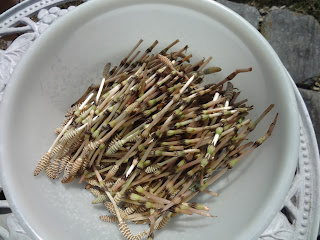

My harvest


First, we must know the brown “leaves” wrapping the stem are not edible. We have to remove them. We can peel the leaves of course, but much easier way is to cut the bottom of a leaf …


Leaves of Tsukushi
You can peal a leaf like this, or
Cut the bottom of a leaf.
A leaf slips out like this.


Continue “cut-and-slip” to remove all the leaves. If you are not strong with bitter veggies like chicory or radicchio, cut off the ear as well. I personally think the best part of dishes with Tuskushi is in the bitterness from the ear, but it’s really a matter of choice.


All the leaves are removed.


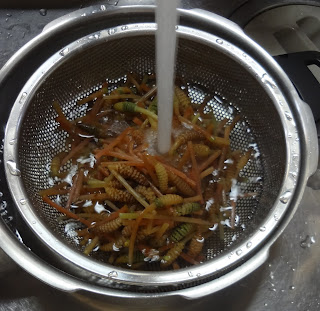
Dunk the processed Tsukushi in water preferably as you continue working with the rest for removing the leaves. Though, it’s OK you rinse all the processed Tsukushi at once. Wash them until there is no trace of grits at the bottom of a bowl. Next, leave them for a while (about 10 minutes) under running water. It is to get rid of the tartness from Tsukushi.


Wash-and-soak stage


Next, drain Tsukushi. Some recipe (for example, here or here) suggests to cook Tsukushi at this stage. But they can taste still harsh, and might be for an acquired taste. To cook them I recommend you to boil them next. You can simply boil them, or add a bit of salt as you cook pasta. I took pasta-way this year. You first dump them in a plenty of boiling water, and wait. When the pan returns boiling, drain Tsukushi quickly. Don’t overcook. A bit of crunchiness is a charm of dishes with Tsukushi.


Boiling Tsukushi
I washed the boiled Tsukushi after draining the water,
to stop over-cooking and to remove the bitterness further.


Now we can sauté them, or eat them as condiments for salad. (Sans ear) Tsukushi omelet was in a spring menu of our family when we were in kindergarten. You can keep it as is in refrig for several days.


Prepared Tsukushi.
After draining the water, I squeezed Tsukushi a bit.
Don’t over-squeeze! Don’t’ crush them!


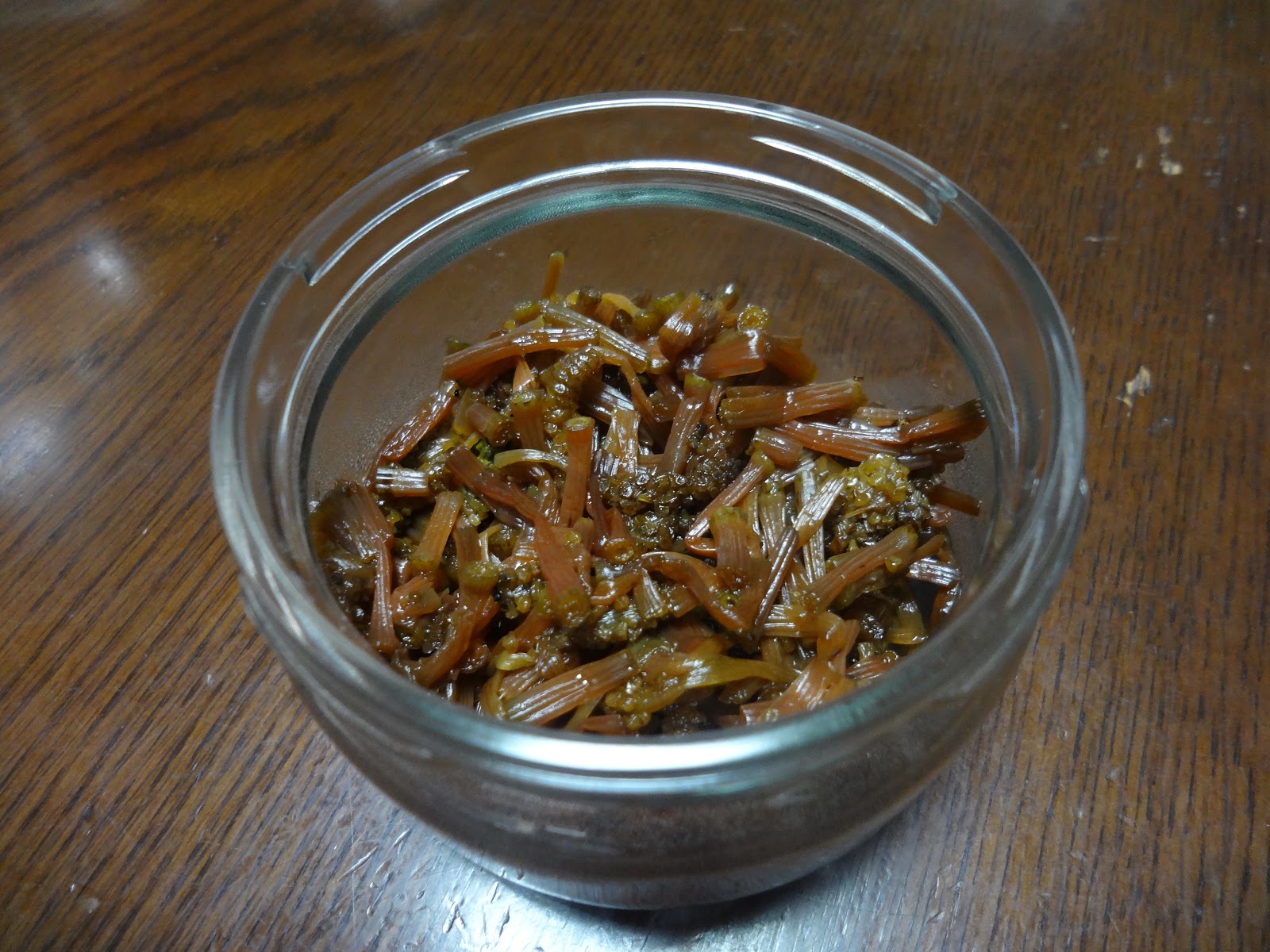
This year, I cooked Tsukudani 佃煮 with Tsukushi. The recipe is simple. For 140g of prepared Tukushi as above, add 2 tbsp of soy source, and 1 tbsp of sake, mirin, and sugar. Cook it until the liquid almost evaporates, and let the pan cool completely. We can keep it in refrig for about a month. It’s tasty spring tapas accompanying for good Japanese sake … Though, in our household, it lasted for only 3 days. Cheers!


My Tsukushi Tsukudani


<Bonus info>

Recently, I’ve found an easy way to concoct skin tonner. In Japan, we have many kinds of citrus with which often contain lots of large seeds. Carefully remove the seeds when you eat a fruit (don’t lick them!), and gather them in a jar. Next, pour white liquor 10 times of the volume of seeds. Leave the jar for at least 7 days in a dark place, and Voila! Citrus skin tonner is ready for your daily skin care. It’s cheap and we can use it as much as we want. By applying it continuously, I’ve noticed my skin becomes smooth and soft. Though, I haven’t made it with sweet citrus like orange as I think they contain too much sugar. In contrast, lemon seeds have become a good lotion. Try it!


My citrus skin toner.
The finished product has a bit of consistency but smooth
when you apply it to your skin.