|
| We’re going up to the ridge of Haruhino-Kurokawa Forest. |
Last month, Haruhino-Kurokawa Forest in Kawasaki City held an autumnal art show, their 9th. My impression from the recent show was not much different from the murmur in my previous post (on December 2, 2022). I’ve been there during its opening days and met several artists who installed their work. In sum, many of them found the wide-open space they could use attractive, and decided participating the project. OK. That’s that. May I mention they might not have thought much about communication with the multilayered ecosystem of the forest? … The artists approach would be similar to the newcomers to Western Nakagawa of Kohoku New Town (; my post on November 24, 2024). That’s unfortunate. The forest clearly shows the existence of people who care about the forest itself and engage in the maintenance works, not-so-flashy-as-art, continuously. Great Divide between two kinds of people, maybe …
 |
| Having
said that, this installation by Toshiyuki Tanaka tries to capture mutual communication with the forest: "TANAKA Toshiyuki, Eyes in the woods." |
 |
| “ISHIZAKI Kouji, Hope” |
 |
| “TAKEMOTO
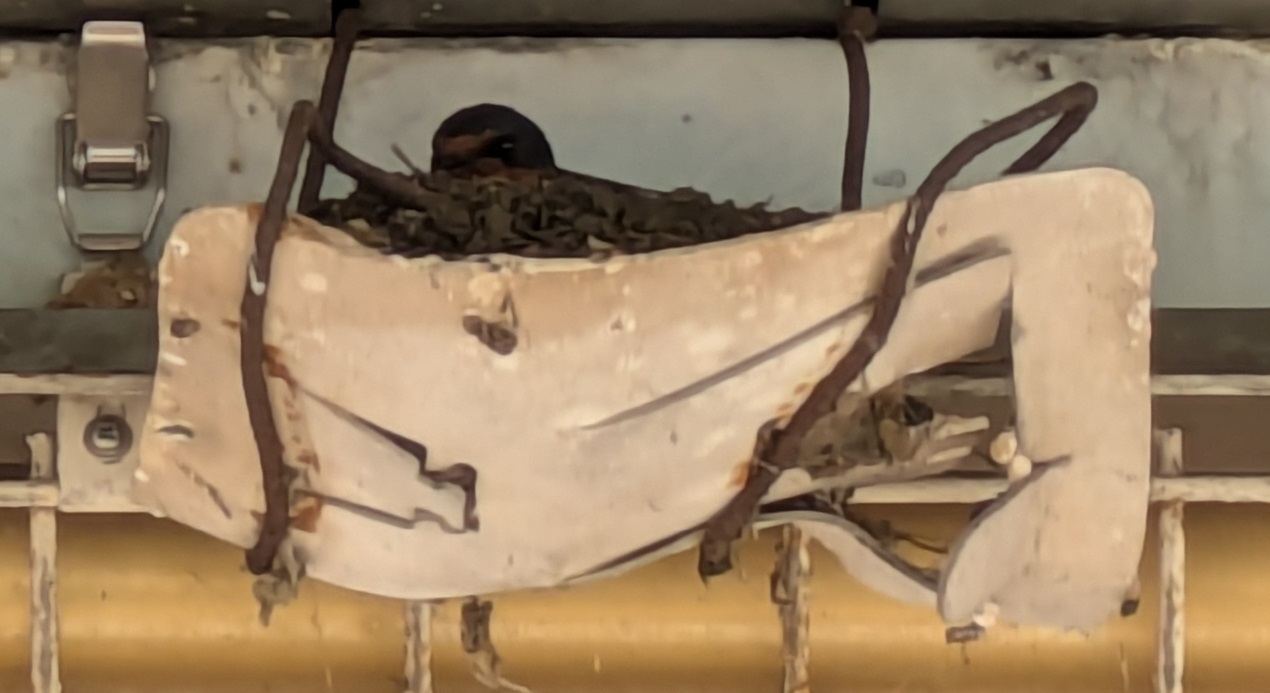
Suguya, Floating Object in the Valley.” This installation would be from the same idea of Tanaka’s installment above. But I was horrified to see this plastic seats floating above the abandoned rice paddy. Reason? Please wait till my next week’s post. |
 |
| “SATO
Hideyuki, Dinosaur Egg.” Ditto for this fiber-reinforced plastic. |
 |
| “LYU Dian, Fountain.” Ditto for this. |
 |
| “TACHIKAWA Mariko, Surrounded by Delicious Sunlight.” |
 |
| “HARADA Riito, Convey my heart.” This I like. |
 |
| “MURATA
Yuta, Place of Soil.” His continuous work from the previous show. I’d like to see how he develops his way of communicating with the land. |
 |
| “MACHI
Kiiko, No!” She emphasized she was strongly against all the wars of the planet, and said NO in a large voice … but why in this forest, I wonder. |
 |
| “TSUKASA Kana, Scene.” |
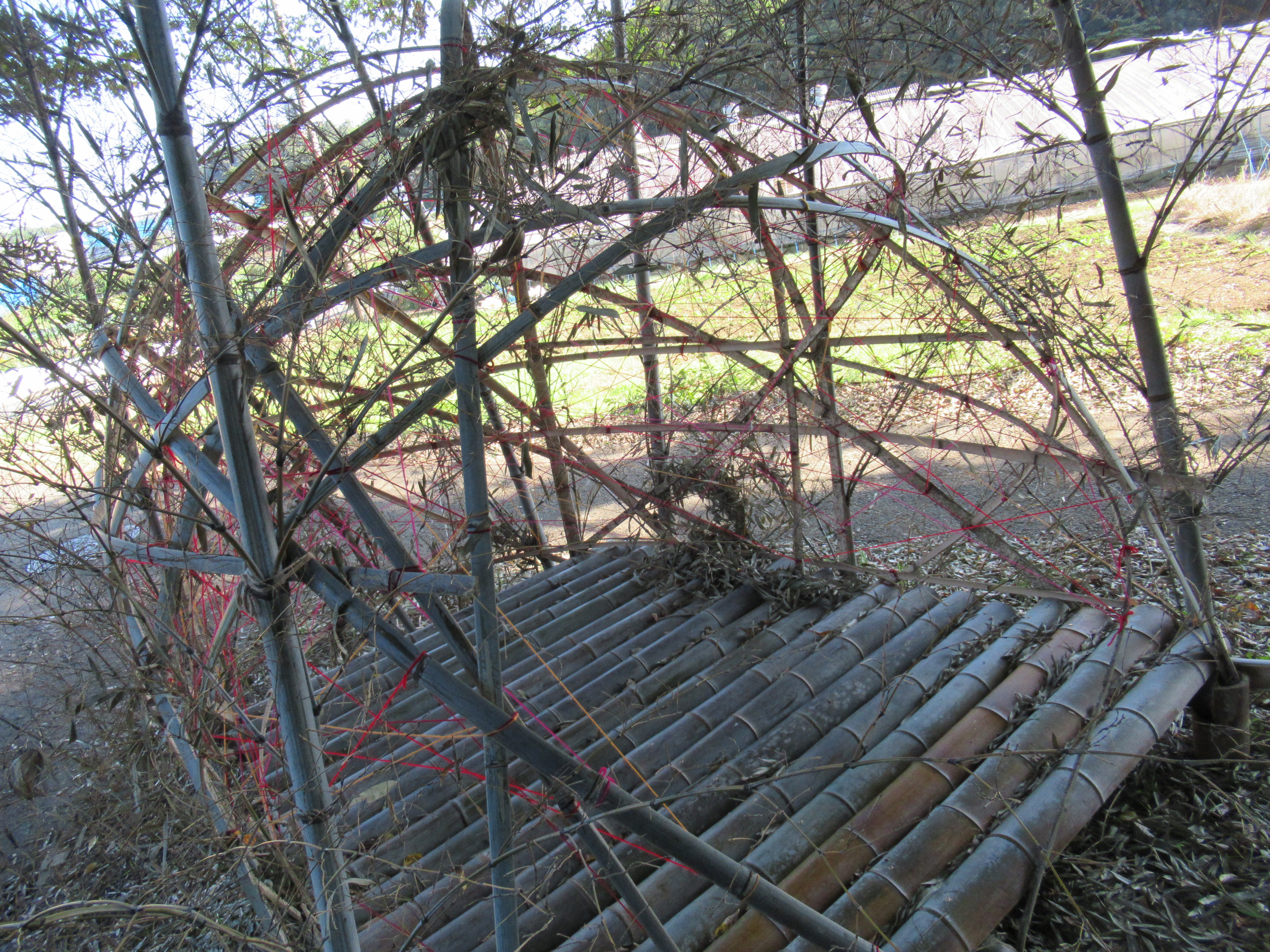 |
| “UTSUMI
Hitoshi, Secret Base.” This one is also I like. He tries to have a fun with the forest as a kid. |
 |
| “ABE
Yasumichi, Loop.” He’s not the only artist of this show who presented a sculpture made of stone. In a sense, it’s a traditional way of humans in the relationship with nature. What does it mean, I wonder. Is it the beginning of gigantic stone palace of Versailles with completely geometrical garden? I suspend my opinion about this … |
I have not yet met people from groups who engage in regular maintenance work for the forest. But according to this page, the area has lively communities, some of which do forestry works for the Forest. Moreover, they’re proud of their dirt-work beyond the desk theory. I had a feeling they are clearly succeeding in it. When I’ve been there last month, it was still a bit early for trees shedding leaves. Yet, the general impression Haruhino-Kurokawa Forest showed was bright with rustling sounds of leaves. The paths inside were well maintained for strollers to enjoy. People are controlling the undergrowth of the forest nicely and treating the damage by oak tree wilt. That’s something. As long as I know, the tenure of the land for Haruhino-Kurokawa Forest is a mixture of governmental, private and corporate entities. The teamwork of volunteers from many corners of Kawasaki and some help from pros hired by the City has done a really good job. Their endeavor in the end created the wide space the artists installed their work. Moreover, the success of such handiworks was scientifically measured in terms of basins.


657 Nanasawa, Atsugi City, 243-0121
〒243-0121 厚木市七沢657
Phone: 046-248-0323
You can send an enquiry to them by clicking the bottom line of their homepage at http://www.pref.kanagawa.jp/div/1644/