Showing posts with label Shiitake Mushrooms. Show all posts

Saturday, May 2, 2015

Thank you for allowing us to visit your forest: inside of Niiharu Citizen Forest 新治市民の森

Niiharu Citizen Forest viewed from Miho Nenjuzaka Park 三保念珠坂公園
The north of Yokohama has two main rivers. One of them, Katabiragawa 帷子川 starts in the south of Miho Citizen Forest 三保市民の森. Another is Tsurumigawa 鶴見川 whose tributary, Umedagawa 梅田川, has its source in Miho Forest. The hills go down from Miho Forest in both direction. Miho Forest is in the south west of Niiharu Forest. So, roughly speaking, the west of Niiharu Forest has higher altitude than the east, and the south is higher than the north. It means, if we enter the Niiharu Forest from Satoyama Exchange Center (aka Okutsu House 旧奥津邸), we must be ready to climb up the hills. (Map, here.)


oh, yes.
In any case, the route of Niiharu Forest is very well-prepared, thanks to the collaboration of landlords and volunteers. Let’s take it easy.


Some routes are closed due to maintenance. Beyond is an afforestation site by volunteers and kids from local elementary schools.
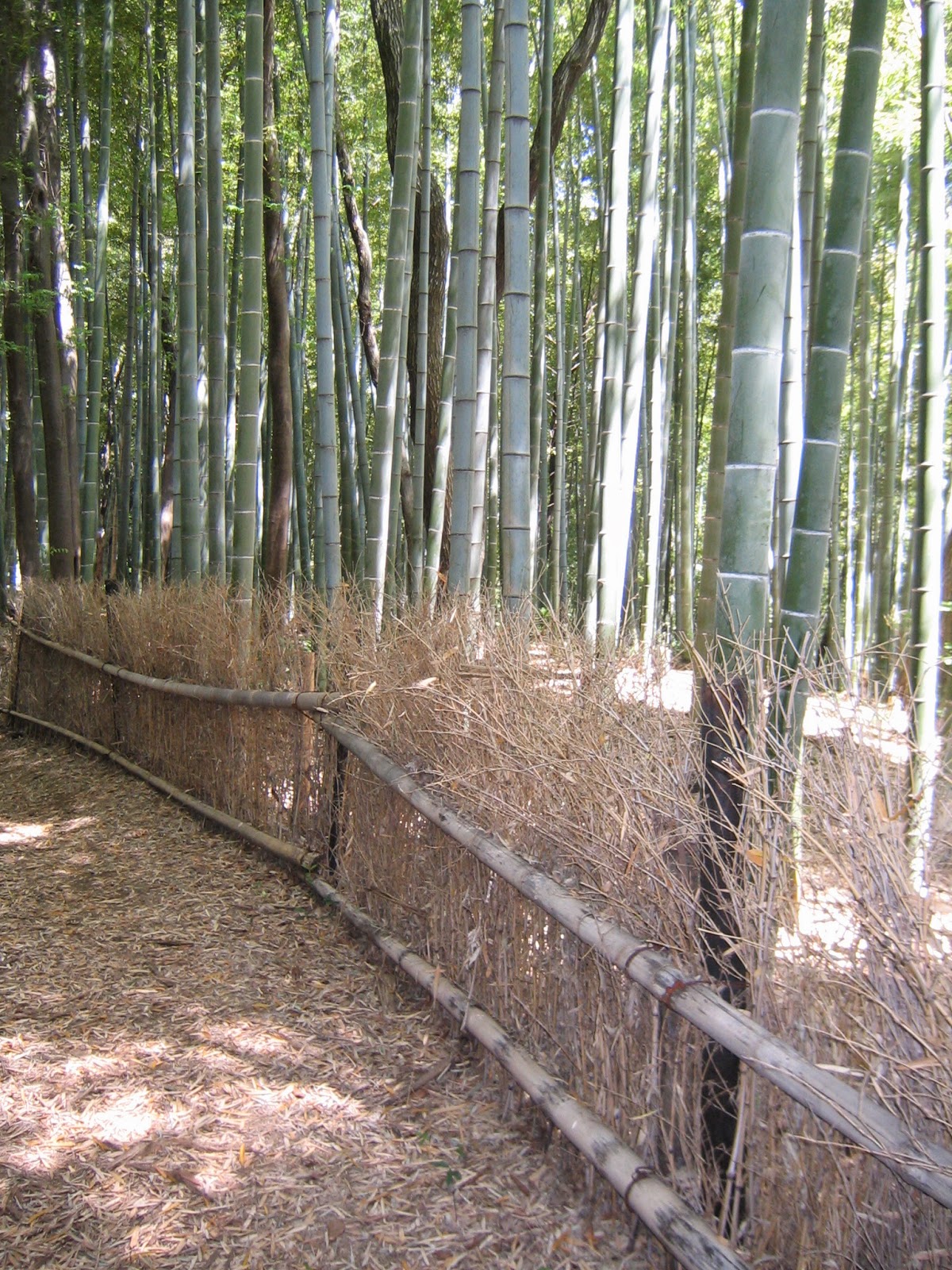
The forest we can see directly from Okutsu House is called Mukaiyama 向山. Mukaiyama means “The hill on the other side.” I guess the name comes from the fact that the area spreads over the opposite side of houses standing next to Okutsu House. Those are the residence of people who actually work in the field of Asahi-Yato 旭谷戸 which we’ve visited in the previous post, “Spring in Satoyama.” Mukaiyama has magnificent Japanese cedars, Japanese cypress, and bamboos.


i.e., Basically Mukaiyama is a cultivated forest for generations. Coniferous forest is for traditional construction materials in Japan, and bamboos are for tools of daily activities, such as baskets and utensils. And hence, Satoyama Center has a regular bamboo basket weaving class. Especially in spring, bamboos provide seasonal delicacy of bamboo shoots, takenoko たけのこ.


If you find bamboo shoots this large, it is too hard to eat already. Let it shoot into the sky.
Normally, people harvest bamboo shoots in early morning. An expert walks in a bamboo forest in soft-sole flip-flops to feel the tip of the shoots still beneath the surface. Finding it, s/he digs it out of the ground, then as soon as possible boils it to get rid of astringent taste. After this procedure, the shoot is ready to be cooked for stew, salad, tempura, etc. It is a typical spring dish in Japan, and hence many people, including thieves, want to dig them. In a beautiful bamboo forest of Niiharu,


there is a warning sign saying “This land is a private property. Digging out bamboo shoots without permission is a crime.”


Aside from culinary and artisanal usage, bamboos were used for flooring at least in Kanagawa Prefecture until the middle of the 19th century. Before Meiji restoration, Niiharu area was a part of land directly controlled by Tokugawa Shogunate in Tokyo. The regulation over the way of living for ordinary people was harsh and strict as Sagami-no-kuni 相模国 (the ancient name for the major part of Kanagawa Prefecture) and Musashi-no-kuni 武蔵国 (the past name of now Tokyo, Kawasaki, and a part of Yokohama) were so near to the castle of Shogun (which is now the Imperial Palace).Ordinary people who lived in the current northern part of Yokohama had to ask special permission from Shogun to construct a house with wooden or tatami-mat floor, as they were more expensive than fast-growing bamboos. Bamboos are easy to be bristled so that it requires frequent changes of floors, i.e. a greater demand for bamboos if they are for floors. The local seniors of Niiharu say in a-matter-of-fact way that any farmers with land (i.e., the ancestors of current landlords of Niiharu) had to have a well-cared bamboo forest. The large bamboo forest in Mukaiyama is the remnant from the time of Shogun. Mukaiyama also maintains the bushes of Sasa veitchii which was once ubiquitous in Yokohama, but now in near extinction.


Sasa veitchii is thriving beneath the canopy.
If you choose to enter from D-1, next to A-1, a small route along the orchard soon brings you to a farm land.


D-1 entrance
I think they are plums.
Mukebara

It is Mukebara 向ヶ原, aka “Niiharu Megumi-no-Sato (Niiharu with blessings) 新治恵みの里,” that is used for educational farming activities operated by local landlords. The harvest from here appears in Farmers’ Market every Saturday.

Between Ikebuchi Hiroba 池ぶち広場 and Miharashi Hiroba みはらし広場, the route is wide enough for a small truck to carry necessary supplies for the maintenance of the Forest. If you are with babies in buggies, you can take the Ikebuchi Route (from A-1 to A-8) for picnic. Ikebuchi Hiroba has faucets for potable water and several picnic benches some of which is under a magnificent canopy of wisteria in full-bloom early May.


Ikebuchi Hiroba also has toilets, with paper, but no soap.


Local mums bring their kids by bikes to Ikebuchi Hiroba for picnic.
The south of Ikebuchi Hiroba and beyond Mukebara is, really, a forest. According to the Revival and Re-energizing Plan for Niiharu Forest, the area is defined as the habitat for (almost) natural fauna and flora of Niiharu. A large group of people (e.g. 100 or more) is positively discouraged to visit the area. A group of 2 or 3 people would be the maximum. (If you plan to have a school excursion, please make a contact with the Office listed below.)


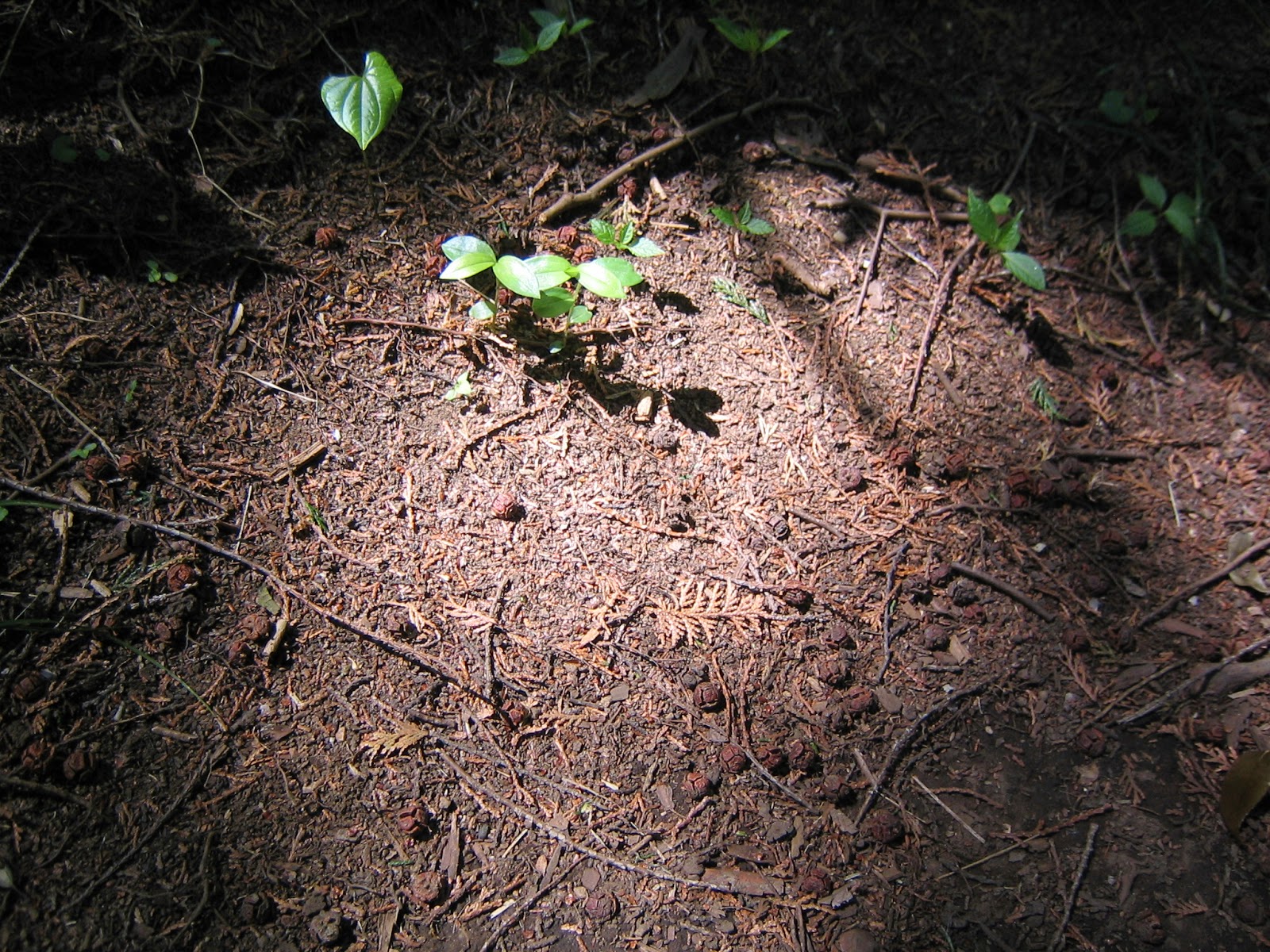
It’s not artificial spot light. I just took a photo of the ground near E-5, one fine day.
Around D-10. The route is really well-kept.
A scenery near D-8. Can you figure out a parking for Yokohama Zoorasia in the middle? 
And suddenly we find logs for Shiitake Mushrooms in the Forest!
The eastern area between Route E and Route D is called Yaman’me Yama やまんめ山. Before, this was the point where people could find many wild silk warm cocoons. (“Yaman’me” means “cocoons of wild silk worm.”) Wild silk cocoons produce the best quality silk so that this hill was really a wealth factory. Now it is the area for regular summer news for wasp and mamushi attacks.


A warning for wasp attack!
The entire experience in the southern part of Niiharu Forest is meditative and really refreshing. Let’s just be modest, as we humans are intruders of family life for wasps and snakes. Don’t be greedy for silks …

If you find a problem in the Park, please make a contact with

Office for the Park Greeneries in the North北部公園緑地事務所
Yokohama Municipal Government Creative Environment Policy Bureau横浜市環境創造局
Phone: 045-311-2016 (I guess in Japanese only)
FAX: 045-316-8420 (I hope there is somebody who can read English …)

Niiharu Administrative Office / Satoyama Exchange Center新治管理事務所・里山交流センター
Phone: 045-931-4947
Fax: 045-937-0898
http://www.niiharu.jp/


Sunday, April 26, 2015

Forest needs people: Niiharu CITIZEN Forest


Niiharu Forest is one of the biggests among the Yokohama Citizen Forest scheme. It has 5 suggested routes to hike in the forest as this map shows. If we plan to enjoy typical Satoyama scenary, Route B (called Asahi-Yato Route旭谷戸, with the orange numbering in the map) would be the best. There are 4 more Routes. Route A is with the pale blue numbering for Ikebuchi Route池ぶち, Route C with the pink numbering for Mukaiyama Route向山, Route D with the dark blue numbering for Ridgeway -Onemichi- Route尾根道, and Route E is with the green numbering for Kamadachi-Yato Route鎌立谷戸. As you can see in the map, each numbering goes like “A-1.”

It is a general numbering system in Yokohama Citizen Forest, although it varies slightly from the forest to the forest. (For smaller Forests, they do not have numbering.) For example, in Niiharu, we find a sign post at C-4 point like


Have you noticed the display “C-4,” though it is not in pink? All the points with numbering in the map of Citizen Forest actually have a sign post showing that number. So, if you think you’ve lost in the forest, you can just check the map, and confirm your location easily.


Now for Niiharu. The preservation of Satoyama Forest of Niiharu is the labor of love by landlords and citizen volunteers. Niiharu Forest has a volunteer organization, The Lovers of Niiharu Citizen Forest新治市民の森愛護会. They meet every first and third Saturdays, and every second and fourth Sundays to clean and tend 67.2ha of Niiharu Forest.

The volunteers wear a protective helmet during activities.
So, look!

They have Niiharu Charter:


“We, the people in Yokohama, love the Niiharu Forest of beautiful nature, and appreciate the blessings the Forest provides us.
Niiharu Citizen Forest would be one of the wonders in a big city. It has been maintained by ordinary life of people in Niiharu for generations.
Now, we open the Forest as the place for every citizen to protect, nurture, and carry the memory of traditional scenery of Yato.
We define our motto for Niiharu such that we revive and re-energize the Niiharu Forest through the cohabitation between the nature and human life, in order to pass this treasure to our children and beyond.

We declare Niiharu Charter such as
  1.      Passing the cultural climate of the nature of Niiharu, and its Satoyama that has been nurtured by Niiharu people , to our next generations,
  2.      Fostering the nature of Niiharu and the next generations of ours to develop more powerful co-habitation between the nature and the humans, through activities to take care of the Forest, and,
  3.      Co-owning all the images of ideal forest for any forest lovers, and cooperating each other in order to create the Forest for every citizen.

At the opening of Niiharu Citizen Forest, by all the Lovers of Niiharu Citizen Forest

March 2000"


A member of the club does not have to attend every meeting of the month, but contributes to the activity according to his/her schedule. In the morning (9:00- for April – November, 9:30- for December – April), they engage in the activities for taking care of the Forest. For those who can devote an entire day, in the afternoon there could be a continuing session for cleaning-up, or thematic fun meetings for, e.g., charcoal making, wood curving, grow-your-own-veggies, scientific nature observation, etc.

… and, I guess, it is a result of their activity.
Actually, if you are interested in it, on any activity day you can just go to Ikebuchi Hiroba 池ぶち広場(Map A-4) and try whatever they are doing as a “trial.” Please make a contact with Mr/Ms Ohkawa (as this is Japan, we do not put any gender differentiating salutation) at 045-934-9898. … I don’t know if English is OK here … so sorry.

Ikebuchi Hiroba, which means “Open space next to a pond,”
and so this is the pond next to Ikebuchi Hiroba.
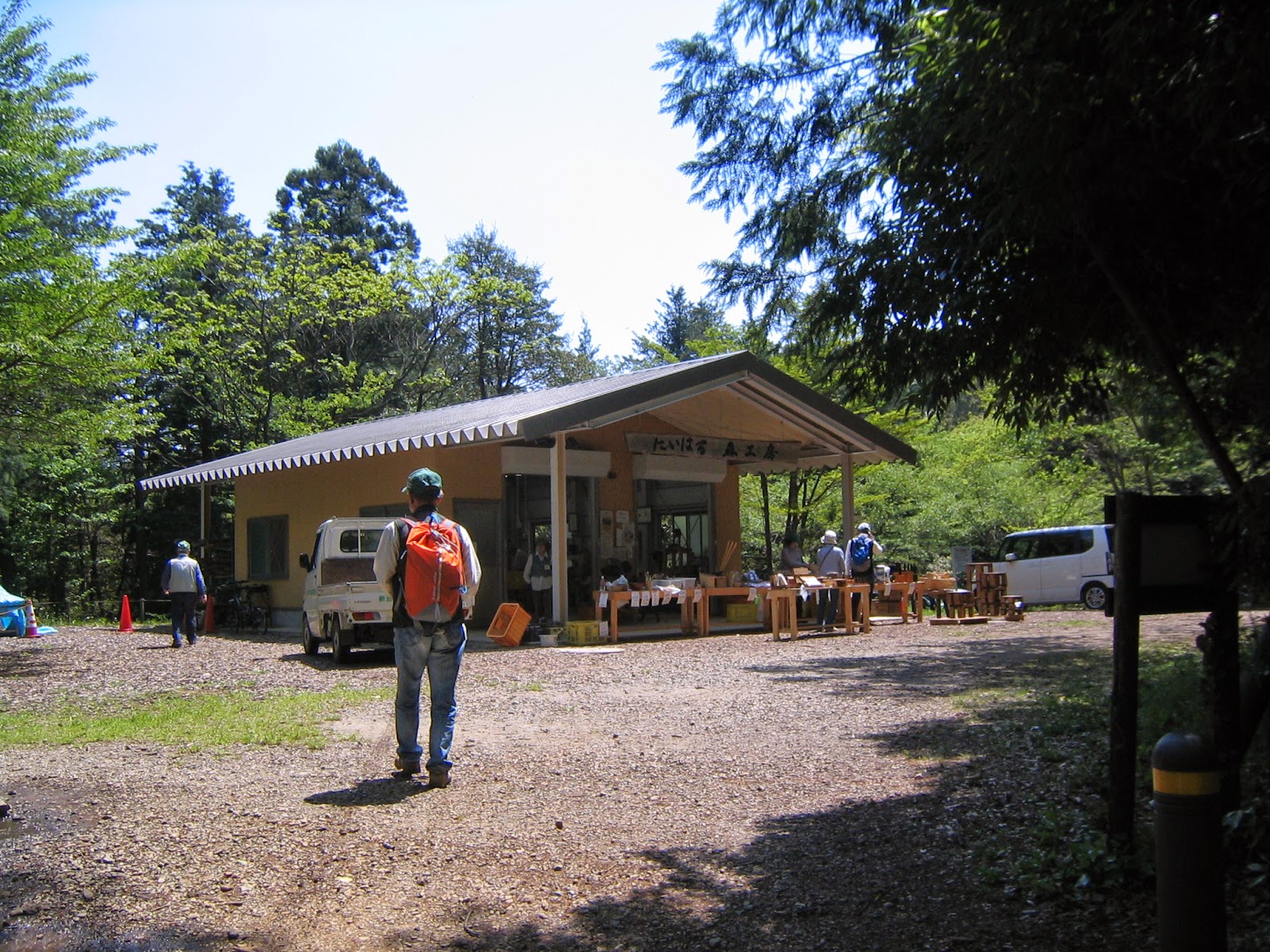
Some of those products created by the volunteer of the Lovers are on sale to support the maintenance of Niiharu Forest. They have an atelier-cum-small shop in Miharashi Hiroba みはらし広場(Map A-8).

Miharashi Hiroba, which means “Open space with a view,”
and so this is the view. Could you recognize the high-rise apartments of Mushashi-kosugui over there?


On sale stands made of precious cherry and Zelkova trees
Cute Taketombos, a traditional Japanese toy. Do you know how to play with it?

Next to Miharashi Hiroba, there is a parking lot open for weekends and public holidays (9:00-17:00). If you come to Niiharu Park via Tomei Express Way weekends, exit from Yokohama/Machida Exit, and find Yokohama Suiryoh High School翆陵高校. This parking is next to their campus. (Oh, yes, this parking is not that far from Indian International School of Yokohama.)


Coming May 10, 2015, the Lovers have an event for kids at Ikebuchi Hiroba for 10:00-14:30. The program consists of

  1. Plant your own Shiitake Mushrooms to a log (cost of the log = 200 yen),
  2. Try traditional hand-processing for the first flash of green tea,
  3. Let’s make whatever you like with bamboo logs, and
  4. Play Honchi-sumo (a traditional kids play with spiders).

No reservation necessary. The cost of attending the event is 100 yen for elementary school kids, 300 yen for adults. (Babies, free.) Bring your own lunch and drinks, and a cup and utensil (; they serve miso-soup during lunch). Also, towels and gloves for outdoor activities would be handy. Pls do not forget the attire of Citizen Forest; this time, long sleeves and long pants would protect you from mosquitos and other nasties in the forest ;)

If you find a problem in the Park, please make a contact with
Office for the Park Greeneries in the North北部公園緑地事務所
Yokohama Municipal Government Creative Environment Policy Bureau横浜市環境創造局
Phone: 045-311-2016 (I guess in Japanese only)
FAX: 045-316-8420 (I hope there is somebody who can read English …)

Niiharu Administrative Office / Satoyama Exchange Center新治管理事務所・里山交流センター
Phone: 045-931-4947
Fax: 045-937-0898